October 2026 Tallahassee Real Estate Market Update
October 21, 2026
All Real Estate News
October 21, 2026
All Real Estate News
QUICK LINKS: The Fed & Mortgage RatesMarket ImpactsWhat's AheadTips for SellersTips for BuyersTallahassee Market StatsThe Bottom Line
As we head into the final stretch of 2026, the housing market continues to present a complicated picture. Between stubborn inflation, mortgage rate fluctuations, and uncertainty surrounding the Federal Reserve - affordability remains a major concern.
But perhaps the biggest takeaway this month is that there isn't just one housing market. Homeowners locked into historically low mortgage rates, cash buyers, those relying on financing, and homebuilders are all navigating very different circumstances.
In this month's Real Estate Market Update, we'll explore what's driving mortgage rates, and how today's market conditions are affecting homeowners, builders, sellers, and buyers differently, both nationally and right here in Tallahassee. More importantly, we'll look at how understanding these differences can help you make smarter real estate decisions in today's market.
QUICK LINKS: The Fed & Mortgage RatesMarket ImpactsWhat's AheadTips for SellersTips for BuyersTallahassee Market StatsThe Bottom Line
The Fed recently raised the federal funds rate for the first time in about three years. And around the same time, mortgage rates have started to spike.
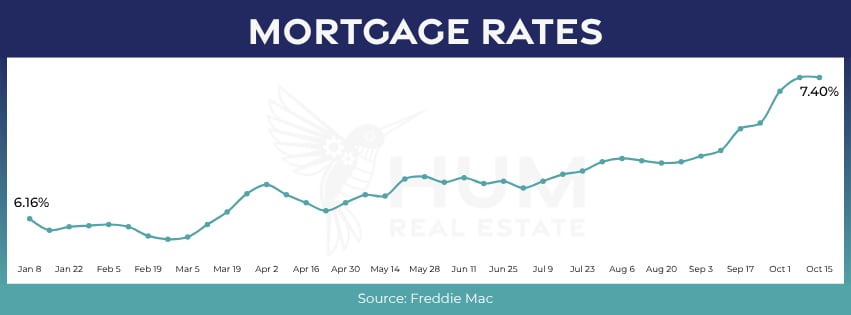
We're up well over 7% now. And so, we thought it would be pretty valuable to take a look at why the Fed is taking these actions, and what that means for the housing industry in both the short-term and long-term.
The Fed has a dual mandate.
The Federal Reserve has two primary goals: maintaining maximum employment and keeping prices stable. For inflation, the Fed targets an annual rate of 2% over the long term.
Employment is pretty good, but inflation remains too high. And so, the Fed has a tool where they can hike the federal funds rate in an effort to bring down inflation.
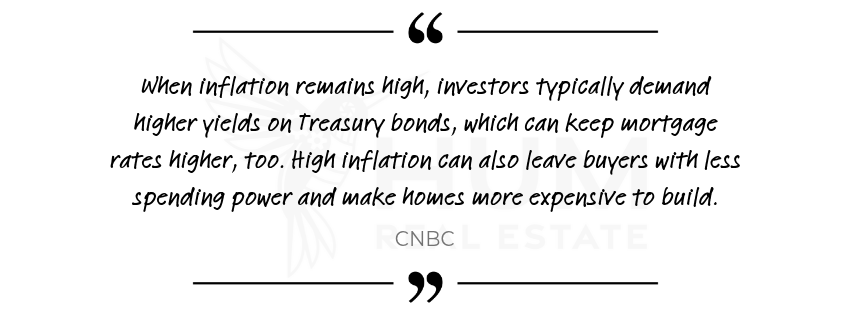
Inflation is hitting us from two sides right now.
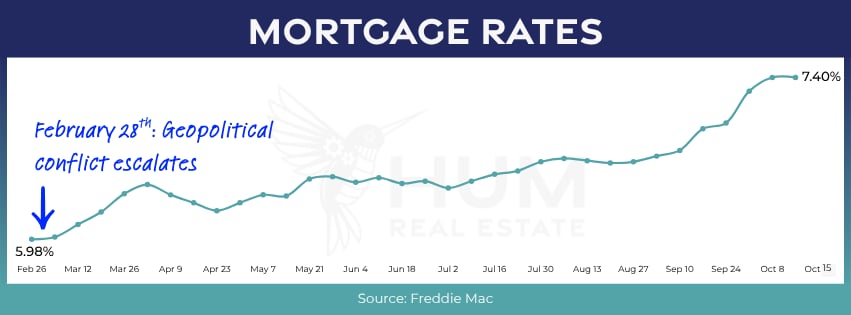
One, it keeps an upward pressure on mortgage rates, which is a big part of the reason why the average 30-year fixed mortgage rate has reached 7.4%. Inflation has been largely impacted by the geopolitical conflict, which began on February 28th.
Basically, we're going to deal with some short-term pain, hopefully for some long-term gain.
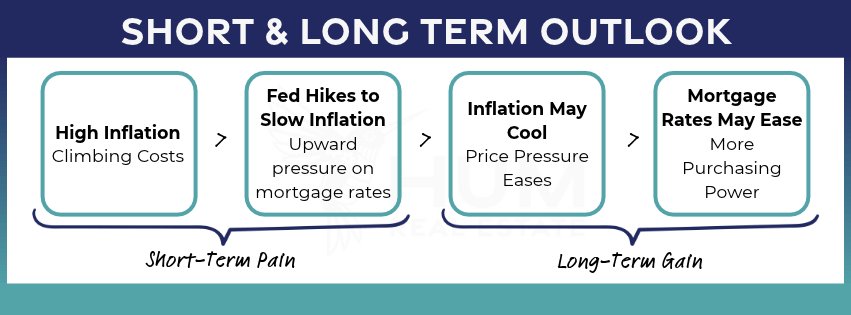
We've had inflation high all year, rising largely as energy prices go up. And so, what the Fed is doing is raising the federal funds rate in an effort to bring inflation down.
In the near term, expectations of additional Fed rate hikes can put upward pressure on mortgage rates, particularly when those expectations reflect concerns about persistent inflation.
Right now, high inflation is hurting mortgage rates and buying power, and when the Fed takes action to bring inflation down, that may further elevate mortgage rates. That's the short-term pain.
The reason they're doing this though is to get to the long-term gain, which will actually be beneficial for the housing market.
As the Fed works to bring inflation down, and hopefully as the geopolitical conflict comes to an end, inflation could gradually move back toward the Fed's 2% target. That could eventually help lower mortgage rates and improve buying power.
Sales have been low, largely due to tight affordability. If we can get to a point where inflation comes down, bringing mortgage rates along with it, that would be a good thing for everyone.
Of course, anytime we talk about the Fed and mortgage rates, we always have to highlight that the Fed does not set mortgage rates.
A great way to be able to visualize this is to take a look at the 30-year fixed mortgage rate going back to 1971, as compared to the Fed funds rate.
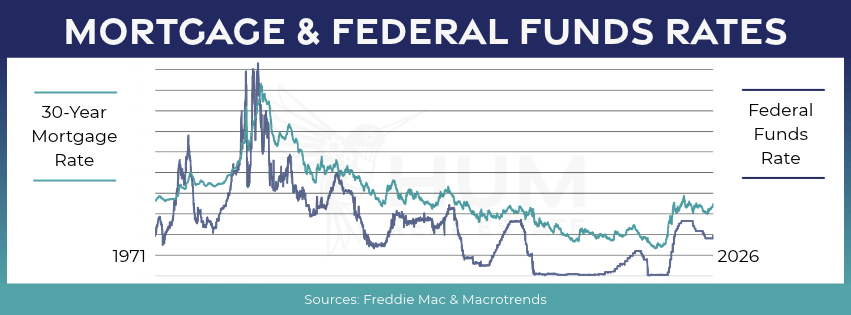
There is a correlation between the 30-year fixed mortgage rate and the Federal funds rate, but they are not exactly aligned at all times.
While there are some periods where mortgage rates did not respond to the Federal funds rate, like in the mid-1970s or in the early 2000s, it is still obvious that the Fed's actions do influence mortgage rates, although they're not the direct cause of where mortgage rates will go.
For that, we would want to look at the 10-year treasury yield. The correlation between the 30-year fixed mortgage rate and the 10-year treasury rate are much more aligned, and have been for about 55 years now moving in unison.
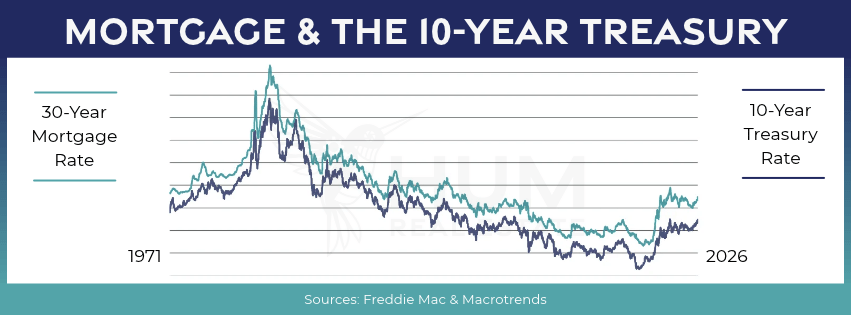
So, where the 10-year treasury goes, so too, generally speaking, so do mortgage rates. And, recently, the 10-year Treasury has been up over 5%, which is the highest that it's been in about 20 years. And that has put significant upward pressure on mortgage rates.
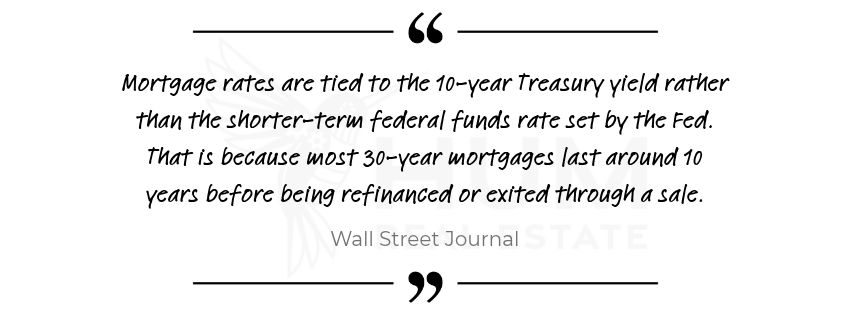
Why? Although a 30-year mortgage has a 30-year repayment schedule, mortgages are often paid off earlier through refinancing or the sale of a home. Their expected cash flows and sensitivity to interest rates make intermediate-term Treasury yields, particularly the 10-year Treasury, a useful benchmark for understanding mortgage rate movements.
QUICK LINKS: The Fed & Mortgage RatesMarket ImpactsWhat's AheadTips for SellersTips for BuyersTallahassee Market StatsThe Bottom Line
In the short-term, Federal rate hikes can impact the housing market. These impacts can be seen across four major groups: current homeowners, smaller builders, sellers, and buyers.
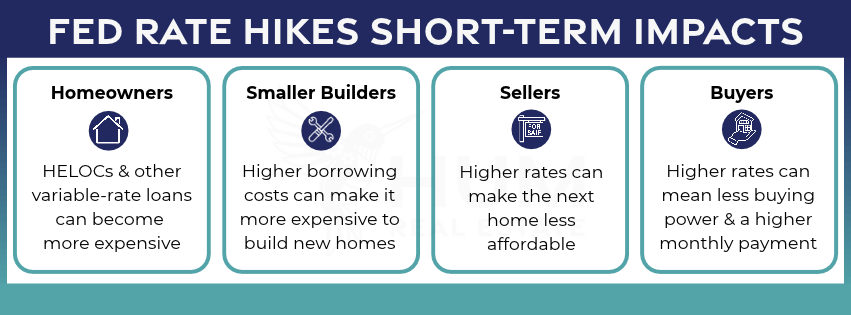
Current homeowners, many of whom have relatively low mortgage rates, may be less directly affected by changes in mortgage rates. But, having the Fed raise the federal funds rate does impact current homeowners who might be wanting to tap into all that equity that they've built.
Homeowners with mortgages have an average of approximately $310,000 in equity nationally, according to Cotality. Some are accessing that equity through Home Equity Lines of Credit (HELOCs), which allow homeowners to borrow against their home's value. Most HELOCs have variable interest rates that typically move with the prime rate, which is heavily influenced by the Federal Reserve.
So, for any homeowner hoping to tap into their equity, it's becoming more expensive to do so as the Fed raises the federal funds rate.
For smaller builders, what the Fed is doing can make it more expensive to build homes.
Smaller builders often take out loans that have an interest rate in order to be able to build homes, sell them, turn a profit, and pay back their loan. And right now, those loans that they have to take out are more expensive. And that can be significant.
Higher construction costs can ultimately translate into higher prices for newly built homes.
For sellers, especially if they're going to be moving and buying another home, they could be taking out a mortgage on that next home. That's going to be more expensive.
And, if you have a low mortgage rate, many people will choose to just sit back and not move for the time being.
For buyers, higher inflation means lower buying power. It also has led to higher mortgage rates, which makes for higher monthly payments and just further subdues buyer demand in the housing market.
QUICK LINKS: The Fed & Mortgage RatesMarket ImpactsWhat's AheadTips for SellersTips for BuyersTallahassee Market StatsThe Bottom Line
The expectation is that the Fed will raise the federal funds rate again before the year is done.
The CME FedWatch tool is a way to take a look at what markets are expecting for the Fed's actions over the course of the remainder of the year.
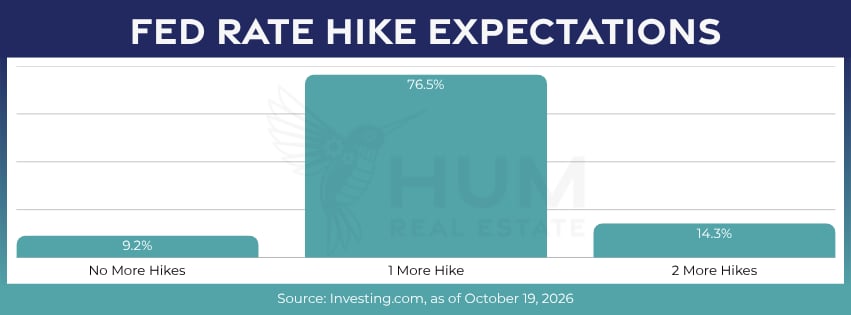
The Federal Reserve has two remaining meetings scheduled for 2026, on October 27th – 28th and December 8th – 9th. While additional rate increases remain possible, market expectations currently favor the Fed holding rates steady in October, with a greater likelihood of another increase in December. However, these expectations can change quickly as new inflation and employment data become available.
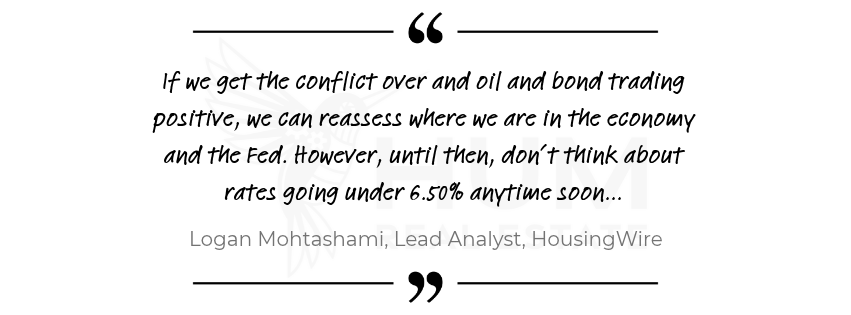
The key things to watch that are playing into the inflationary pressure right now are the geopolitical climate and energy prices. Regardless of what the Fed does, if geopolitical tensions intensify and energy prices continue rising, it is going to be difficult to get inflation down.
Mortgage rates may remain above 6.5% in the near term.
QUICK LINKS: The Fed & Mortgage RatesMarket ImpactsWhat's AheadTips for SellersTips for BuyersTallahassee Market StatsThe Bottom Line
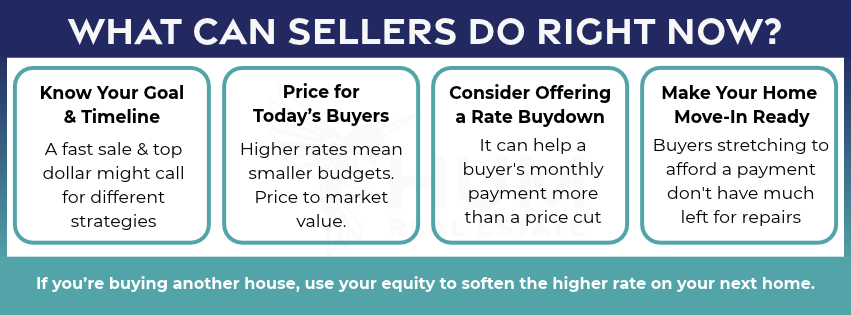
For sellers, start with your goal and your timeline, because a quick sale and maximizing your sale price may require different strategies.
Do you need to move quickly? Are you looking to get the most money possible? Either way, the strategy is going to be incredibly important right now.
Second, price for today's buyers who we know are already stretched with higher mortgage rates. List your home at its market value, and understand that many sellers are doing price cuts right now.
Third, think about offering a rate buydown. Depending on the buyer's financing, offering a mortgage rate buydown may lower their monthly payment more than a comparable price reduction.
Fourth, make sure your home is move-in ready. Buyers are stretching every last penny just to get into a home right now. They don't have a lot of money left over to make a lot of improvements after getting into the home. They're looking for something that's ready.
And then lastly, if you are buying another house, as we mentioned before, you've probably got a lot of equity right now. If you're selling one home and purchasing another, consider using the equity from your sale toward a larger down payment. This could reduce how much you need to finance at today's higher mortgage rates, potentially lowering your monthly payment.
If you’re wondering how much equity you have, visit HomeSweetHomeBot.com for a detailed, interactive home valuation report.
QUICK LINKS: The Fed & Mortgage RatesMarket ImpactsWhat's AheadTips for SellersTips for BuyersTallahassee Market StatsThe Bottom Line
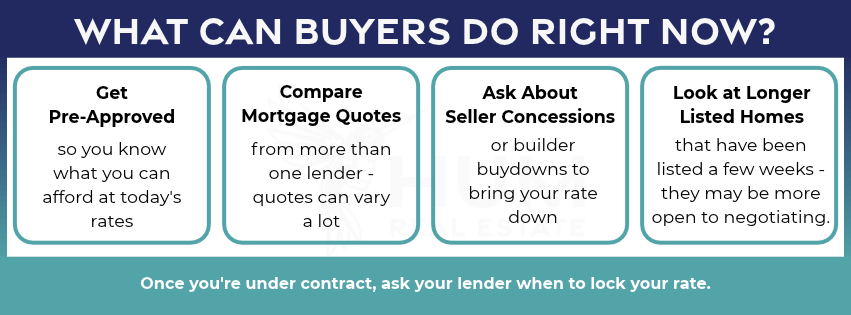
For buyers, first get pre-approved with a lender so you know exactly what you can afford at today's rates. Keep in mind, what you are pre-approved for may be more than you want to spend. It is crucial to also know your budget.
Secondly, compare offers from more than one lender. Remember, the 30-year mortgage rate in the headlines is the average, and may not be the rate you are quoted.
Third, ask about seller concessions or builder buydowns. In many markets, buyers have more room to negotiate than they've had in recent years, particularly when it comes to seller concessions and builder incentives. Nationally, sellers provided concessions in 44.7% of home sales in August, according to Redfin. And according to the National Association of Home Builders, 65% of builders reported offering sales incentives in October, including incentives such as mortgage rate buydowns. Sellers and builders are doing what they can to help affordability because they still need to sell.
Fourth, look at homes that have been listed longer than is typical for their price range or neighborhood. These are sellers that are often more open to negotiating. These may be situations in which you can negotiate a stronger deal.
And lastly, once you're under contract, talk with your lender about when to lock your interest rate. A rate lock can protect you from increases before closing, provided the lock remains valid and your loan terms don't change.
QUICK LINKS: The Fed & Mortgage RatesMarket ImpactsWhat's AheadTips for SellersTips for BuyersTallahassee Market StatsThe Bottom Line
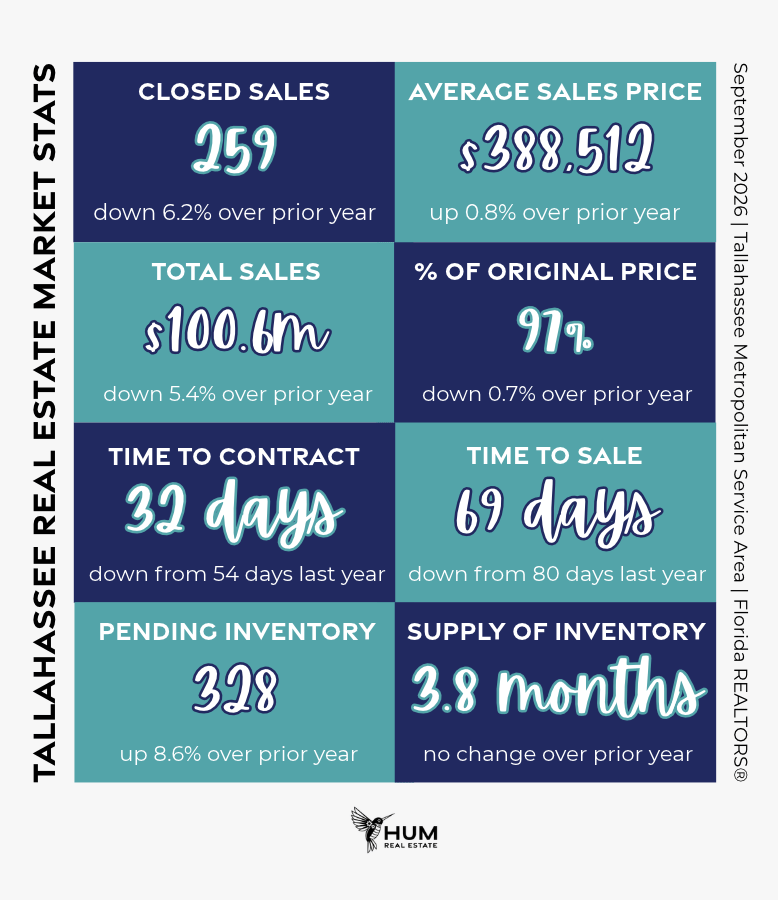
Here in Tallahassee, September's numbers tell an interesting story.
QUICK LINKS: The Fed & Mortgage RatesMarket ImpactsWhat's AheadTips for SellersTips for BuyersTallahassee Market StatsThe Bottom Line
The housing market is facing some short-term challenges, but that doesn't mean buyers and sellers should put their plans on hold.
Higher mortgage rates and affordability concerns are creating obstacles, but they're also creating opportunities for those who understand how to navigate today's market.
For sellers, realistic pricing, move-in-ready homes, and creative incentives can make all the difference in attracting buyers.
For buyers, increased negotiating opportunities, seller concessions, and mortgage rate buydowns may help offset some of today's higher borrowing costs.
The best time to make a move isn't necessarily when market conditions are perfect. It's when the numbers, timing, and opportunity make sense for you.
QUICK LINKS: The Fed & Mortgage RatesMarket ImpactsWhat's AheadTips for SellersTips for BuyersTallahassee Market StatsThe Bottom Line
Stay up to date on the latest real estate trends.
All Real Estate News
October 21, 2026

All Real Estate News
October 20, 2026

Articles for Buyers
October 19, 2026

October 19, 2026

All Real Estate News
October 17, 2026

All Real Estate News
October 16, 2026
You’ve got questions and we can’t wait to answer them.