Mortgage Rates Are Above 7%: What Homebuyers Can Control
September 28, 2026
All Real Estate News

September 28, 2026
All Real Estate News
If mortgage rates have you questioning whether now is the right time to buy a home, you are definitely not alone.
Affordability remains one of the biggest challenges facing homebuyers, and mortgage rates have recently moved higher again.
As of September 25, 2026, Mortgage News Daily's average 30-year fixed mortgage rate was 7.43%. Freddie Mac's weekly average was 7.03%, as of September 24. Different surveys calculate rates differently, but both tell the same basic story: mortgage rates have moved back above 7%.
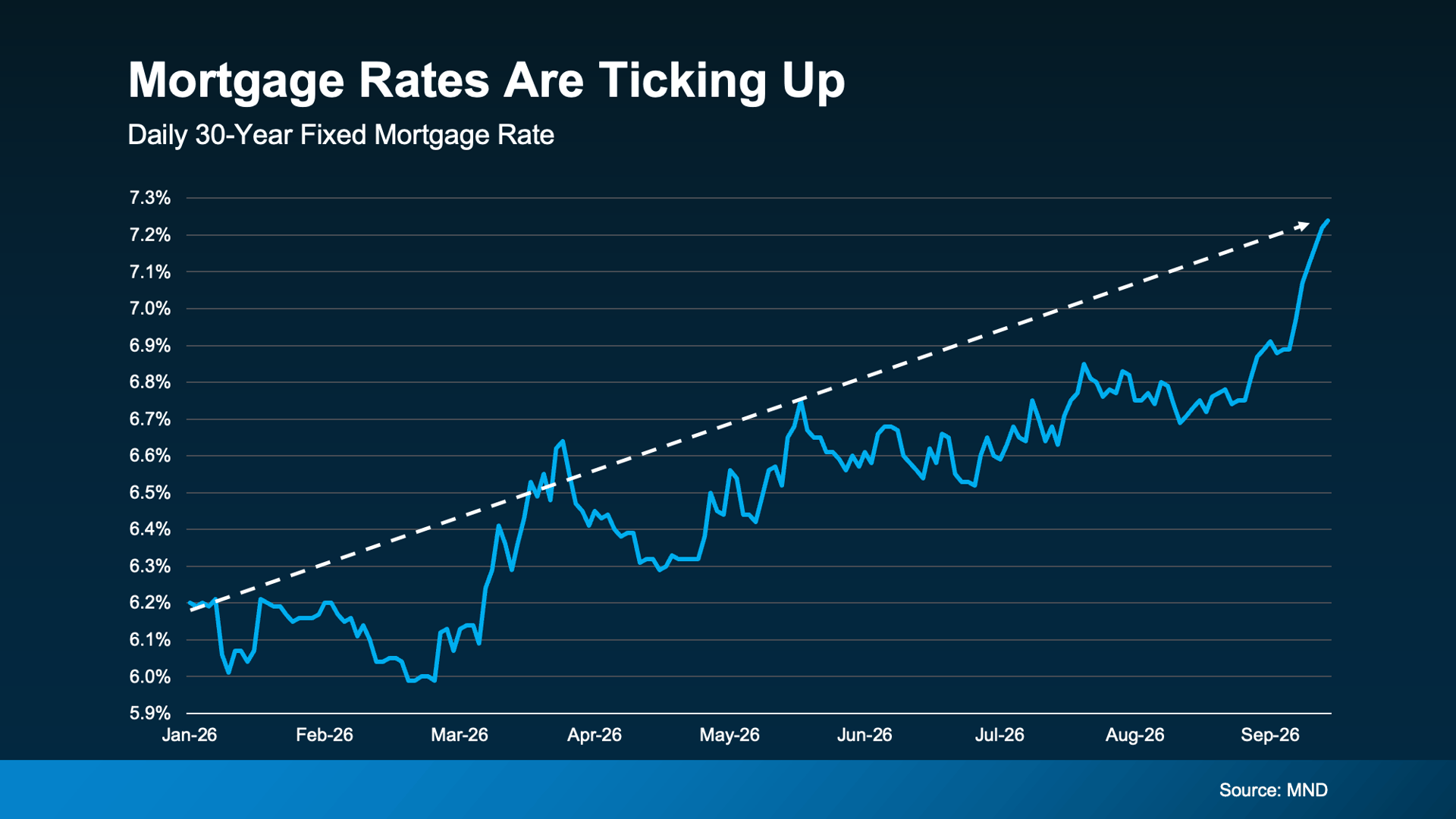
That can make it tempting to put your home search on hold and wait for rates to fall.
The problem?
No one knows exactly when that will happen.
What you can do is focus on the parts of your home purchase that you actually have some control over.
And there may be more of those than you think.
Mortgage rates do not move because of one single factor.
Inflation, economic growth, employment data, geopolitical events, oil prices, and the bond market can all influence mortgage rates.
The Federal Reserve matters too, but there is an important distinction.
The Fed does not set mortgage rates.
On September 16, the Federal Reserve raised its target range for the federal funds rate by 0.25 percentage point to 3.75% to 4.00%. The Fed said inflation remained elevated and cited continued uncertainty related in part to geopolitical developments.
Changes in Fed policy can influence financial markets and borrowing costs, but 30-year mortgage rates are much more closely connected to longer-term bond yields and investors' expectations for inflation and the economy.
Translation: there are a lot of moving pieces.
Fortunately, you do not have to predict all of them to make a smart homebuying decision.
Two people shopping for the same house on the same day may not receive the same mortgage rate.
Your credit profile is one reason why.
Generally, borrowers with stronger credit profiles may qualify for more favorable loan terms. That means improving your credit before applying for a mortgage could potentially reduce your borrowing costs.
If you are thinking about buying, this is a good time to:
• Check your credit reports for errors
• Pay bills on time
• Avoid taking on unnecessary new debt
• Be cautious about opening new credit accounts
• Talk with a lender before making major financial changes
And do not assume you need perfect credit to buy a home.
Different mortgage programs have different qualification standards, so a conversation with a knowledgeable lender may reveal options you did not know you had.
There is no single mortgage that is best for every buyer.
Depending on your finances, eligibility, and long-term plans, you may be able to consider conventional, FHA, VA, USDA, fixed-rate, or adjustable-rate financing.
For example, FHA-insured mortgages can allow qualifying borrowers to purchase with as little as 3.5% down.
But the lowest advertised interest rate is not automatically the least expensive loan.
You also want to compare:
• APR
• Mortgage insurance
• Points
• Origination and lender fees
• Required down payment
• Cash needed at closing
• Monthly payment
• Whether the rate can change later
APR can be particularly helpful because it incorporates the interest rate plus certain additional loan costs.
The goal is not simply to find the lowest number in an advertisement. It is to find financing that makes sense for your budget and plans.
Homebuyers will compare 20 houses before choosing one and then sometimes call only one lender.
That can be an expensive shortcut.
The Consumer Financial Protection Bureau recommends comparing mortgage offers from multiple lenders. Its research suggests borrowers could potentially save roughly $600 to $1,200 per year by getting mortgage offers from multiple lenders.
Even with the same borrower and same property, lenders can offer different rates, fees, credits, and loan structures.
The CFPB recommends comparing Loan Estimates using the same type of loan and features so you are making an apples-to-apples comparison.
That may be one of the simplest ways to improve affordability without waiting for the entire mortgage market to change.
This one is especially interesting right now.
Many builders have inventory they want to sell, and larger builders can sometimes offer financing incentives that an individual homeowner simply cannot.
That can include:
• Mortgage-rate buydowns
• Closing-cost assistance
• Lender credits
• Upgrade incentives
• Other financing promotions
And the difference can be meaningful.
According to Realtor.com data, buyers of newly built homes in the second quarter of 2026 received an average mortgage rate of 5.85%, compared with 6.47% for buyers of existing homes.
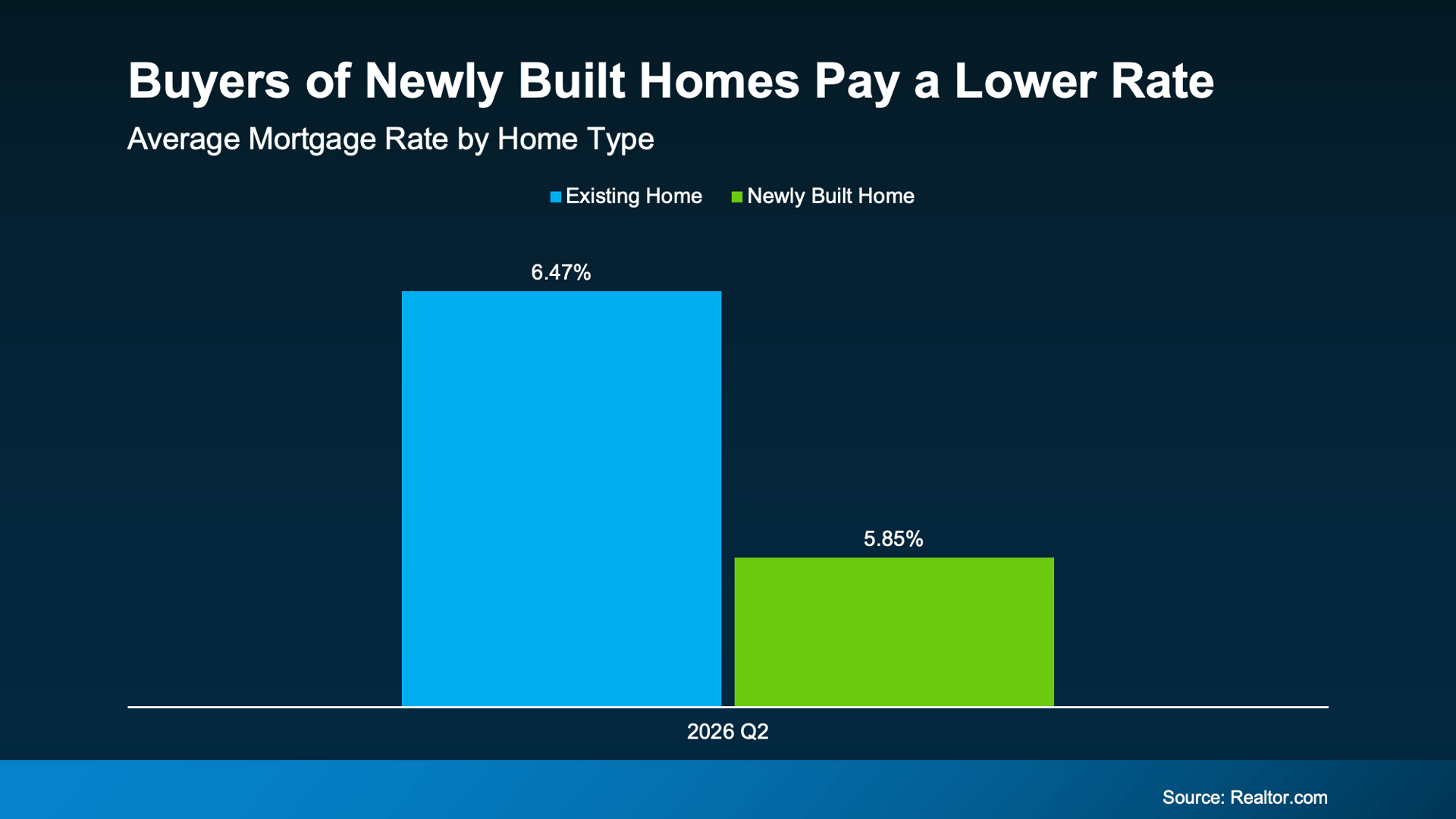
That is a 0.62 percentage-point difference.
The important part is why.
New homes did not somehow qualify for a different national mortgage market. Builder incentives and mortgage-rate buydowns are helping create that difference.
Realtor.com's research has found that reduced mortgage rates have become one of the most common incentives builders use to attract buyers.
This is not only a national story.
Tallahassee has maintained a meaningful supply of newly constructed homes this year, giving local homebuyers another category to compare rather than looking exclusively at resale homes.
Earlier this summer, Tallahassee had 120 active new-construction homes with an average asking price of $422,808. The median sales price for newly constructed homes during the first half of June was $364,900.
That does not mean a new home will automatically be the better financial choice.
It means it is worth running the numbers.
A resale home at a lower purchase price could still cost more per month than a higher-priced new home if the builder is offering a substantial permanent rate buydown.
Or the resale home may be the better deal after you compare the full transaction.
You cannot know from the asking price alone.
Not every advertised builder rate works the same way.
Some incentives permanently reduce the mortgage's interest rate.
Others are temporary buydowns that reduce the payment for the first year or several years before the payment increases to the loan's full rate.
There may also be requirements to use a particular lender or meet specific financing qualifications.
So when you see an advertised builder rate, ask:
• Is this a permanent or temporary buydown?
• What will my payment be after any temporary buydown expires?
• Do I have to use the builder's preferred lender?
• Are points or fees being charged to obtain the rate?
• How does the APR compare?
• What would the same home cost with another lender?
• How does the total offer compare with a similar resale home?
The interest rate is important.
The entire transaction is more important.
There is another reason not to look at mortgage rates in isolation.
Today's Tallahassee housing market gives buyers more breathing room than the ultra-competitive markets of a few years ago.
In August 2026, Tallahassee had 1,786 active residential listings. There were 308 price reductions during the month, and closed homes sold for an average of 97.59% of their asking price.
That does not mean every seller will negotiate.
But it does mean there may be opportunities beyond simply negotiating the purchase price.
Depending on the property and the seller's situation, a buyer may be able to negotiate closing-cost assistance or another concession that improves the overall cost of the purchase.
Sometimes the best affordability strategy is not waiting for a lower national mortgage rate.
It is finding the right combination of property, price, financing, and negotiation.
This is where mortgage shopping becomes much easier to understand.
Imagine financing $300,000 with a 30-year fixed mortgage.
At 7.25%, principal and interest would be approximately $2,047 per month.
At 6.25%, it would be approximately $1,847.
That's about a $200 monthly difference, or roughly $2,400 per year.
Taxes, insurance, HOA fees, and mortgage insurance would be additional, but the example shows why even a seemingly small change in interest rate can matter.
It is also why credit, lender shopping, and builder incentives deserve attention.
Maybe.
There are perfectly valid reasons to wait to buy a home.
Your savings may not be where you want them to be. Your employment situation may be changing. You may need time to improve your credit. You may simply not have found the right house yet.
But waiting solely because you are certain mortgage rates will be lower later is different.
No one knows exactly where rates will be six months or a year from now.
And if rates eventually do fall, you would not be the only buyer who notices.
Lower rates can improve affordability, but they can also bring more buyers back into the market.
The better question is:
Can you find a home and financing structure that comfortably works for you today?
If the answer is no, waiting may make sense.
If the answer is yes, today's headline mortgage rate does not necessarily tell you what your individual rate, payment, or opportunity will look like.
You cannot control the bond market, inflation, global events, or the Federal Reserve.
But you have more control over your mortgage than it may seem.
You can work on your credit.
You can compare loan programs.
You can shop multiple lenders.
You can explore new-construction incentives.
And you can look for opportunities to negotiate in today's Tallahassee market.
Instead of asking only, "What are mortgage rates today?" ask a better question:
"What rate, payment, and overall deal can I qualify for?"
That is the number that actually matters.
Stay up to date on the latest real estate trends.
All Real Estate News
September 28, 2026

All Real Estate News
September 27, 2026

All Real Estate News
September 26, 2026

All Real Estate News
September 25, 2026

All Real Estate News
September 23, 2026
All Real Estate News
September 22, 2026
You’ve got questions and we can’t wait to answer them.