Adjustable-Rate Mortgages: Pros, Cons & Savings
October 27, 2026
All Real Estate News

October 27, 2026
All Real Estate News
Mortgage rates have been a major challenge for homebuyers over the past few years. And with affordability still a concern, some people are revisiting a financing option that hasn't always had the best reputation: adjustable-rate mortgages (ARMs).
Yes, those mortgages.
The ones that sound great at first, until you start wondering what happens when the interest rate changes.
But adjustable-rate mortgages aren't necessarily a bad idea. In the right circumstances, they can provide meaningful savings, particularly when the starting interest rate is lower than a traditional fixed-rate mortgage.
And lately, more mortgage applicants are taking a closer look.
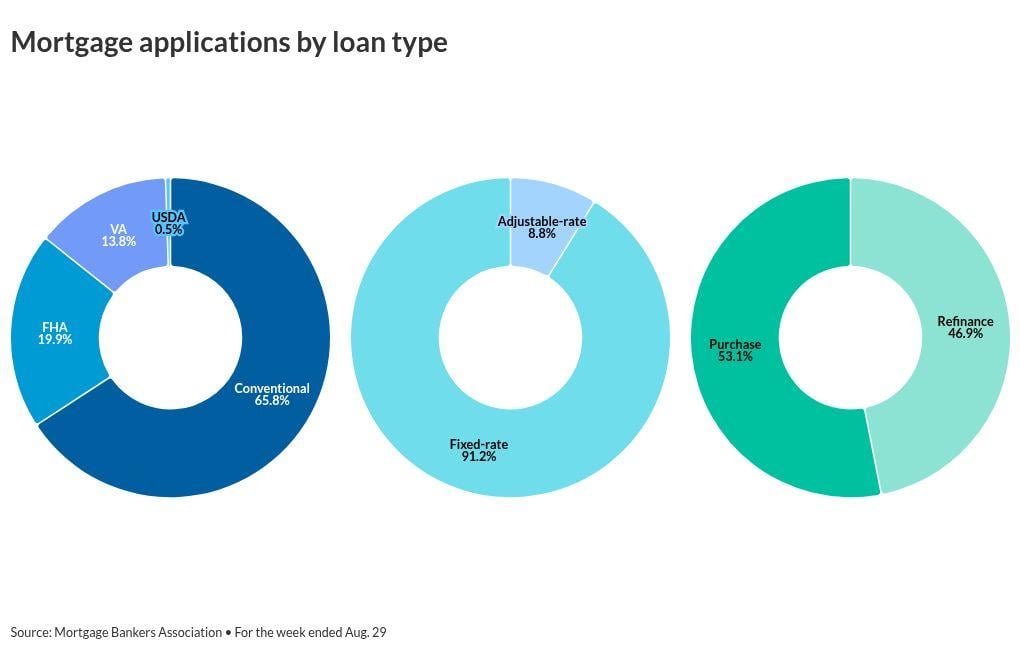
According to the Mortgage Bankers Association (MBA), adjustable-rate mortgages accounted for 10.5% of all mortgage applications during the week ending October 16, 2026.
That's approximately 1 in every 10 mortgage applications nationwide.
Why the growing interest?
During that same week, the MBA reported:
That's a difference of nearly one percentage point.
And when you're financing hundreds of thousands of dollars, even a relatively small difference in interest rates can have a noticeable impact on your monthly payment.
But there's a catch.
The lower interest rate on an ARM isn't necessarily permanent.
These national averages also reflect different upfront points and fees, so the interest rate alone doesn't tell the entire story.
An adjustable-rate mortgage typically starts with an interest rate that's fixed for a specified number of years.
After that initial period, the interest rate can change periodically based on market conditions and the terms of your loan.
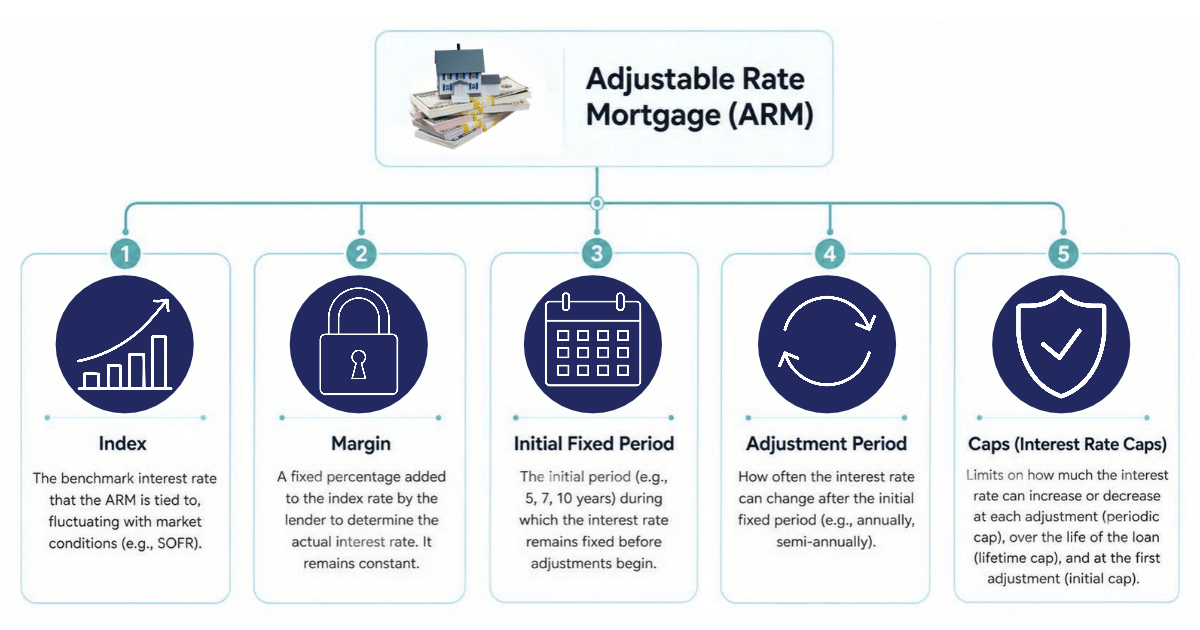
For example, with a 5/1 ARM:
You'll also encounter mortgages described as 5/6, 7/6, or 10/6 ARMs. In those examples, the first number refers to the initial fixed-rate period in years, while the second represents how often the rate can adjust afterward, in months.
So, a 7/6 ARM would have a fixed interest rate for seven years, followed by potential adjustments every six months.
The important distinction is that an ARM's interest rate can go up or down.
If the underlying financial index decreases, your interest rate may decrease, depending on your loan's terms and adjustment limits.
If the index increases, your interest rate could increase, potentially making your monthly mortgage payment more expensive.
Fortunately, most ARMs include rate caps that limit how much the interest rate can change at the first adjustment, at later adjustments, and over the life of the loan.
But those caps don't necessarily prevent a significant payment increase.
Let's put this into perspective using some local numbers.
According to Florida Realtors' September 2026 SunStats report, the median single-family home sale price in the Tallahassee Metropolitan Statistical Area was $329,950.
Let's imagine purchasing a home at that price with a 20% down payment.
That leaves a mortgage balance of approximately $263,960.
Using the national average rates reported by the MBA for the week ending October 16, 2026, here's how the initial monthly principal and interest payments could compare:
Mortgage Type | Interest Rate | Monthly Principal & Interest |
|---|---|---|
30-Year Fixed | 7.41% | $1,829 |
5/1 ARM | 6.46% | $1,661 |
Potential Difference | 0.95 percentage points | $168/month |
That's approximately $2,016 less in principal and interest payments over the first year with the ARM, assuming those starting rates remain in effect.
Over five years, the difference in monthly payments could add up to more than $10,000.
Not exactly pocket change.
However, this example is for illustration only. It excludes property taxes, homeowners insurance, association fees, mortgage insurance, and closing costs. The MBA's surveyed loans also carried different average discount points and origination charges.
And perhaps most importantly, this example assumes the ARM's lower initial interest rate remains fixed for five years.
What happens after that is where the decision becomes more complicated.
This is where homeowners need to understand the fine print.
When an adjustable-rate mortgage reaches its first adjustment date, the interest rate is recalculated according to the loan's terms.
Let's revisit our Tallahassee example.
If the ARM starts at 6.46%, but its interest rate increases to 8.46% after five years, the monthly principal and interest payment could increase from approximately $1,661 to $1,982, assuming a standard 30-year amortization schedule and the remaining 25-year repayment period.
That's approximately $321 more per month.
An increase of that size would depend on the underlying index, the lender's margin, and the loan having a first-adjustment cap that permits a two-percentage-point increase.
And future adjustments could change the payment again.
Of course, interest rates might decrease instead. In that case, an ARM could potentially become less expensive.
But here's the important part.
You shouldn't choose an adjustable-rate mortgage based entirely on the assumption that rates will fall, or that you'll be able to refinance before your rate changes.
Refinancing isn't guaranteed, and selling a home before a particular deadline isn't always within your control.
The Consumer Financial Protection Bureau (CFPB) specifically recommends understanding whether you could afford your mortgage if the interest rate rises to the maximum allowed under your loan agreement.
Tallahassee's housing market has changed considerably from the conditions we experienced a few years ago.
According to Florida Realtors, September 2026 ended with approximately 3.8 months of single-family housing inventory across the Tallahassee MSA.
That means buyers have more choices than they did when inventory was extremely limited, and sellers may need to compete more carefully on pricing, presentation, and terms.
For sellers, understanding how financing affects affordability can help explain why potential buyers respond differently to changes in mortgage rates.
For buyers, having more financing options creates another opportunity to evaluate what makes sense for their budget.
An adjustable-rate mortgage could be worth considering if:
For example, someone who expects to relocate within several years might evaluate an ARM differently than someone planning to stay in the same house for 20 or 30 years.
Neither situation automatically makes an ARM the right or wrong choice.
The decision depends on your financial goals, risk tolerance, and the actual terms being offered.
Before signing up for an adjustable-rate mortgage, make sure you understand exactly how it works.
Here are a few questions worth asking:
And don't forget to compare quotes from multiple lenders.
Two mortgage products with similar initial interest rates can have substantially different adjustment provisions, fees, and long-term costs.
The CFPB's Consumer Handbook on Adjustable-Rate Mortgages is a useful starting point for understanding these terms.
Not necessarily.
A traditional fixed-rate mortgage provides predictability. Your interest rate remains unchanged for the life of the loan, although your total monthly housing payment can still change as taxes, insurance, and other costs fluctuate.
An adjustable-rate mortgage may offer lower initial payments, but it introduces uncertainty about future borrowing costs.
If you value payment stability and plan to stay in your home for many years, a fixed-rate loan might be the more comfortable option.
If you're financially prepared for potential adjustments and the upfront savings are substantial, an ARM might deserve a closer look.
There's also another consideration: What are you doing with the money you're saving?
Lower monthly payments could give you additional financial flexibility, help you build reserves, or allow you to direct more money toward other financial goals.
But the potential savings should be weighed against the possibility of higher payments later.
Ultimately, the best mortgage isn't necessarily the one with the lowest initial interest rate. It's the one that fits your financial situation both today and in the future.
With adjustable-rate mortgages accounting for approximately 1 in 10 mortgage applications nationwide, it's clear that more borrowers are considering alternatives to traditional fixed-rate financing.
And with recent ARM rates averaging nearly a full percentage point below 30-year fixed rates, it's easy to understand why.
For homebuyers, that difference could translate into meaningful initial monthly savings.
But lower payments today shouldn't come at the expense of financial stability tomorrow.
Before choosing an ARM, compare your financing options, understand the potential risks, and make sure the mortgage fits your long-term goals.
Because buying the right house is important. But understanding how you're paying for it matters just as much.
Stay up to date on the latest real estate trends.
All Real Estate News
November 20, 2026

All Real Estate News
November 19, 2026

All Real Estate News
November 19, 2026
All Real Estate News
November 17, 2026

All Real Estate News
November 16, 2026

All Real Estate News
November 15, 2026
You’ve got questions and we can’t wait to answer them.