Credit Scoring Is Changing: 3 Things Homebuyers Should Know
November 3, 2026
All Real Estate News

November 3, 2026
All Real Estate News
Think you need a 700 credit score to buy a home? Or maybe you've checked your credit through an app and assumed homeownership is still a few years away.
You might be surprised by what you actually qualify for.
There's a lot of confusion about credit scores, mortgage requirements, and what it really takes to purchase a home. And with recent changes to how mortgage lenders evaluate credit, some of the advice you've heard in the past may no longer tell the whole story.
For homebuyers, that's worth paying attention to. Whether you're looking for your first home, considering a move, or just wondering if homeownership is financially realistic, understanding your credit options is an important first step.
Here's what you need to know about credit scores, the changes happening in 2026, and what they could mean for buying a home.
Ask someone what credit score they need to qualify for a mortgage, and you'll probably hear a number like 650, 700, or even 750.
But where do those numbers come from?
According to a 2026 survey from Veterans United Home Loans, many prospective homebuyers believe the requirements are higher than they actually are.
The survey found that 66% believed near-perfect credit was necessary to get the best mortgage rates, while 34% thought a score of at least 700 was required just to qualify for a mortgage.
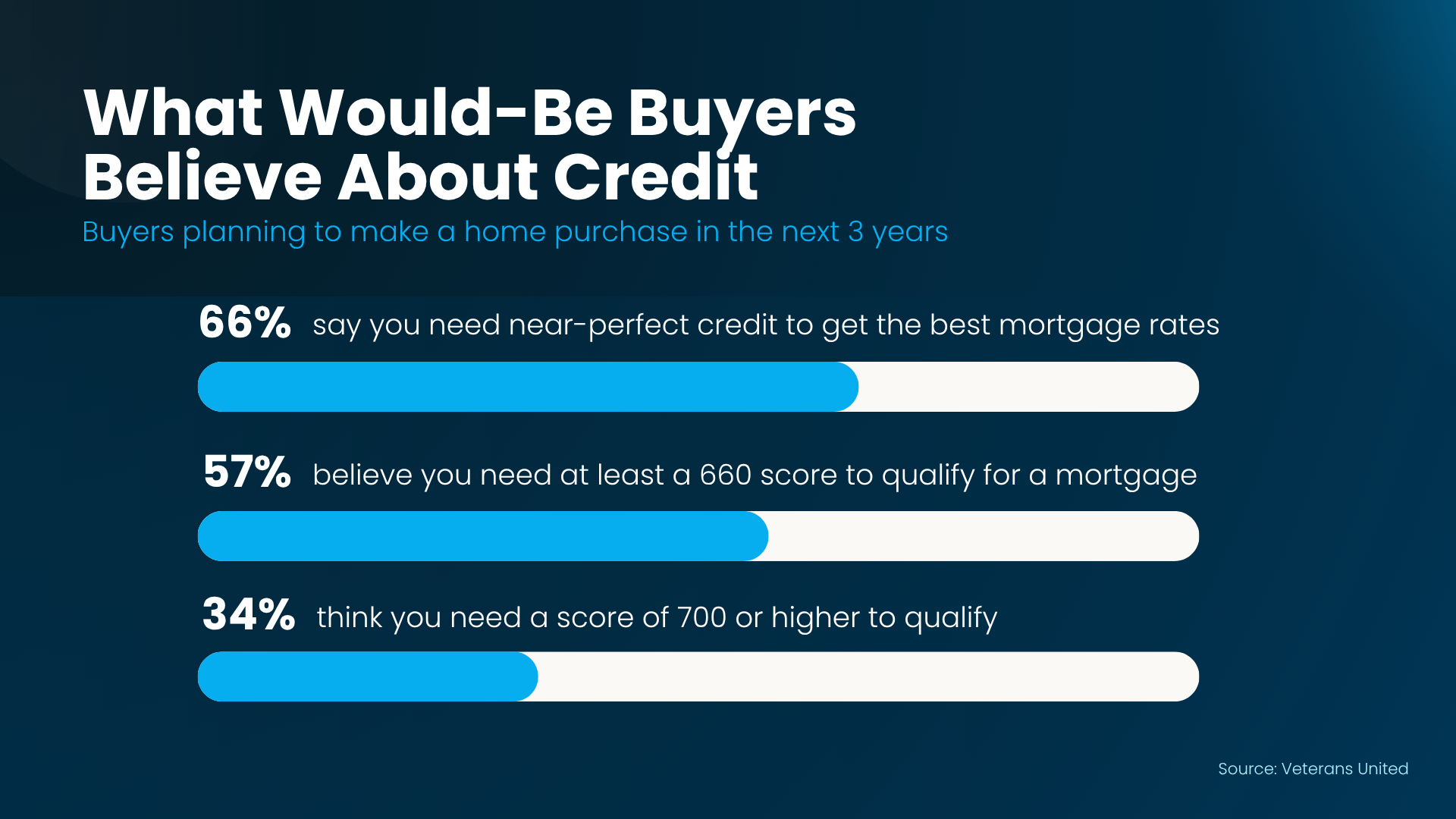
There's an important difference between qualifying for a mortgage and qualifying for the most favorable interest rate.
Generally, stronger credit can help you secure better financing terms. But a less-than-perfect score doesn't automatically mean you can't purchase a home.
And there isn't one universal credit score that every mortgage lender requires.
Different loan programs have different requirements, and lenders may establish additional standards of their own.
Here's a general breakdown of several mortgage programs available to qualified homebuyers in the Tallahassee area.
Mortgage Program | Credit Score Guidelines |
|---|---|
Conventional (Fannie Mae) | No fixed minimum for Desktop Underwriter approvals; generally 620 for manually underwritten fixed-rate loans |
FHA | Generally 580 for maximum financing with 3.5% down; scores of 500–579 may qualify with at least 10% down |
VA | No minimum credit score established by the VA, although individual lenders may require one |
USDA Guaranteed | No universal minimum established by USDA, although lenders evaluate creditworthiness and may have additional requirements |
Florida Housing Homebuyer Program | Generally requires a minimum credit score of 640 |
These are program-level guidelines, not guarantees of loan approval. Credit history, income, debt, assets, property eligibility, and individual lender requirements all play a role.
The takeaway? Don't assume you can't buy a home because your credit score isn't where you think it needs to be.
And if your credit does need work, knowing what loan programs may be available can help you set a realistic goal.
Here's something a lot of prospective homebuyers may not realize: the mortgage industry is changing how credit scores are used.
For years, many conventional mortgage guidelines relied on a minimum credit score of 620.
But in November 2025, Fannie Mae eliminated the fixed minimum third-party credit score requirement for loans evaluated through its automated underwriting system, Desktop Underwriter.
Instead of automatically applying that single cutoff, Desktop Underwriter evaluates a broader collection of credit and financial risk factors to determine whether a loan meets its eligibility standards.
That doesn't mean credit scores no longer matter, or that everyone with a lower score will qualify.
It means the evaluation may be more comprehensive than a single number.
There's another significant change happening, too.
The Federal Housing Finance Agency (FHFA) has authorized additional credit scoring models, including VantageScore 4.0 and FICO 10T, as part of an effort to modernize mortgage credit evaluation.
As of September 2026, eligible conventional loans delivered to Fannie Mae and Freddie Mac can use either Classic FICO or VantageScore 4.0, depending on the lender. FICO 10T has been approved for future implementation.
These newer models can account for financial behavior differently, potentially allowing some borrowers with limited traditional credit histories to be evaluated more effectively.
FHA is also preparing to accept alternative scoring models beginning in January 2027.
So, what does that mean for someone buying a house?
The credit score you see through your bank or a credit monitoring app may not match the score a mortgage lender uses. And depending on the loan program, the lender's evaluation may consider much more than that number alone.
That's why speaking with a knowledgeable lender can be more useful than trying to determine your mortgage eligibility from an app.
This is where understanding your options becomes especially important.
While some mortgage programs have become more flexible with their credit score requirements, certain down payment assistance programs still have their own eligibility standards.
For example, Florida Housing Finance Corporation offers mortgage and down payment assistance programs through participating lenders.
Its Homebuyer Program generally requires a minimum credit score of 640, along with income limits, purchase price limits, homebuyer education, and other qualifications.
That means someone might be eligible for a particular mortgage but not qualify for a specific assistance program.
Tallahassee also has local homeownership resources.
The City of Tallahassee, through the Tallahassee Lenders' Consortium, offers programs intended to help qualifying households with homeownership preparation, financing education, and, when available, down payment or closing cost assistance.
Eligibility, funding availability, and application requirements vary.
And for buyers looking outside the city limits, USDA financing may be worth exploring. Certain eligible properties in rural areas surrounding Tallahassee may qualify for USDA-backed mortgages, subject to location, household income, creditworthiness, and other program requirements.
That's one reason it's helpful to explore your financing options before narrowing your home search.
Sometimes the loan program you're considering can influence which homes fit your budget and eligibility requirements.
Even with the changes to credit scoring, the fundamentals of maintaining healthy credit haven't changed.
Whether you're hoping to purchase a home next month or next year, there are several steps worth taking now.
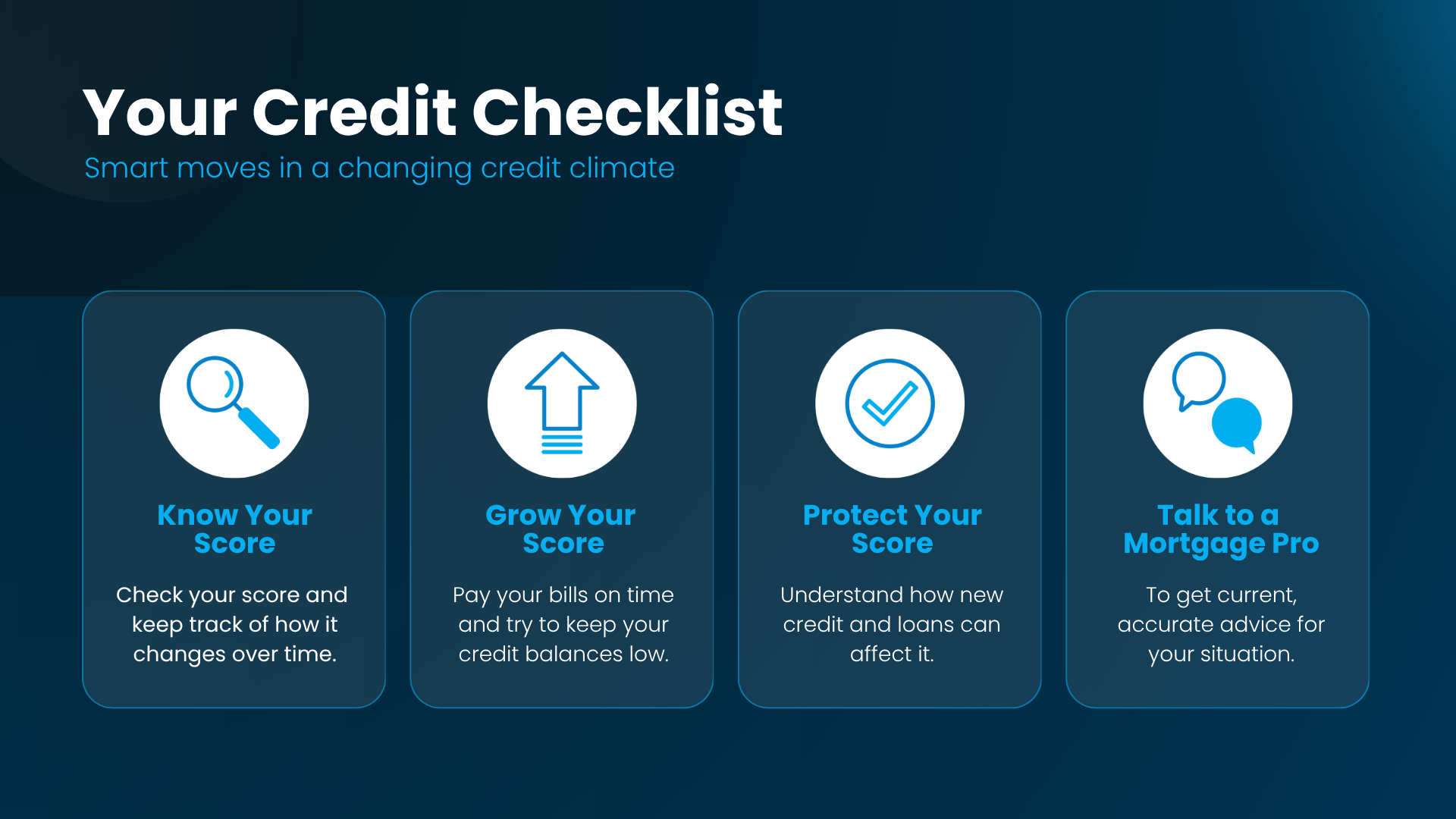
Know your credit. Start by reviewing your credit reports for errors, unfamiliar accounts, or outdated information. You can access free weekly credit reports from Equifax, Experian, and TransUnion through AnnualCreditReport.com. Checking your own credit report doesn't lower your credit score.
Keep payments on time. Payment history is an important factor in credit scoring. Consistently paying bills by their due dates can help build a stronger financial profile over time.
Watch your credit card balances. Using a large portion of your available revolving credit can affect your score. Paying down balances may improve your credit profile, although the impact depends on your individual circumstances.
Be careful about opening new accounts. If you're preparing to apply for a mortgage, avoid taking on unnecessary new debt or opening credit accounts without discussing the potential consequences with your lender.
Talk with a mortgage professional before making major changes. Paying off a loan, closing a credit card, or moving money between accounts may not always have the effect you expect. A lender can help you understand which decisions are most relevant to your mortgage readiness.
The goal isn't necessarily to achieve a perfect credit score. It's to put yourself in the strongest financial position possible for the home you want to purchase.
There's another misconception worth clearing up: you don't have to be ready to purchase a home tomorrow to start learning about mortgage financing.
In fact, getting guidance early can give you more time to prepare.
Maybe your score is already sufficient for a particular loan program. Maybe paying down a credit card could improve your options. Or maybe you need a little time to establish more consistent credit history.
Whatever the situation, it's better to have accurate information than to build a homebuying plan around assumptions.
You can also learn more at the Tallahassee Homebuyer Class and Workshop where local real estate professionals and lenders help explain the homebuying process, financing considerations, assistance programs, and what's happening in our local market.
It's an opportunity to ask questions, learn about the process, and understand what steps may make sense for your situation.
Because whether you're buying your first home in Tallahassee, looking in Crawfordville, or exploring communities throughout the Big Bend, the best place to start is with accurate information.
You don't necessarily need perfect credit to buy a home, and the mortgage industry's credit scoring rules are evolving.
But your credit score is only one part of the financing picture. Income, debt, savings, loan programs, and lender requirements can all affect what you qualify for and how much your monthly payment may be.
Before assuming your credit is holding you back, have a conversation with a qualified mortgage lender.
You may discover that homeownership is closer than you thought. And if you're not quite ready, you'll have a better understanding of what it may take to get there.
Stay up to date on the latest real estate trends.

All Real Estate News
November 4, 2026
All Real Estate News
November 3, 2026

All Real Estate News
November 2, 2026

All Real Estate News
November 2, 2026

All Real Estate News
October 31, 2026

All Real Estate News
October 30, 2026
You’ve got questions and we can’t wait to answer them.