Could a Fixer-Upper Be Your Ticket to Homeownership?
November 23, 2026
All Real Estate News

November 23, 2026
All Real Estate News
Finding a home that checks all your boxes without stretching your budget can be a challenge. But what if the right home isn't the one with the updated kitchen, fresh paint, and perfectly staged living room?
Sometimes, the best opportunities are hiding behind outdated wallpaper, worn flooring, or a kitchen that hasn't seen a renovation since the 90s.
A fixer-upper isn't for everyone. Some homebuyers want to unpack their boxes and start enjoying their new home immediately. But if you're willing to take on a few projects, buying a home that needs some attention could open up possibilities you hadn't considered.
And with renovation financing options that can help cover the cost of improvements, you may not need as much cash up front as you think.
One of the biggest advantages of considering a fixer-upper is the potential for a lower purchase price.
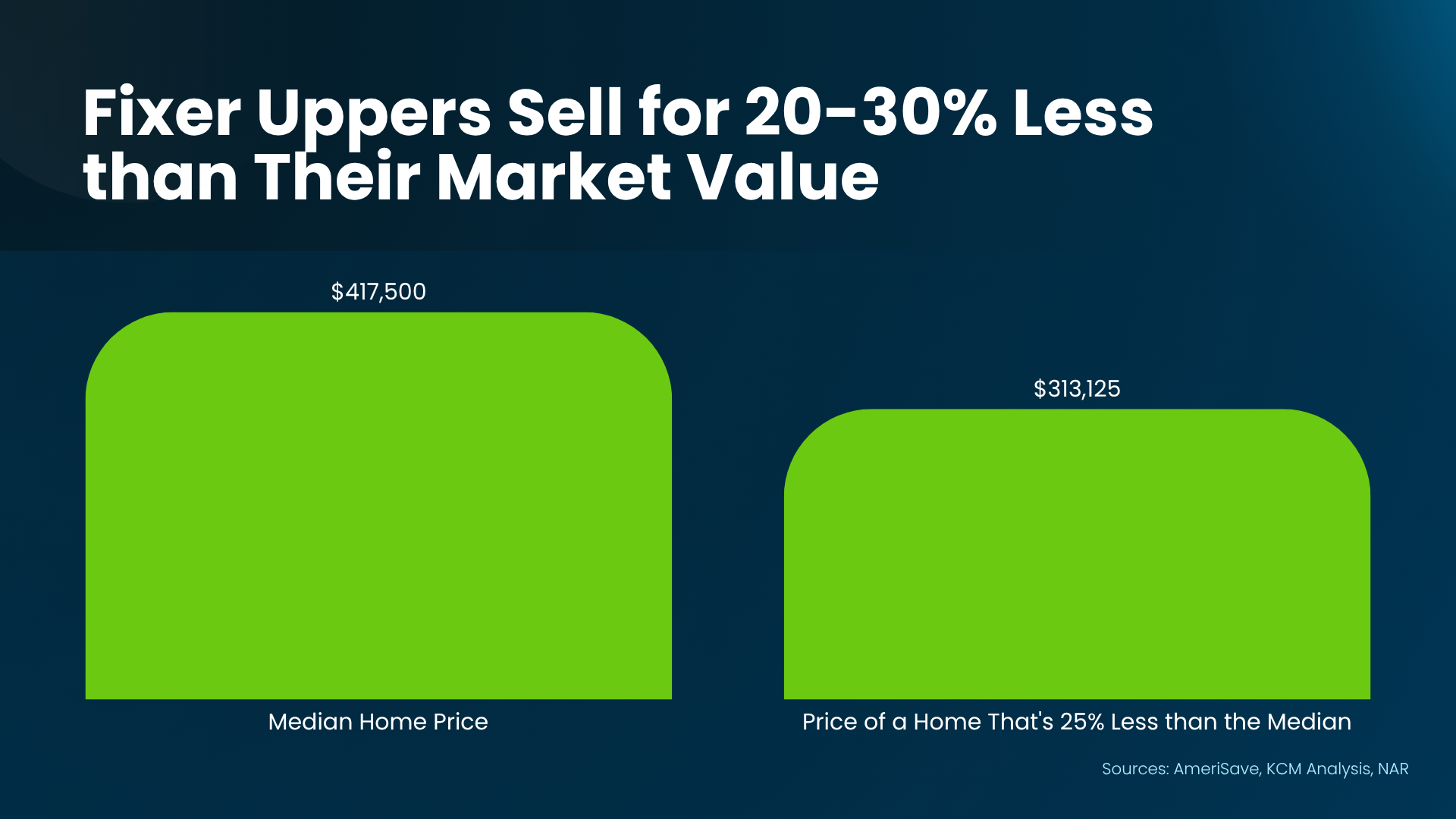
According to Florida Realtors October 2026 housing market data, the median sold price for a home in Tallahassee was approximately $339,966. For homebuyers searching below that price point, expanding the search to include properties that need updating could uncover additional opportunities.
While these are national numbers, to put the potential difference into perspective, consider a hypothetical home priced 25% below Tallahassee's median sold price.
The important question isn't simply how much less you could pay for the home. It's how much you'll spend getting it into the condition you want.
For example, if a $255,000 home needs $40,000 in improvements, you're approaching $295,000 before accounting for unexpected repairs, financing costs, and other expenses.
That's why getting reliable estimates before purchasing is so important. A dated kitchen might be a manageable project, but discovering that the home needs a new roof, extensive electrical work, and major plumbing repairs could change the financial picture considerably.
One advantage of searching for homes is the variety of established neighborhoods and housing styles throughout the community.
From older homes in areas like Levy Park and Indianhead Acres to properties in established in Killearn Lakes, there are opportunities to consider homes with character, mature landscaping, and floor plans that may benefit from modernization.
Some properties might need little more than new flooring, paint, lighting, or kitchen updates. Others could require significant improvements to their major systems.
For Tallahassee homebuyers, particularly those considering older properties, it's worth paying close attention to several things:
The good news is that you don't necessarily need to tackle every cosmetic improvement at once. Depending on the property's condition and your financing, some projects may be completed gradually as your budget allows.
However, repairs necessary for safety, insurability, or loan approval may need to be completed much sooner.
One of the biggest concerns with purchasing a fixer-upper is figuring out how to pay for the improvements after putting money toward a down payment and closing costs.
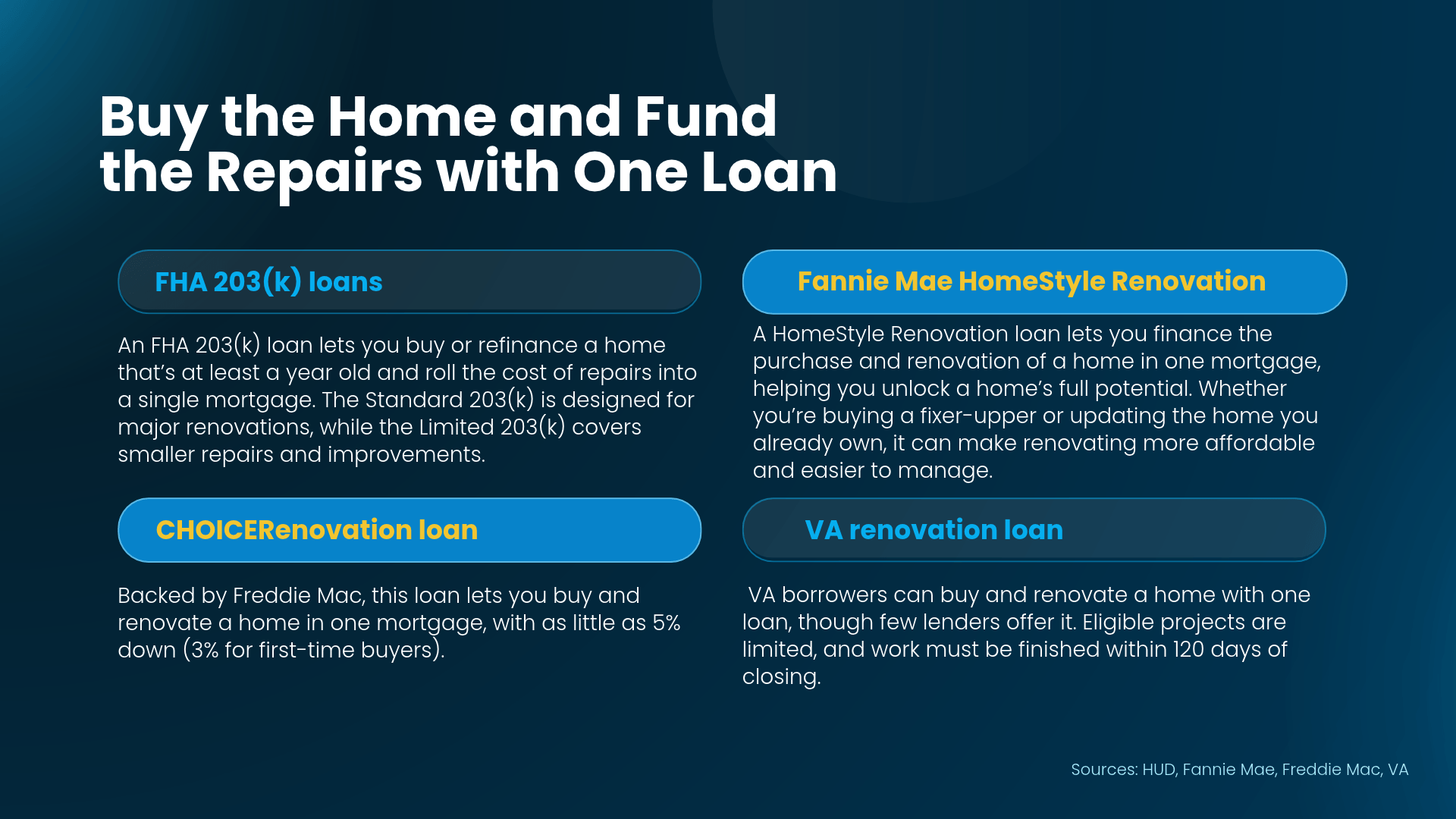
Fortunately, several mortgage programs allow eligible homebuyers to combine the purchase price and qualifying renovation expenses into a single loan.
Options include:
FHA 203(k) Rehabilitation Loans: These government-insured loans can help finance the purchase or refinance of an eligible home along with qualifying improvements. The Standard 203(k) is designed for more extensive projects, including structural repairs, while the Limited 203(k) can finance qualifying nonstructural improvements, generally up to $75,000 in rehabilitation costs under current FHA guidelines.
Fannie Mae HomeStyle Renovation: This conventional mortgage program allows eligible borrowers to finance a home purchase and qualifying renovations together. Projects may include repairs, remodeling, and improvements, subject to lender and program requirements.
Freddie Mac CHOICERenovation: Another conventional financing option that combines a home purchase with renovation costs. Freddie Mac also offers CHOICEReno eXPress for smaller-scale improvement projects.
VA Alteration and Repair Loans: Eligible borrowers using VA financing may be able to include qualifying repairs and improvements with a home purchase. Availability varies because not all VA lenders offer this type of financing.
These programs can be especially helpful when a home needs improvements that would be difficult to fund entirely out of pocket.
There are important differences, though. Renovation loans may require approved contractors, detailed project estimates, inspections, and specific completion deadlines. They aren't necessarily designed to let you work on the house at your own pace over several years.
Before making an offer on a property that needs significant work, it's worth speaking with a lender who has experience with renovation loans. Understanding the available financing options early can help you determine which properties fit your budget and renovation plans.
Tallahassee and Leon County have programs intended to help preserve existing housing and assist qualifying homeowners with needed repairs.
For example, the City of Tallahassee Home Rehabilitation Program provides eligible existing homeowners with up to $75,000 in forgivable, zero-interest assistance for qualifying improvements, including certain roofing, plumbing, flooring, and accessibility projects. The City's application portal is currently closed, and eligibility restrictions apply.
Leon County Housing Services also administers rehabilitation and emergency repair programs for eligible homeowners in unincorporated areas. The County began accepting a new round of applications in October 2026, subject to available funding and program requirements.
It's important to understand that these programs are primarily intended for qualifying existing homeowners. They shouldn't be assumed to provide renovation funds for a home you're planning to purchase.
Still, they're useful resources to know about if you're already a homeowner facing significant repairs.
A lower price doesn't automatically make a home a better deal.
Before buying, you'll want to understand what the property is worth in its current condition, what comparable updated homes are selling for, and what it may realistically cost to make the improvements.
A thorough inspection is a good starting point, but you'll also want estimates from qualified contractors for the work you're considering. Depending on the property, additional evaluations by specialists may be worthwhile.
It's also smart to build some flexibility into your renovation budget. Older homes can reveal surprises once work begins, and even relatively straightforward projects can become more expensive than expected.
Finally, consider how the purchase price, renovation expenses, and financing costs compare with the potential market value after improvements. Not every renovation adds dollar-for-dollar value, and purchasing a fixer-upper doesn't guarantee immediate equity.
The goal is to find a property that makes sense for your finances, your lifestyle, and your plans for the future.
You don't necessarily need a perfectly updated home to find the right place to live.
A home that needs some TLC could offer a lower entry price, an opportunity to make improvements that reflect your personal style, and a way to consider neighborhoods or properties that might otherwise be outside your budget.
But the key is knowing what you're getting into before you buy.
Because sometimes the right home doesn't come with everything you want. Sometimes, it comes with the potential to make it your own.
Stay up to date on the latest real estate trends.
All Real Estate News
November 23, 2026
All Real Estate News
November 20, 2026

All Real Estate News
November 19, 2026
All Real Estate News
November 19, 2026

All Real Estate News
November 17, 2026

All Real Estate News
November 16, 2026
You’ve got questions and we can’t wait to answer them.