Downsizing: Aging in Place vs. 55+ Communities
October 15, 2026
All Real Estate News

October 15, 2026
All Real Estate News
You've spent years making your house feel like home. Maybe you've raised a family there, hosted countless gatherings, watched the trees grow, or finally finished that home improvement project you've been putting off for a decade.
But as you start thinking about the years ahead, you may be asking yourself a different question: Is this still the right house for the next chapter of my life?
For many homeowners, that decision comes down to two possibilities: staying in the home they love and making it easier to maintain, or downsizing into a property that better fits their changing needs.
And with local 55+ communities, independent living options, and smaller homes to consider, there may be more possibilities than you realize.
The right choice isn't necessarily about finding a smaller house. It's about finding a home that makes life a little easier and gives you more time to enjoy it.
You probably have a few good reasons to stay right where you are.
Maybe you love your neighborhood, you're close to friends and family, or you've finally got that backyard looking exactly how you want it.
Staying in your current home as you get older is called aging in place. And for many homeowners, it's an appealing option.
But there's an important consideration: the home that worked perfectly for you 20 years ago may not be as convenient 10 or 20 years from now.
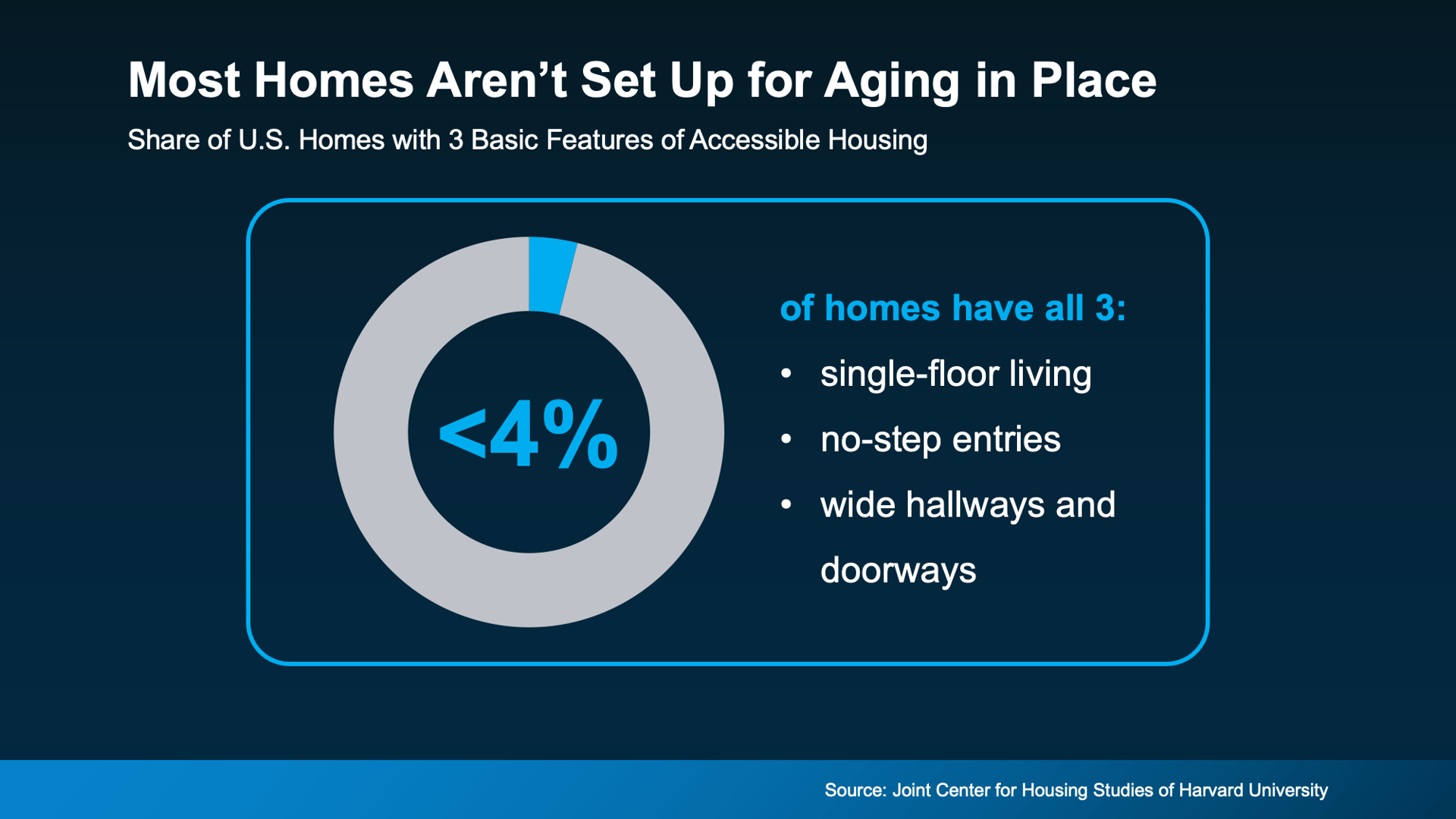
According to the Joint Center for Housing Studies of Harvard University, fewer than 4% of U.S. homes have all three foundational accessibility features: single-floor living, a no-step entry, and wide hallways and doorways.
That doesn't mean every homeowner needs to remodel. But it does suggest that many homes could benefit from modifications to make everyday activities easier.
According to the National Association of Home Builders, 56% of remodelers surveyed are involved in aging-in-place home modification projects.
Some of the most common improvements include installing grab bars, replacing traditional bathtubs with curbless showers, widening doorways, and adding higher toilets.
A large yard that's been a source of pride for decades can eventually become a lot of work. An older home's roof, HVAC system, and exterior maintenance may require more attention. And steps, uneven walkways, or a two-story layout could become less convenient over time.
None of these necessarily means you need to move.
But it's worth comparing the cost of making your current home work better with the cost of moving into a property that's already designed around your needs.
Here's something that can make the decision a little easier.
If you've owned your home for a long time, you may have accumulated substantial home equity.
Home equity is the difference between your property's current market value and what you still owe on it.
And after years of mortgage payments, potentially combined with home price appreciation, that equity may represent a significant financial resource.
For example, imagine your home is worth $400,000 and you have $75,000 remaining on your mortgage.
That would mean you have approximately $325,000 in equity.
Of course, that's not the same as the cash you'd receive from selling. You would still need to account for selling expenses, any additional liens, and other applicable costs.
But depending on your circumstances, the proceeds could help fund a smaller home, reduce or eliminate a mortgage payment, or provide additional financial flexibility.
And you don't necessarily need to sell to benefit from your equity. Some homeowners may explore financing renovations with existing savings or available home equity products, although borrowing introduces additional costs and risks.
The important thing is knowing what your home is worth before deciding whether staying or moving makes more financial sense.
If you're curious about your home's estimated value, you can get started at HomeSweetHomeBot.com.
It's an easy first step toward understanding your options, although an automated estimate isn't a substitute for a detailed market analysis of your particular property.
If the idea of spending less time maintaining a house sounds appealing, a 55+ community may be worth exploring.
These communities are generally designed for adults seeking a particular type of housing and lifestyle, often with shared amenities, planned activities, and opportunities to connect with neighbors.
And you don't necessarily have to leave Tallahassee to find one.
For example, Camellia Oaks in northeast Tallahassee is marketed as a 55+ community offering cottage-style homes and shared recreational amenities.
Premier Fine Homes has also announced a 55+ residential development within Tallahassee's Canopy community, with construction underway as of October 2026.
These are examples of active adult housing, but there are other retirement housing options around town as well.
It's important to distinguish between a 55+ residential neighborhood, an independent living community, and an assisted living facility. They can offer very different ownership arrangements, services, expenses, and eligibility requirements.
According to Rocket Mortgage, some of the potential advantages of 55+ communities include shared amenities, community activities, reduced exterior maintenance responsibilities, and opportunities for social connection.
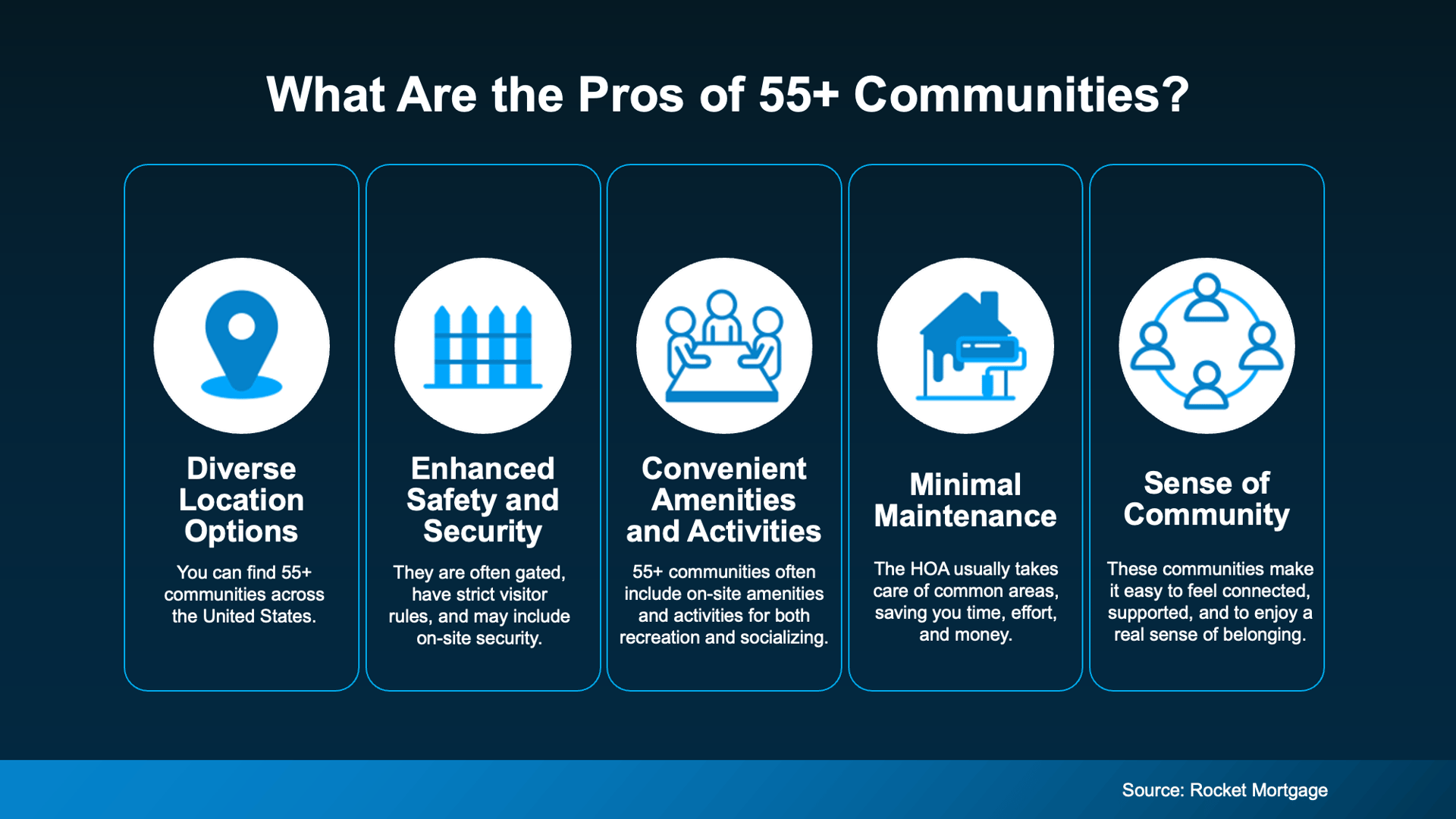
Amenities, security features, maintenance responsibilities, and associated fees vary by community.
For some Tallahassee homeowners, the attraction isn't necessarily the age-qualified community itself. It's the prospect of a smaller, more manageable home with less upkeep.
Imagine trading a large lawn and a never-ending home maintenance list for a smaller property with fewer responsibilities.
Of course, there's a tradeoff.
Many communities charge HOA or service fees, and those costs can be significant. Some maintain landscaping and common areas but leave individual homeowners responsible for exterior repairs, insurance, or other expenses.
Others provide more extensive services, sometimes with additional entrance or monthly fees.
That's why it's important to compare the full cost of living in a community, not just the home's purchase price.
And remember, you don't have to move into a 55+ community to downsize.
A smaller single-story home, townhome, or condominium in a traditional Tallahassee neighborhood may offer much of the convenience you're looking for without age-related community requirements.
Here's something Tallahassee homeowners should absolutely consider when planning to downsize.
If your current property qualifies for Florida's homestead exemption, you may have accumulated a valuable property tax benefit through the state's Save Our Homes assessment limitation.
This limits annual increases in the assessed value of qualifying homesteaded property.
And when you move to another qualifying Florida homestead, you may be able to transfer some or all of that accumulated assessment benefit through a process known as portability.
That could help reduce the taxable value of your next home.
The Leon County Property Appraiser provides information about homestead exemptions, Save Our Homes, portability applications, and estimated property taxes.
It's an important consideration because purchasing a less expensive house doesn't automatically mean your property taxes will be lower.
Your next property's assessed value, exemptions, and eligibility for portability can all affect the outcome.
Before selling your longtime Tallahassee home, it's worth understanding how those benefits may apply to your next purchase.
There's no one-size-fits-all answer.
Some homeowners are happiest staying exactly where they are, making a few thoughtful improvements, and continuing to enjoy the home they've built memories in.
Others reach a point where the responsibilities of owning a larger property outweigh the benefits.
Before making a decision, consider a few questions.
If you stay: How much would it cost to make your home more accessible? What major repairs could be needed over the next several years? And how much time and money are you currently spending on maintenance?
If you move: What would you actually receive after selling your current home? What would a smaller property cost? Would you have HOA fees, community fees, or different insurance expenses? And how would the move affect your property taxes?
There's also the lifestyle side of the decision.
Do you want to be closer to family? Would you enjoy having more opportunities for social activities? Would you prefer a home that's easier to leave behind when you travel?
And perhaps most importantly, what type of home would make your everyday life more comfortable?
For homeowners who enjoy community activities but don't want to move, Tallahassee also has resources like the Tallahassee Senior Center, which offers opportunities to stay active and connected without changing your address.
Sometimes, staying put and changing how you use your home is the best solution.
Other times, moving opens up possibilities you hadn't considered.
Downsizing isn't necessarily about giving something up.
Sometimes it's about trading square footage and maintenance responsibilities for a home that better fits the life you want to live.
Whether that means renovating your existing Tallahassee home, purchasing a smaller property, or exploring a 55+ community, the best decision starts with understanding your options.
And your home's equity could play an important role in making that next chapter possible.
Curious what your Tallahassee home might be worth? Start with a home value estimate at HomeSweetHomeBot.com.
When you're ready to explore the possibilities, a local real estate expert can help you evaluate your current home's market value, estimate potential selling proceeds, and explore properties that better fit your next chapter.
Because the goal isn't necessarily a bigger house or a smaller house. It's finding the right home for the life you want to live.
Stay up to date on the latest real estate trends.

All Real Estate News
October 16, 2026
All Real Estate News
October 15, 2026

All Real Estate News
October 14, 2026
Articles for Buyers
October 13, 2026

All Real Estate News
October 12, 2026
All Real Estate News
October 9, 2026
You’ve got questions and we can’t wait to answer them.