The Home Insurance Move That Could Save You Hundreds
November 4, 2026
All Real Estate News

November 4, 2026
All Real Estate News
If you've opened your homeowners insurance renewal lately and wondered why protecting your house costs so much, you're certainly not alone.
Between property taxes, mortgage payments, maintenance, and insurance, the cost of owning a home can add up quickly. And for Florida homeowners, insurance has become a particularly important part of that equation.
But here's some encouraging news: Insurance costs are rising more slowly nationwide, and homeowners who shop around are finding opportunities to save.
According to new research from Intercontinental Exchange (ICE), homeowners who switched insurance companies saved an average of $440 annually compared with those who stayed with their existing carrier.
And with some insurance companies announcing rate reductions here in Florida, now may be a good time for homeowners to take another look at what they're paying.
Let's start with the bigger picture.
According to ICE's September 2026 Mortgage Monitor, property insurance costs increased 8.7% nationally over the previous year. That's still a substantial increase, but the pace of growth has slowed from earlier periods.
In fact, insurance costs increased just 1.8% during the second quarter of 2026, the smallest quarterly increase recorded since ICE began tracking the metric.
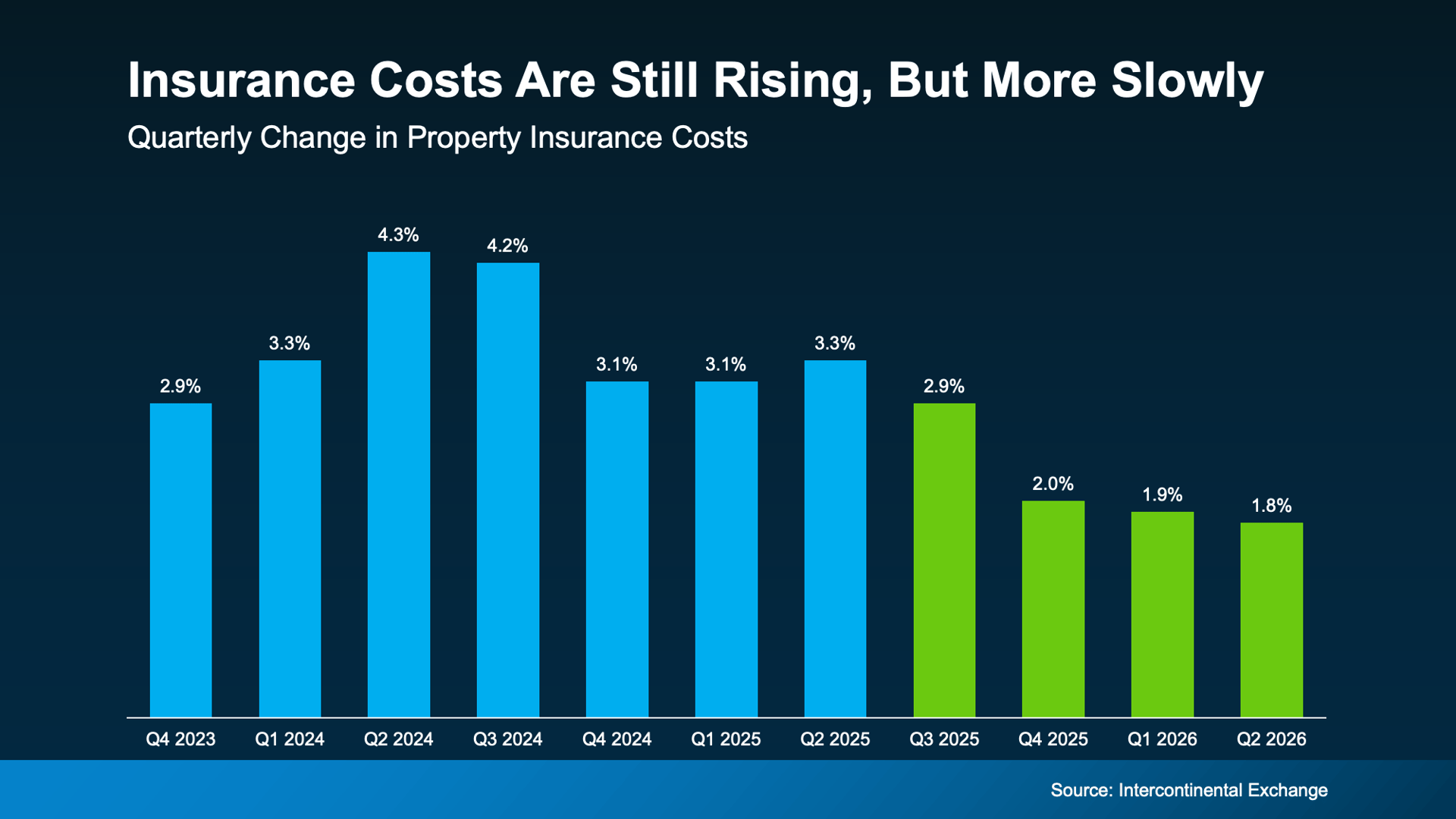
That's a meaningful change from 2024, when quarterly increases reached 4.3%.
But there's an important distinction here.
Insurance costs increasing more slowly doesn't mean your insurance bill is going down.
It simply means that, nationally, the rate of increase is easing. Individual homeowners may still receive significant renewal increases depending on their property, insurance company, coverage, and location.
And here in Florida, the story gets a little more interesting.
Florida has spent the last several years dealing with challenges involving property insurance availability, premiums, and the financial pressures facing insurance companies.
However, recent reports from the Florida Office of Insurance Regulation (OIR) suggest there may be some improvement.
In September 2026, OIR announced it had approved rate decreases for four insurance companies, affecting more than 62,000 policies statewide.
Since January 2024, 48 companies had filed requests for rate decreases, while another 53 had requested no rate change.
That doesn't mean every Florida homeowner will see lower premiums, and these statewide filings don't necessarily reflect the experience of every Florida household.
But they do suggest that the insurance market may be offering homeowners more opportunities to compare rates.
According to the Florida Office of Insurance Regulation's July 2026 Property Insurance Stability Report, the average annual homeowners insurance premium in Leon County was $2,538 for traditional policies including wind coverage.
That figure reflects data as of March 31, 2026, and represents an average across insured properties, not a quote for any particular home.
For comparison, the same report showed average premiums of $2,723 in Gadsden County, $2,292 in Wakulla County, and $2,782 in Jefferson County.
Actual premiums can vary considerably depending on the property.
A home in an established Tallahassee neighborhood with an older roof may have different insurance considerations than a newer home with updated construction features. Insurers may also evaluate property condition, coverage limits, claims history, and other underwriting factors.
That's why comparing actual quotes is more helpful than relying exclusively on county averages.
And the latest national research suggests that comparing those quotes may be worth the effort.
Here's where the findings from ICE get particularly interesting.
Homeowners who stayed with their existing insurance company experienced an average annual premium increase of 10.4%.
Meanwhile, homeowners who switched private insurance carriers saw their premiums decrease by an average of 6.6%.
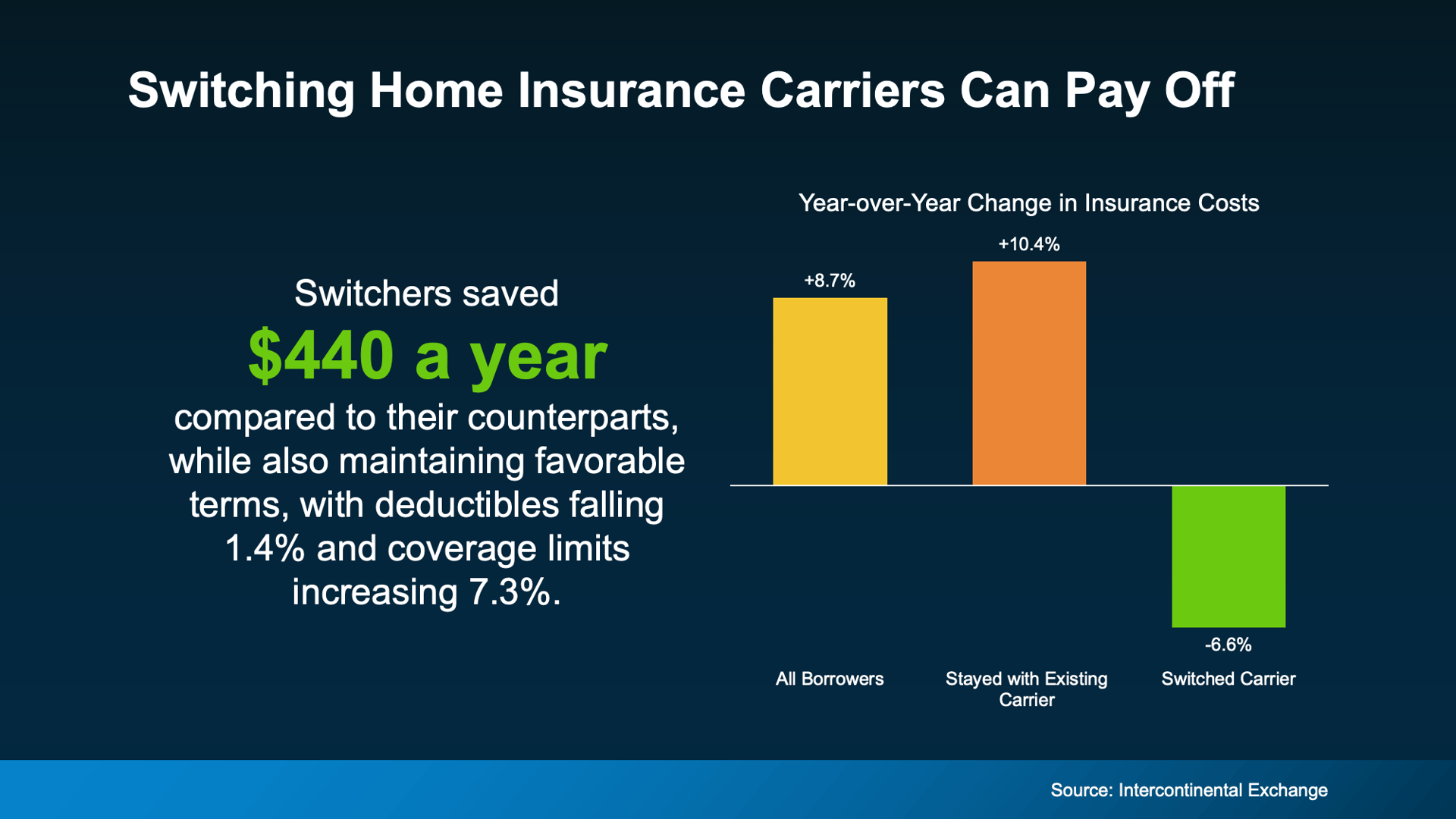
The difference worked out to approximately $440 in annual savings for homeowners who switched compared with those who didn't.
And surprisingly, those savings didn't necessarily come from accepting less coverage.
ICE found that homeowners who switched carriers also experienced average deductible reductions of 1.4% and coverage limit increases of 7.3%.
In other words, the homeowners studied weren't simply saving money by stripping away their insurance protection.
These are national averages, and the results don't guarantee that switching will lower every homeowner's premium. The research also doesn't establish that switching alone caused the differences.
Still, the findings highlight something worth remembering: Being a loyal customer doesn't necessarily mean you're getting the most competitive insurance rate.
Before automatically renewing your policy, it may be worth finding out what other insurers can offer.
Finding a lower premium is great. Finding a lower premium without sacrificing important coverage is even better.
Before switching insurance companies, here are five things worth considering.
Two insurance policies with similar premiums may offer very different protection.
Look carefully at dwelling coverage, personal property limits, liability protection, hurricane deductibles, roof coverage, and exclusions.
Also, make sure you're comparing replacement cost coverage with replacement cost coverage, rather than assuming two policies will pay claims the same way.
A cheaper policy isn't necessarily a better deal if it leaves you responsible for significantly more money after a covered loss.
This is particularly relevant for Florida homeowners.
Certain construction features designed to reduce wind damage may qualify for insurance premium discounts.
Depending on the property, these can include roof covering materials, roof-to-wall connections, roof deck attachment methods, and other qualifying features.
A wind mitigation inspection documents eligible features so your insurer can evaluate available credits.
If you've replaced your roof or made improvements to your home, ask your insurance agent whether an updated wind mitigation inspection could help.
The Florida Office of Insurance Regulation provides additional information about wind mitigation inspections and potential insurance savings.
In Florida, homes come in a wide range of ages, construction styles, and conditions.
And the roof can be an important consideration when obtaining insurance.
An insurer may evaluate its age, condition, remaining useful life, and construction characteristics when deciding whether to offer coverage and at what price.
Some companies may also require a four-point inspection for an older home. This inspection generally evaluates the roof, electrical system, plumbing, and HVAC system.
If you've recently replaced your roof or completed significant improvements, make sure your insurance agent has accurate documentation.
Flood insurance deserves its own conversation, especially when evaluating properties with potential drainage or flood risks.
Most standard homeowners insurance policies don't cover damage caused by flooding.
And while a property may not be located in a designated high-risk flood zone, that doesn't mean flooding is impossible.
Leon County provides flood risk information and mapping resources to help property owners understand potential exposure.
You can explore those resources through Leon County's Flood Protection Program.
When comparing homeowners insurance quotes, make sure you understand whether separate flood coverage is required or advisable for your property.
You don't necessarily have to wait until your current policy expires to explore other insurance options.
A licensed insurance agent may be able to compare available companies, coverage options, and discounts.
Florida's Office of Insurance Regulation also provides a free CHOICES Homeowners Insurance Rate Comparison Tool, which allows homeowners to review illustrative rates from insurance companies in their county.
Keep in mind that these are sample rates based on standardized properties, not personalized insurance quotes.
If you decide to switch carriers, coordinate the new policy's effective date and your mortgage servicer's insurance and escrow requirements before canceling your existing coverage.
The goal is to avoid any interruption in protection.
For homeowners preparing to sell, insurance can be more than just another ownership expense.
It can also become an important consideration during the transaction.
Buyers using mortgage financing generally need to obtain acceptable property insurance before closing. If the home has a roof issue, an older electrical system, or another condition that creates insurance complications, the transaction could face delays or additional negotiations.
That's one reason we encourage sellers to consider a pre-listing inspection and gather documentation for major improvements before putting their home on the market.
Understanding potential property concerns early can help sellers evaluate repairs, prepare disclosures, and anticipate questions that may arise during the buyer's insurance and financing process.
For buyers, homeowners insurance is also an important part of determining the actual cost of purchasing a property.
Your monthly mortgage payment isn't just principal and interest. It may also include property taxes, homeowners insurance, and mortgage insurance, depending on your loan.
That means an insurance quote can affect your monthly housing budget and potentially your financing qualifications.
Getting an insurance estimate early, rather than waiting until the days before closing, can help avoid unexpected affordability concerns.
Homeowners insurance remains a significant expense, but there are signs that the market may be improving.
Nationally, premium increases are slowing. In Florida, some insurance companies are requesting or receiving rate reductions. And research suggests homeowners who compare carriers may find meaningful savings.
For homeowners, the takeaway is simple: Don't assume the insurance company you've always used is necessarily offering the best rate or coverage for your situation.
Review your current policy, understand your coverage, ask about available discounts, and compare your options with a licensed insurance professional.
Whether you're planning to stay in your home for years or preparing to sell, knowing your insurance costs and options can help you make more informed financial decisions.
Because sometimes the easiest way to save money on your home isn't another renovation or a lower mortgage rate.
It's taking a closer look at a bill you're already paying.
Stay up to date on the latest real estate trends.
All Real Estate News
November 4, 2026

All Real Estate News
November 3, 2026

All Real Estate News
November 2, 2026

All Real Estate News
November 2, 2026

All Real Estate News
October 31, 2026

All Real Estate News
October 30, 2026
You’ve got questions and we can’t wait to answer them.