Is Fall a Better Time To Buy a Home? What the 2026 Numbers Show.
September 15, 2026
All Real Estate News
September 15, 2026
All Real Estate News
In Tallahassee, fall does not always mean sweater weather. But the housing market can still change seasons.
If you’ve been waiting for mortgage rates to make a dramatic move before jumping back into your home search, there may be another shift worth paying attention to.
Nationally, fall has historically brought a combination home shoppers tend to like: more homes to choose from, softer asking prices, and, in some cases, more room to negotiate.
And Tallahassee is already showing several of those same signals.
In August 2026, Tallahassee had 1,786 active residential listings. Homes took an average of 91 days to sell, 308 listings had price reductions, and closed sales averaged 97.59% of asking price, according to local market data.
That does not mean every home is suddenly a bargain. It does mean the market heading into fall looks different from the faster, tighter markets many people got used to a few years ago.
One of the most frustrating parts of house hunting is trying to make a major decision when there simply are not many good options.
Historically, fall can help.
Looking at national Realtor.com data from 2016 through 2026, the average number of active listings was highest during the September through November period.
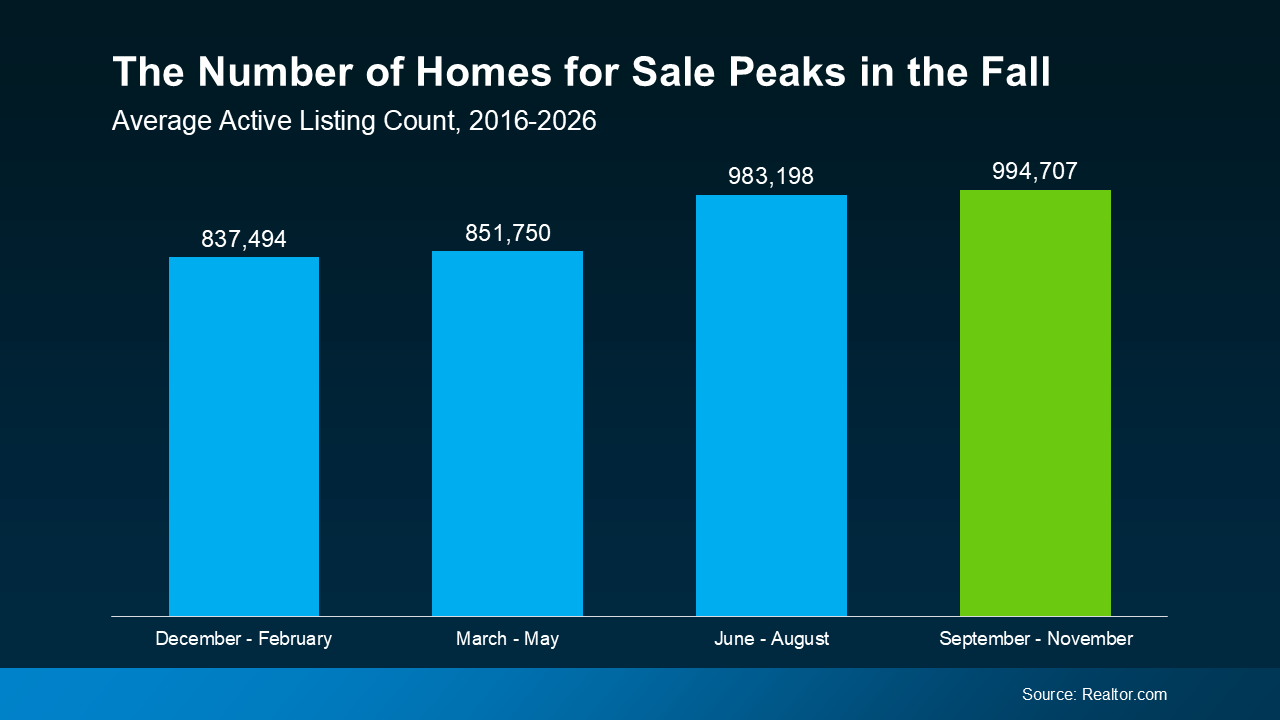
Tallahassee has been showing its own version of that inventory shift.
There were 1,786 active residential listings in August 2026, according to the Tallahassee Board of REALTORS®. Another 771 new listings came on the market during August.
Florida Realtors data also shows months of housing inventory increasing through the year, from 3.4 months in February to 3.8 months in July.
That does not mean Tallahassee suddenly has too many homes for sale. In fact, July’s 3.8 months of inventory was still 2.6% lower than July 2025.
But it does mean someone shopping for a home today has a market with considerably more breathing room than the ultra-low-inventory years when multiple shoppers were often chasing the same handful of properties.
More choices can matter almost as much as price. It can mean being able to compare homes, neighborhoods, condition, updates, insurance considerations, commute times, and monthly costs instead of feeling pressured to choose whichever acceptable house happens to hit the market.
More inventory is helpful. But the next question is usually the one everyone really wants answered:
What are prices doing?
Nationally, HousingWire data shows a seasonal pattern in which median single-family home asking prices tend to peak during June through August and move lower during September through November.
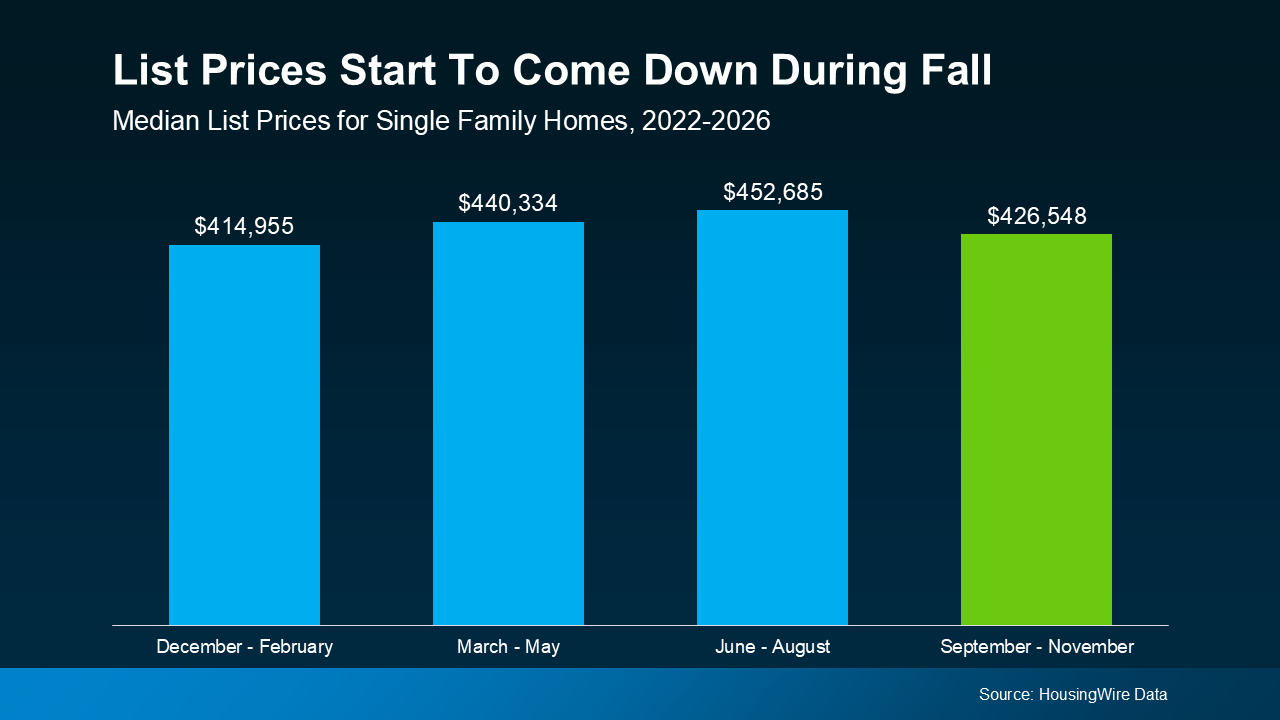
There is an important distinction here. That national graphic looks at list prices, while the Tallahassee numbers below are closed sale prices, so they are not an apples-to-apples comparison.
But the local direction is still worth watching.
Tallahassee’s median residential sale price was $315,000 in June, fell to $297,000 in July, and came back slightly to $300,000 in August.
The average sale price followed a similar pattern, moving from $374,627 in June to $355,191 in August.
So, no, Tallahassee prices did not simply fall month after month. And one or two months of data certainly does not mean every home in Tallahassee lost value.
The mix of homes that sells each month changes, and that can move median and average prices around.
What the numbers do tell us is that the typical August residential sale remained below its early-summer level. For someone actively looking for a home, that is worth paying attention to.
This may be the most interesting part of the local story.
Nationally, Realtor.com’s seasonal data shows the share of listings with a price cut averaging 16.8% during June through August and 16.9% during September through November.
In other words, fall is not necessarily when sellers suddenly start slashing prices. Price reductions tend to become relatively common by late summer and remain elevated into fall.
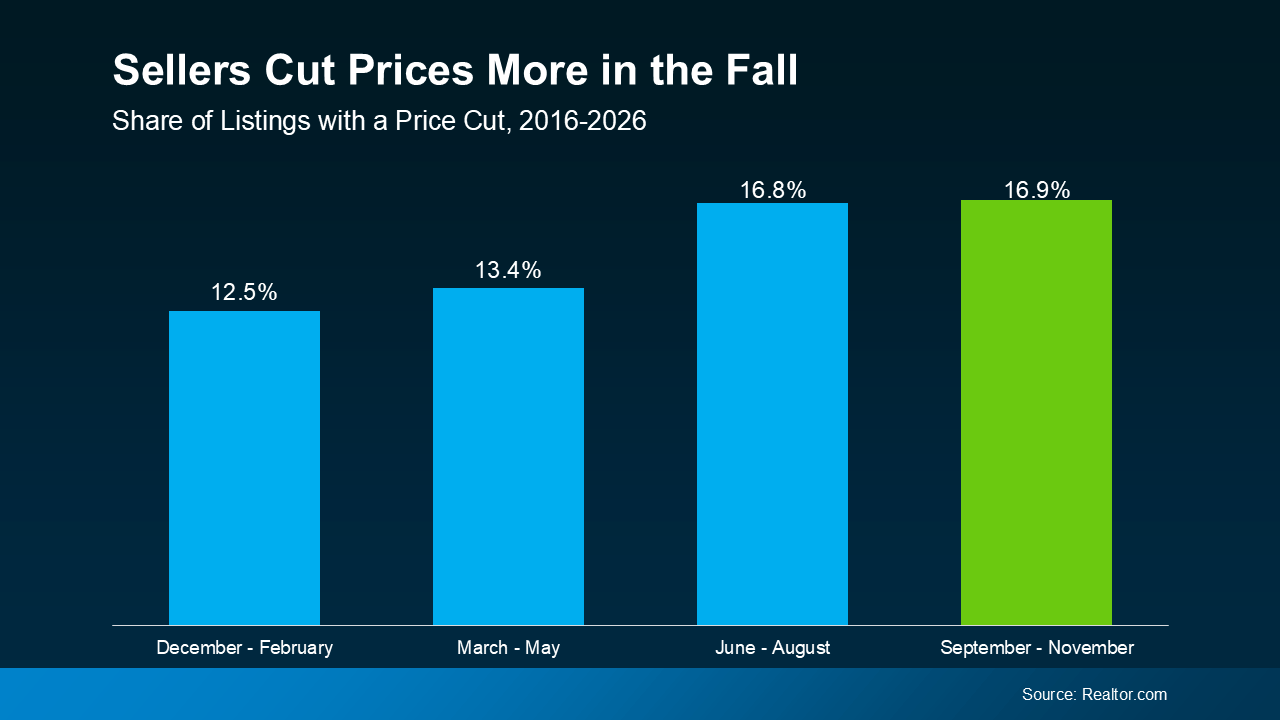
Tallahassee appears to be experiencing something similar.
There were 265 residential price reductions in June, 318 in July, and 308 in August, according to Altos Research.
So August did not set a new high. July did.
But August still had about 16% more price reductions than June.
That matters because price reductions are one of the clearest signals that sellers are responding to the market instead of simply waiting for shoppers to meet their original asking price.
It does not mean every reduced property is suddenly a great deal. Sometimes the original price was simply too high. Sometimes condition, location, insurance costs, needed repairs, or other factors are affecting demand.
But it does create opportunities for careful shoppers to look beyond the newest listings and pay attention to homes that have been sitting on the market or have recently adjusted their price.
Here is another number that helps put the market into perspective.
Tallahassee residential properties sold for an average of 97.59% of asking price in August.
That is down from 98.29% in June.
That does not mean you should automatically offer 2.41% below the asking price on every house. Some properties still sell at asking price or above it. Others require much larger adjustments.
The number is useful because it tells us what is happening across the market as a whole.
And when you combine a 97.59% sale-to-list ratio with an average of 91 days on market, 308 price reductions, and 152 expired listings in August, the picture becomes clearer:
Pricing matters.
Homes can still sell well when they are positioned correctly, but shoppers have more time and more information to compare their options. Properties that miss the mark on price, condition, presentation, or terms may have a harder time getting traction.
That can create room to negotiate on more than just price.
Depending on the property and the circumstances, negotiations may involve closing costs, repairs, credits, closing dates, personal property, or other contract terms.
The National Association of REALTORS® has also noted that the typical fall slowdown can mean less competition and greater willingness to negotiate, while cautioning that seasonality can vary substantially by region, particularly in warmer parts of the country.
Maybe. And that answer is more useful than pretending there is one magical month when every house goes on sale.
The national data says fall has historically brought more inventory, seasonal price adjustments, and less competition.
Tallahassee’s August numbers suggest several of those ingredients are already here.
There are 1,786 active residential listings. The median August sale price was $300,000, below June’s $315,000. Homes averaged 91 days on the market. More than 300 listings had a price reduction during August. And the average closed sale came in below asking price.
That is not the same thing as saying the market suddenly belongs entirely to home shoppers.
A well-priced property in a popular area can still attract plenty of attention. Tallahassee is made up of many smaller markets, and conditions can look very different depending on neighborhood, price range, property type, condition, and competition.
But if you stepped away from your home search because everything felt too competitive or you did not have enough choices, fall 2026 may be worth another look.
Instead of searching only for the newest listings, this is a market where it can pay to look at the full history of a property.
How long has it been listed? Has the price changed? How does the current asking price compare with recent nearby sales? Are there competing homes that offer more for the money? Has the property gone under contract before and returned to the market? And are there terms other than price that could make an offer work better for everyone involved?
The answer will be different for every house.
That is exactly why broad headlines like “prices are falling” or “it’s a buyer’s market” usually do not tell you enough to make a six-figure decision.
The better question is:
What is happening with the homes you would actually consider buying?
The Tallahassee market is not following the national fall pattern perfectly, but it is showing many of the same signs as we head into the season.
Inventory has increased from earlier in the year. August sale prices remained below June levels. Homes are taking longer to sell. Price reductions remain elevated. And the average sale is closing below asking price.
None of those statistics guarantees a deal.
Together, though, they suggest that someone who has been sitting on the sidelines may find more options and more opportunities to negotiate than they expect.
If you are thinking about buying a home in Tallahassee, the best place to start may not be trying to perfectly time mortgage rates or the housing market. It may simply be taking another look at what is available now and seeing whether the numbers work for you.
You can browse current Tallahassee homes for sale through Hum Real Estate’s live property search: Search Tallahassee homes for sale
Local data sources: Tallahassee Board of REALTORS® for August 2026 residential market statistics; Altos Research for Tallahassee price reductions; Florida Realtors for months of inventory through July 2026.
Stay up to date on the latest real estate trends.

All Real Estate News
October 23, 2026

All Real Estate News
October 23, 2026
All Real Estate News
October 21, 2026
All Real Estate News
October 20, 2026

Articles for Buyers
October 19, 2026

October 19, 2026
You’ve got questions and we can’t wait to answer them.