Real Estate Scams Are Becoming More Sophisticated. Here's How to Protect Yourself.
July 21, 2026
Articles for Sellers
July 21, 2026
Articles for Sellers
Selling or buying a home is one of the largest financial transactions most people will ever make. Unfortunately, it's also one of the reasons scammers continue to target real estate transactions.
While fraud isn't new, the technology behind it has become much more convincing. Criminals are using fake emails, cloned phone numbers, artificial intelligence, and even impersonated real estate professionals to trick people into sharing personal information or sending money.
The good news? Knowing what to look for can go a long way toward protecting yourself.
Today's scammers rarely rely on obvious mistakes or poorly written emails.
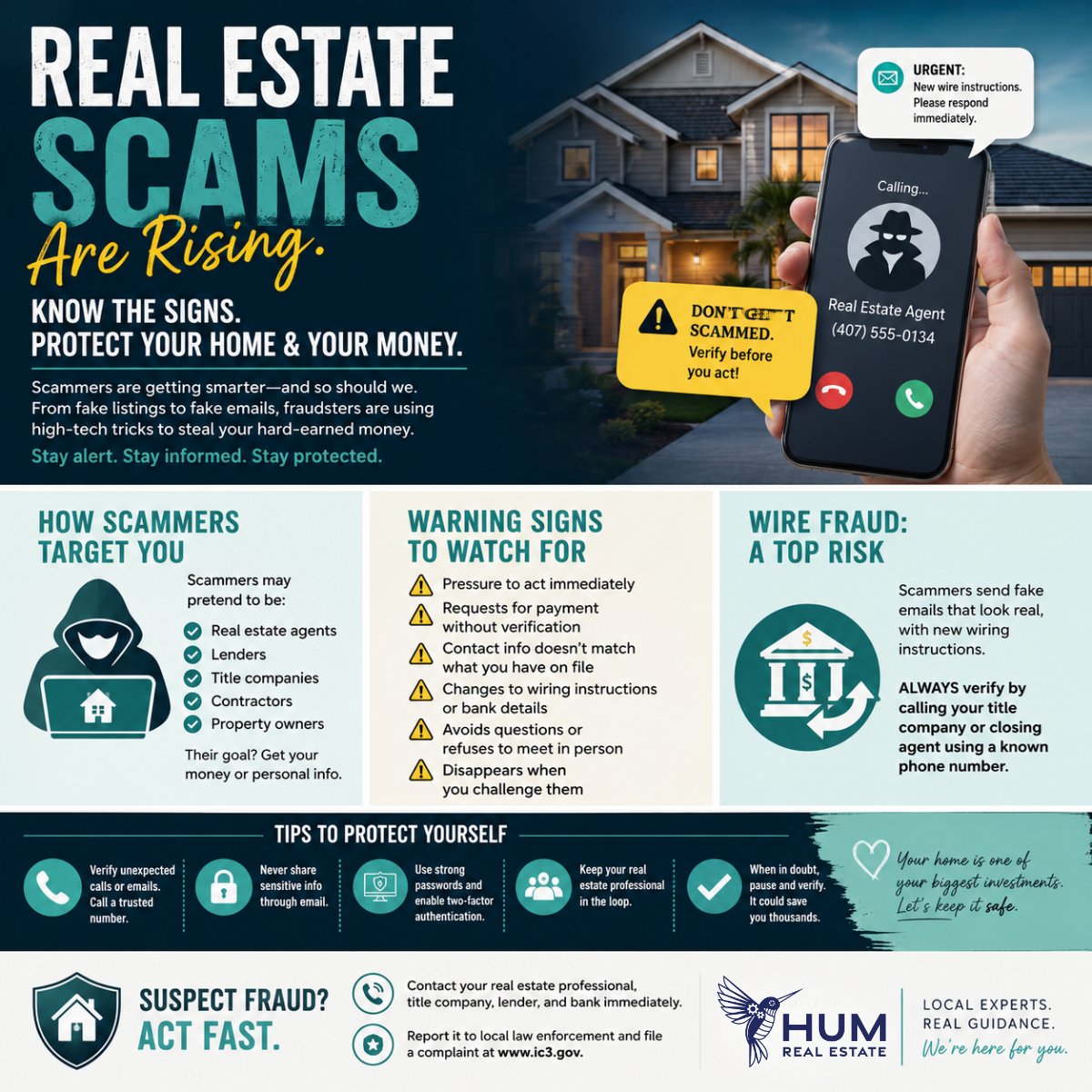
Instead, they may pretend to be a real estate agent, title company representative, lender, contractor, or even a property owner. Some create fake property listings, while others attempt to intercept communications during an active transaction.
Their goal is usually the same: convince someone to act before they have time to verify the information.
While every situation is different, many scams share similar characteristics.
Be cautious if someone:
If something feels unusual, trust your instincts and pause before taking action.
One of the most common real estate scams involves fraudulent wire instructions.
A scammer may send an email that appears to come from your title company or closing agent, instructing you to wire your closing funds to a different account.
These emails can look remarkably authentic.
Before sending any money, always verify wiring instructions by calling your title company or closing attorney using a trusted phone number you already have (not the one included in the email).
Not long ago, scam emails were easy to recognize because they were filled with spelling mistakes and awkward grammar.
Today, artificial intelligence can generate professional-looking emails that closely resemble legitimate communications.
Some scammers are even using AI-generated voice recordings and manipulated videos to impersonate trusted individuals.
As these tools become more advanced, it's increasingly important to verify information through trusted channels instead of relying solely on what you see or hear online.
Whether you're buying or selling a home, a few simple habits can help reduce your risk.
If you believe someone is attempting to impersonate a party in your transaction or you've become the victim of fraud, act quickly.
Notify your real estate professional, title company, lender, and financial institution immediately. You should also report the incident to your local law enforcement agency. If the fraud involved internet communications or wire transfers, you can also submit a report through the FBI's Internet Crime Complaint Center (IC3) at www.ic3.gov.
The faster potential fraud is reported, the greater the chance that financial losses can be limited.
Technology has made buying and selling real estate more convenient, but it has also created new opportunities for scammers.
The best defense is slowing down when something doesn't feel right. Taking a few extra minutes to verify a phone call, email, or payment instruction can help protect one of the biggest financial transactions of your life.
Stay up to date on the latest real estate trends.

All Real Estate News
August 26, 2026

All Real Estate News
August 25, 2026

All Real Estate News
August 24, 2026

All Real Estate News
August 21, 2026

All Real Estate News
August 20, 2026

All Real Estate News
August 19, 2026
You’ve got questions and we can’t wait to answer them.