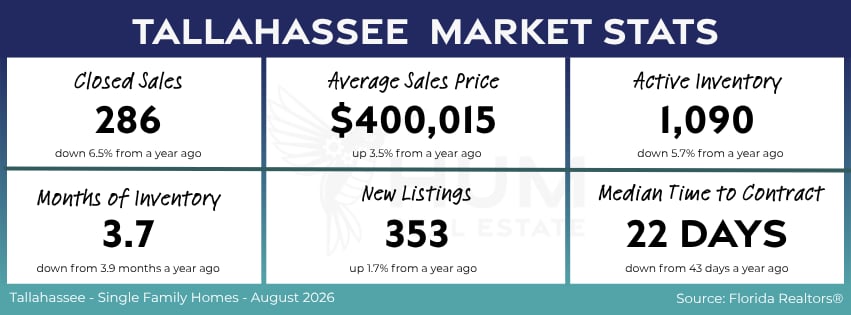
September 2026 Real Estate Market Update
September 21, 2026
Monthly Market Updates

September 21, 2026
Monthly Market Updates
Quick Links: Homeowners Are Putting Their Equity to Work | What’s Ahead for Buyers in the Fall Housing Market? | Bottom Line | Prior Month Tallahassee Market Stats
Fall is here, which means cooler weather, football, pumpkin spice, and apparently, a few interesting shifts in the housing market. This month, we’re looking at an update on homeowner equity for sellers and how they are starting to put it to use, and why fall can create some unique opportunities for potential homebuyers. Let’s get into it.
Most American homeowners now have a comfortable equity cushion.

Across the United States, 56.7 million properties have an average of $310,500 in equity.
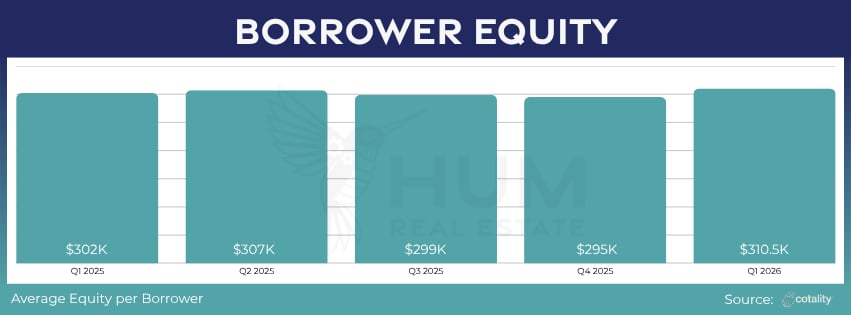
Higher home values and continued mortgage paydown can both contribute to growing homeowner equity, which is apparent across the nation.
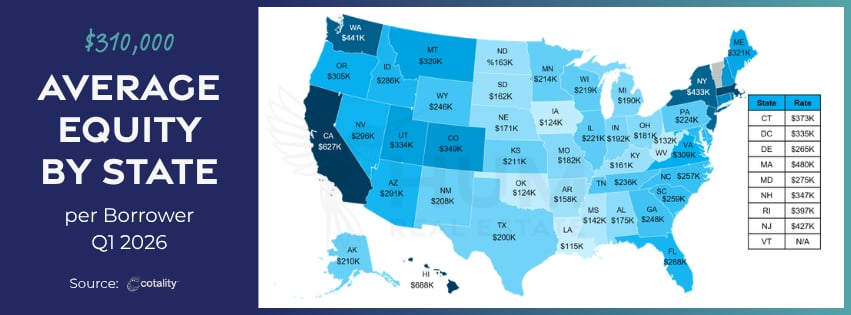
The key for homeowners is understanding just how much they have and what a benefit it can be for them, whether they're moving or not. Maybe they want to pay off debt, find out how much their home would rent for, or see if there’s room to make renovations.
Outstanding HELOC balances have been climbing again, reaching roughly $459 billion in the second quarter of 2026. A Home Equity Line of Credit is a revolving line of credit secured by your home, allowing you to borrow against available equity as needed.
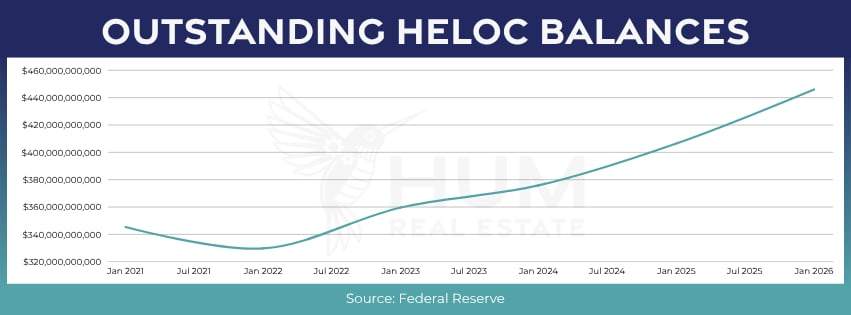
Many homeowners with low existing mortgage rates have been staying in their homes longer, giving them more time to pay down their mortgages and potentially build additional equity.

If you are considering putting your equity to work, the right professional depends on your goal. A lender can explain borrowing options, a financial advisor can help evaluate how those choices fit into your broader finances, an attorney can address legal questions, and a real estate agent can help you understand your property’s current market value and what selling or renting might look like.
And keep in mind that the home serves as collateral and HELOCs commonly have variable interest rates, so it is important to understand the terms, costs, and risks before borrowing.

HomeSweetHomeBot.com is a detailed, interactive report of your home’s value and local market trends. Its equity snapshot helps you see an estimate of how much equity you may have and explore different ways that equity could fit into your next move or financial plans.

Fall can present a lot of opportunities for buyers. Depending on your market, there can be more inventory available, and (because homes usually take a little bit longer to sell) buyers don't have to feel quite as rushed as if it were the spring or summer season. Plus, prices can start to come down as the market moves past the peak pricing season.
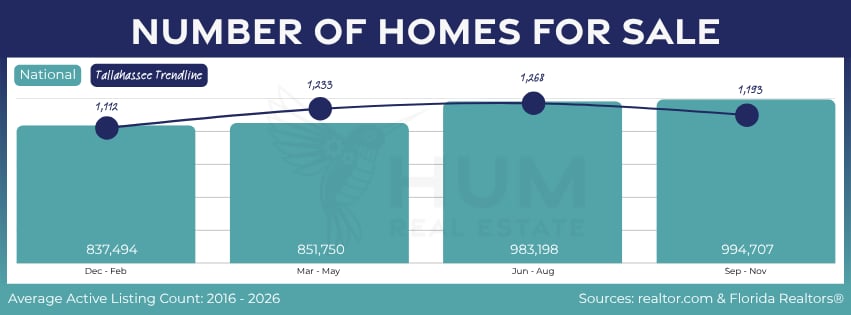
Looking back at the past 10 years of active listings by month, nationally winter sees the lowest number of homes for sale, while fall sees the highest number of homes for sale.
Interestingly enough, Tallahassee does not follow that same trend. Locally, the winter months do see the lowest inventory numbers. However, the spring, summer, and fall seasons tend to see a similar number of active listings.
One of the biggest factors affecting buyer demand right now is mortgage rates.
Mortgage rates started the year relatively close to 6%, averaging about 6.08% through January and February and briefly dipping below 6% in late February.
Since then, geopolitical conflict, rising oil prices, changing inflation expectations, Treasury yields, and shifting expectations for Federal Reserve policy have all contributed to a much more volatile mortgage-rate environment.
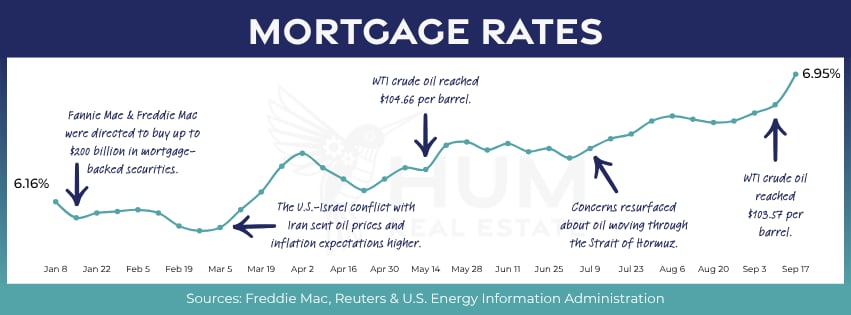
At its September meeting, the Federal Reserve raised its benchmark interest rate by a quarter percentage point to a range of 3.75% to 4.00%. That marked the first rate increase in more than three years. Fed policymakers also indicated that another increase may be appropriate before the end of the year as inflation remains elevated.
The important things to keep an eye on will be inflation data, jobs reports, future Fed policy decisions, Treasury yields, oil prices, and geopolitical headlines.
Looking back again, at the past 10 years, homes take the longest amount of time to sell in the winter, and the spring and summer are when the market moves the quickest. As we move into fall, it really starts to slow down. This is true both nationally and locally.
That seasonal slowdown can give buyers a little more breathing room and more time to evaluate their options.

As inventory rises and buyers have more options, supply is up and demand is down. That also puts downward pressure on home prices.
Nationally, the historical seasonal decline in list prices has already begun.
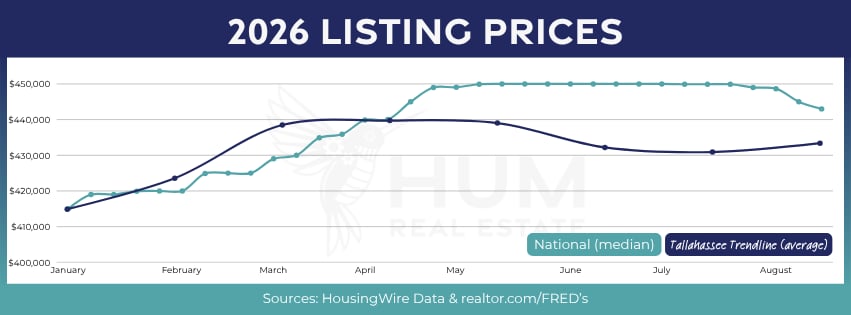
Traditionally, home prices are at their highest in the spring and summer months when real estate is at its peak season. We move into the lower prices of fall, before typically falling to the lowest prices in winter.
Lower prices can be welcome news for buyers, especially when affordability is already stretched.
The number of listings with price cuts each month so far this year is showing a very obvious trend.
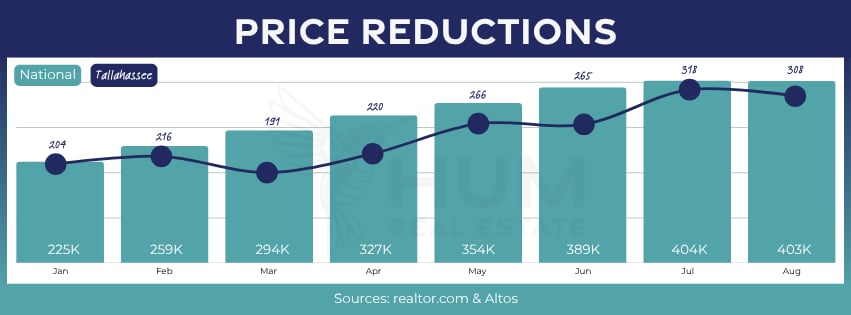
Nationally, every single month this year up to July, there have been more listings with price cuts than the month prior. Locally, a similar overall upward trend is clear.
Even with the slight August pullback, price reductions normally remain elevated heading into fall.

There is a lot moving underneath the housing market right now, and the opportunities look different depending on what you are trying to accomplish.
For sellers, substantial home equity can create flexibility when planning the next move. For homeowners who are staying put, that equity may also open the door to renovation, debt-management, or borrowing options, depending on their financial situation.
For buyers, fall can bring a little more breathing room. Nationally, price reductions remain elevated and homes historically take longer to sell as the year moves toward winter. Tallahassee does not follow every national seasonal trend perfectly, but local prices have softened from early-summer levels and price reductions remain elevated.
Mortgage rates are still the wild card. Rather than trying to perfectly predict what happens next, the most useful question is whether today’s numbers work for your specific goals, finances, and your local market.
Stay up to date on the latest real estate trends.

All Real Estate News
October 20, 2026

Articles for Buyers
October 19, 2026

October 19, 2026

All Real Estate News
October 17, 2026

All Real Estate News
October 16, 2026

All Real Estate News
October 15, 2026
You’ve got questions and we can’t wait to answer them.