The Case for Putting 20% Down on Your Next Home
August 18, 2026
All Real Estate News
August 18, 2026
All Real Estate News
If you’re thinking about buying another home, you may be looking at today’s prices and mortgage rates and wondering how you’d make the numbers work.
But if you already own a home, you have something many first-time homebuyers don’t: equity.
And that equity may be a much bigger part of your next move than you realize.
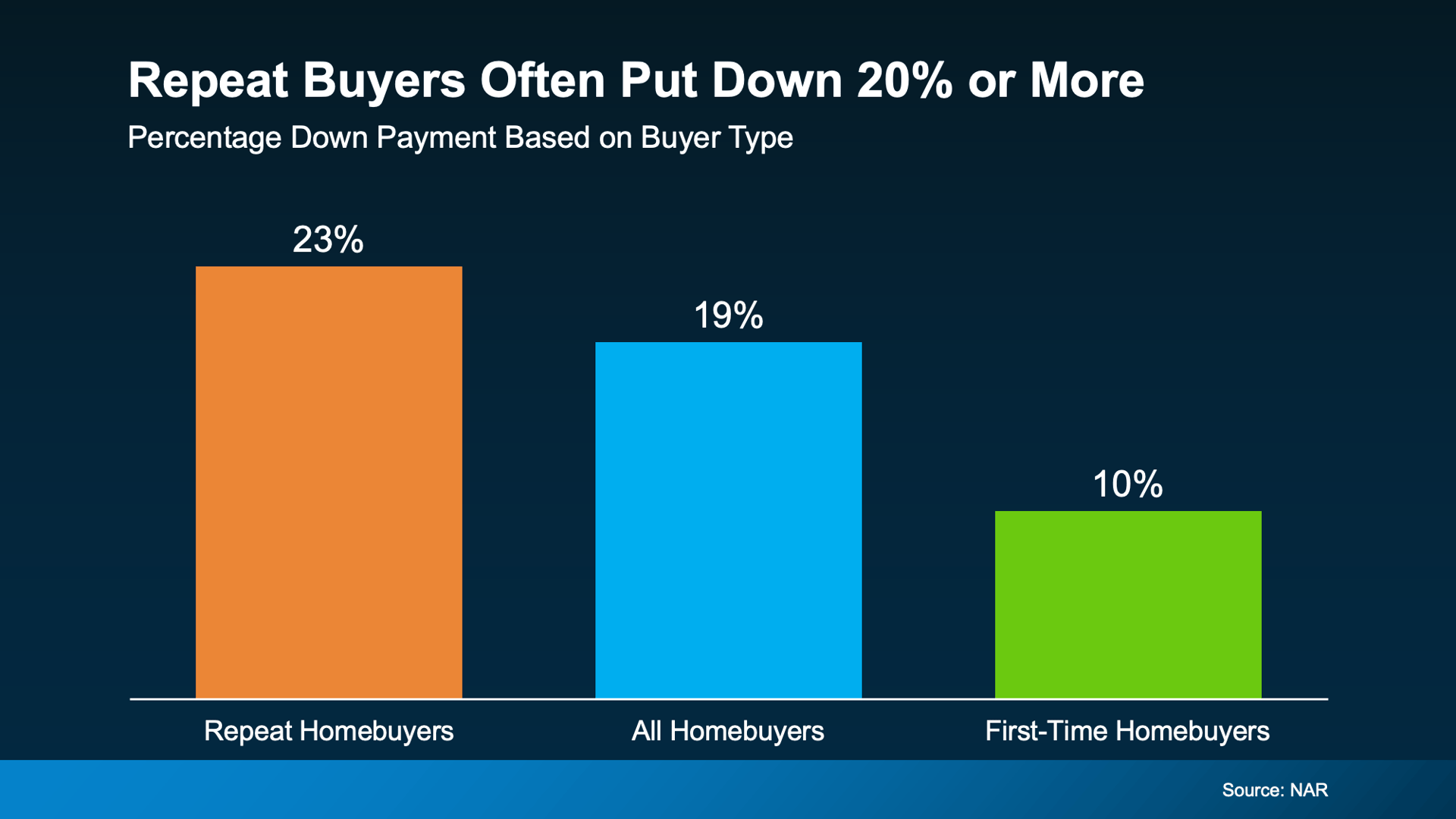
According to the National Association of REALTORS®, the median down payment for a repeat homebuyer is now 23%. For all homebuyers, it’s 19%, while first-time homebuyers put down a median of 10%.
That doesn’t mean you need 20% down to buy a home. Depending on the loan program and your qualifications, there are financing options with much smaller down payments. Conventional loans, for example, may allow down payments well below 20%.
So why are so many repeat homebuyers able to put more down?
For many of them, the answer is the home they already own.
Home equity is essentially the difference between what your home is worth and what you still owe against it.
Over time, homeowners can build equity by paying down their mortgage, through increases in property value, or both.
When the home is sold, some of that equity can become cash available for the next purchase after the mortgage and other selling expenses are paid.
And that’s exactly what many repeat homebuyers are doing. You can find out how much equity you have at HomeSweetHomeBot.com
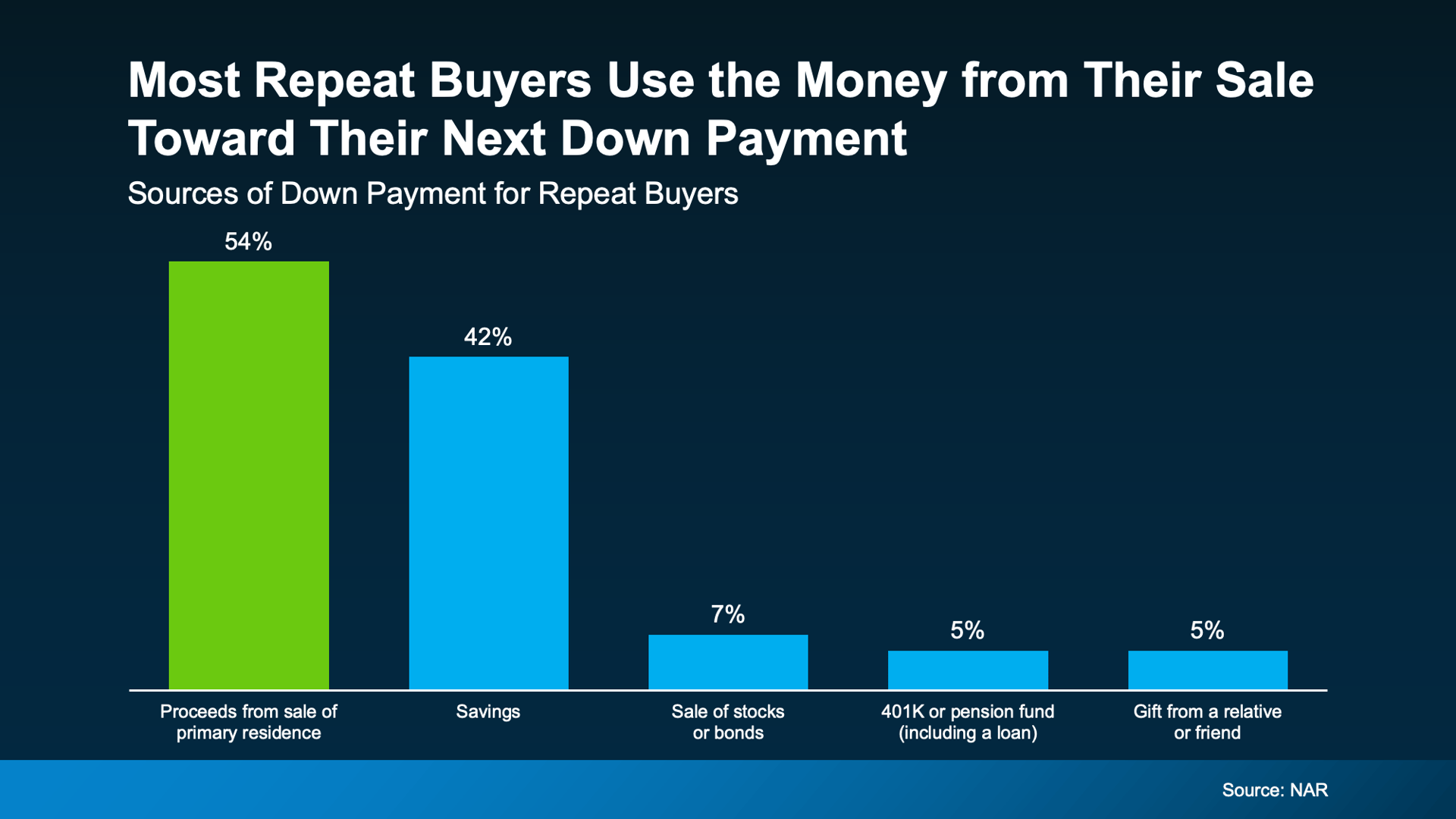
NAR reports that 54% of repeat homebuyers who financed their purchase used proceeds from the sale of their primary residence toward their down payment. Savings were another major source, used by 42%.
That’s an important distinction when you’re trying to figure out whether your next home is affordable. Looking only at the money sitting in your savings account may leave out one of your largest financial resources.
For a simple example, imagine a homeowner sells for $300,000 and still owes $175,000 on the mortgage.
That’s $125,000 in gross equity before selling expenses and any other amounts due at closing.
Not all of that necessarily needs to go into the next house. But even a portion of it could significantly change the size of the next mortgage.
That matters in a market where monthly payment, not just purchase price, is often the deciding factor.
Based on the July Tallahassee numbers, the median sold price was about $297,000. So this isn’t just a conversation for people selling especially expensive homes. Longtime homeowners at fairly typical Tallahassee price points may have meaningful equity available for their next move.
If you have enough equity to put 20% or more down, there can be some real benefits.
A smaller mortgage means a smaller amount to finance. All else being equal, that lowers the principal-and-interest portion of your monthly payment and reduces the amount of interest you’ll pay over the life of the loan.
On a conventional mortgage, putting 20% down will also typically allow you to avoid private mortgage insurance, or PMI. PMI generally applies to conventional loans when the down payment is less than 20%.
A substantial down payment may also give a seller additional confidence in a financed offer, particularly if it demonstrates that the purchaser has sufficient funds to complete the transaction.
But bigger isn’t automatically better.
Putting more money down also means keeping less cash available after closing. Depending on your situation, you may want funds available for moving expenses, repairs, improvements, emergencies, or simply financial reserves.
That’s why the question usually isn’t:
“How much can I possibly put down?”
It’s:
“How much should I put down to make this move work well for me?”
One of the biggest mistakes a longtime homeowner can make is trying to figure out the next purchase without first figuring out the current home.
Before deciding whether moving is realistic, it helps to know:
What could your current home realistically sell for?
How much do you still owe?
What would your approximate proceeds be after the sale?
How much of those proceeds would you actually want to use toward the next home?
And what would different down payment amounts do to the monthly payment on your next mortgage?
Those numbers can turn a vague idea about moving into an actual plan.
You don’t need to put 20% down to buy your next home. But if you’ve owned your current home for several years, the equity you’ve built may make a larger down payment possible.
And that can mean borrowing less, potentially eliminating PMI on a conventional loan, and bringing the payment on your next home closer to where you want it.
The first step is to find out what you’re actually working with.
A trusted lender can help you compare financing options and different down-payment scenarios.
Stay up to date on the latest real estate trends.

Monthly Market Updates
September 21, 2026

All Real Estate News
September 21, 2026

All Real Estate News
September 18, 2026

All Real Estate News
September 17, 2026
All Real Estate News
September 16, 2026

All Real Estate News
September 15, 2026
You’ve got questions and we can’t wait to answer them.