The House That Started It All Could Kickstart What's Next
August 12, 2026
All Real Estate News
August 12, 2026
All Real Estate News
Remember how exciting it was to buy your first home? It may have felt like crossing a long-awaited finish line. It gave you a place to build your life, put down roots, and start making a home your own.
But for many homeowners, that first home was also a starting point.
Maybe you need another bedroom now. Maybe you'd love a bigger backyard, a dedicated home office, a different location, or simply a home that fits your life better today.
If you've been thinking about selling your first home but aren't sure whether moving up makes sense in today's market, there are a few things worth considering. The home you're selling may appeal to buyers searching for more affordable options, there are more homes available for your next move, and the equity you've built could help you get there.
One reason more affordable homes can be difficult to find goes back years.
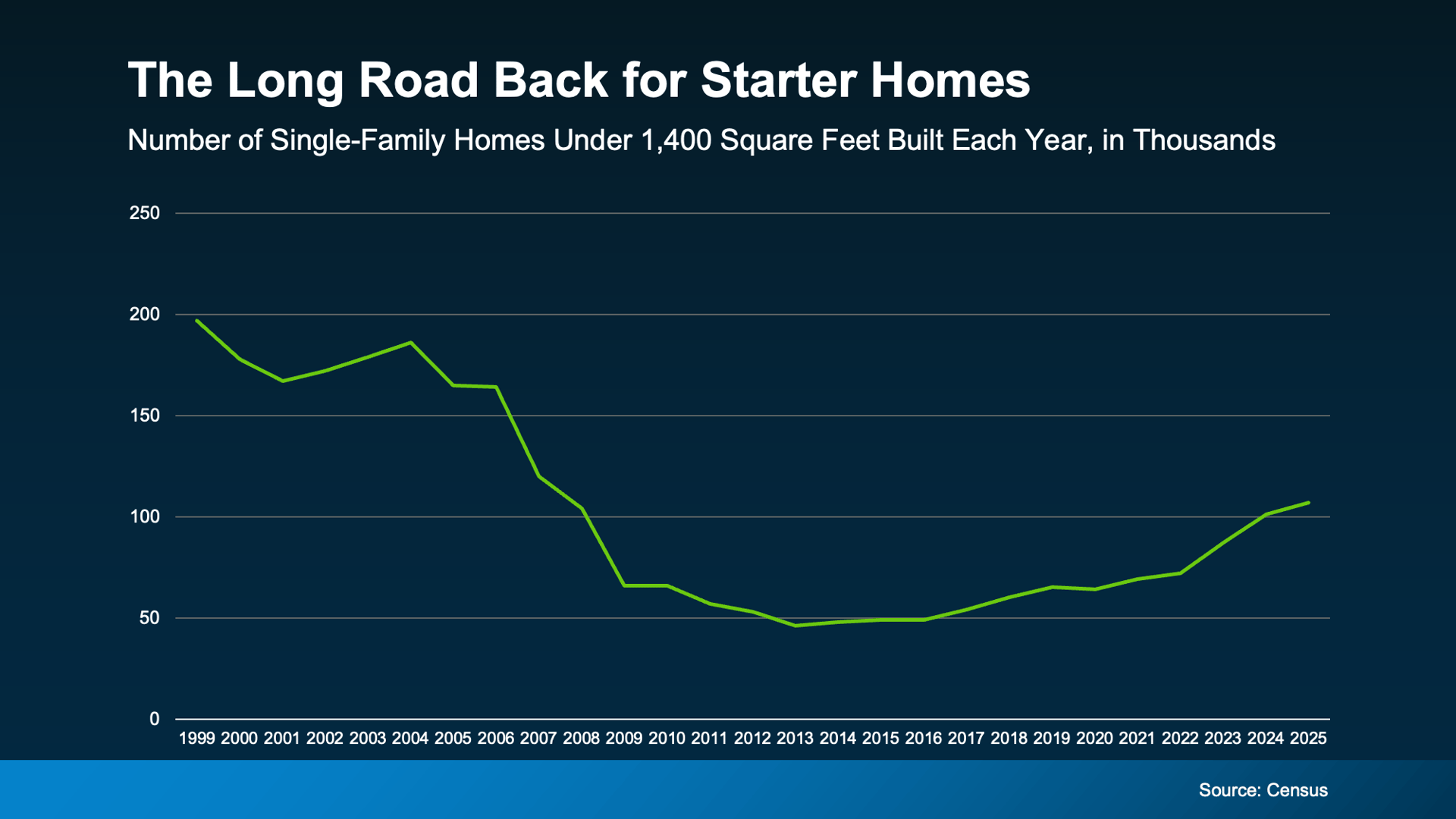
Census Bureau data on newly constructed single-family homes shows just how dramatically the number of smaller homes declined. In 1999, nearly 200,000 single-family homes under 1,400 square feet were completed nationally. By the early 2010s, annual construction had fallen to roughly 50,000.
Builders have been adding more smaller homes again in recent years, but construction still hasn't returned to anything close to those earlier levels.
That history matters because the supply of smaller, more affordable homes isn't something the housing market can rebuild overnight.
And while smaller doesn't automatically mean affordable, and affordable doesn't automatically mean a starter home, the shortage helps explain why finding a first home can still be challenging in many markets.
Here's where looking at the actual Tallahassee market is much more useful than relying solely on national headlines.
As of August 8, 2026, there were:
That's 450 active properties classified as detached below $300,000.
For context, the median residential sales price in Tallahassee was $297,000 in July 2026.
But there's an important caveat. Those 450 listings should not be interpreted as 450 "starter homes." MLS property classifications and price searches can include properties that don't fit what most people would consider a traditional starter home. A property could need substantial repairs, have unusual characteristics, or even include little more than land and an accessory structure.
The numbers tell us what's listed in certain price ranges. They don't tell us whether every property is a practical option for a particular buyer.
Still, they give us a useful look at the lower-priced portion of Tallahassee's housing inventory.
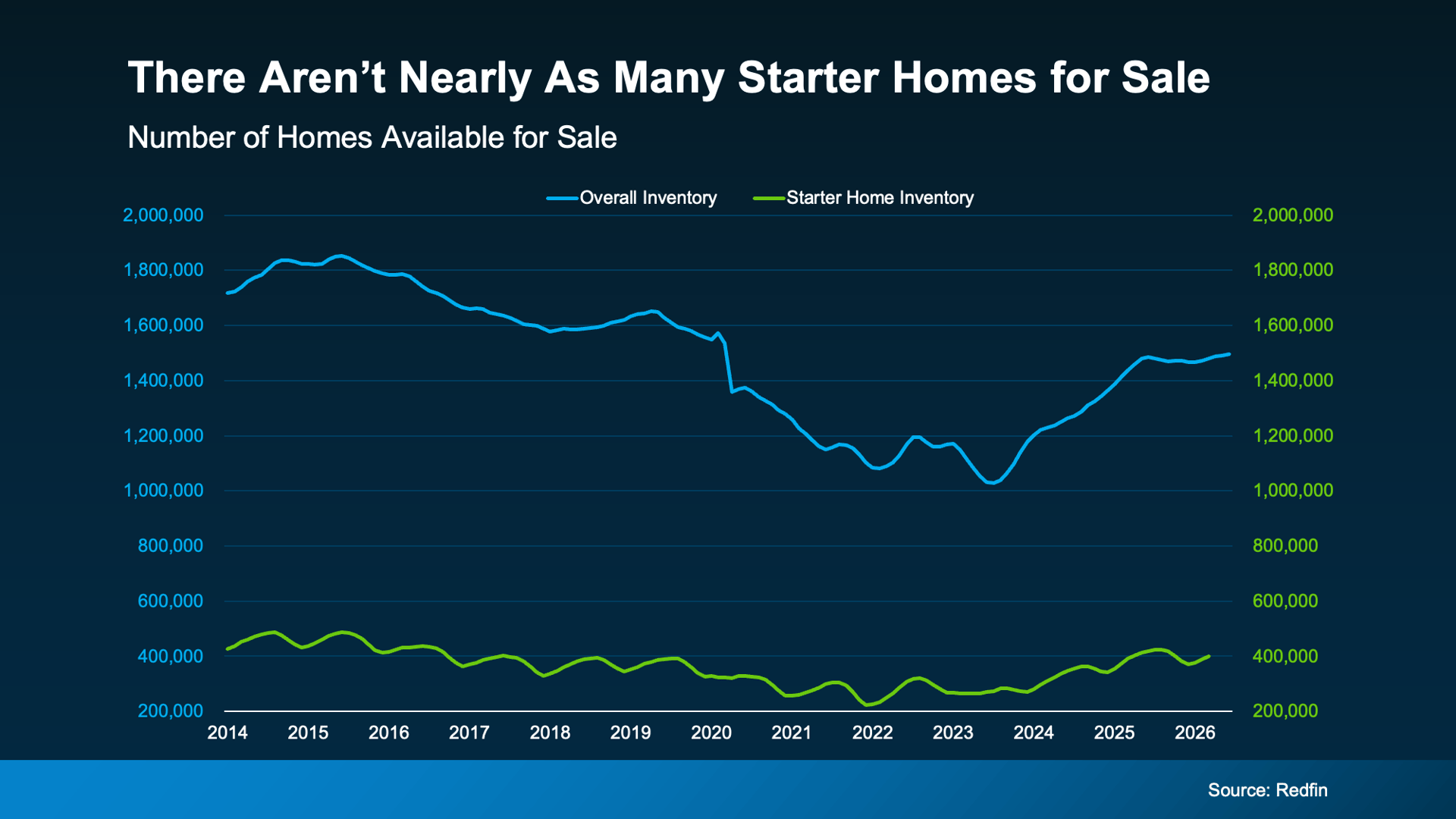
Nationally, the picture is similar. Redfin data shows that overall housing inventory has recovered considerably from the lows reached a few years ago, while starter-home inventory has recovered more slowly.
Here in Tallahassee, there were 1,771 active residential listings as of August 8, 2026.
That's important for homeowners who are thinking about moving because selling your current home is only half of the equation.
You also need somewhere to go.
If you're looking for another bedroom, more square footage, a larger yard, a home office, a pool, or something else your current home doesn't offer, having more inventory means there may be more opportunities to find that next home.
It's easy to look at today's market from only one side.
A homeowner may think, "I don't want to sell because buyers have more choices now."
But if you're selling one home and purchasing another, you're participating in the same market twice.
The additional inventory that creates competition when you're selling can also give you more choices when you're shopping for your next home.
And Tallahassee's July numbers show why strategy matters on both sides.
In July 2026, the average residential sale closed at 97.24% of the list price, and 318 active listings had experienced a price reduction.
That suggests sellers need to pay attention to pricing and competition. But it can also create opportunities when you're on the other side of the transaction looking for your next home.
Meanwhile, Tallahassee's median time to contract was 24 days in July 2026, down from 37 days in July 2025, and months of inventory was 3.6 months, down from 4.1 months in July 2025.
In other words, this isn't simply a market where nothing is selling. Homes are moving, but sellers and buyers have more room to negotiate than they did during the most competitive years of the housing market.
There's another part of the move-up equation that's easy to overlook: equity.
Every mortgage payment that reduces your principal increases your ownership stake in your home. If your home's market value has increased since you purchased it, that may have added equity too.
Nationally, Cotality reported that the average U.S. homeowner with a mortgage had approximately $295,000 in equity at the end of 2025. That doesn't mean the typical Tallahassee homeowner has $295,000 available, and individual equity positions vary considerably. But it illustrates how significant home equity has become for many longtime owners.
For someone considering a move, the important number isn't the national average. It's yours.
Your estimated equity is roughly the difference between what your home could sell for and what you still owe, before accounting for selling expenses, liens, closing costs, and other transaction expenses.
That potential net proceeds figure can completely change the conversation about whether moving is realistic.
Equity from the home you're selling may help provide the down payment for the home you're buying, reduce the amount you need to finance, or give you more flexibility when structuring your next purchase.
This is probably the biggest mental hurdle for homeowners who bought or refinanced when mortgage rates were much lower.
Giving up a low interest rate can be a very real financial consideration. But your mortgage rate is only one piece of the decision.
The more useful question is: What would the entire move look like?
That means looking at what your current home could realistically sell for, how much you still owe, estimated selling expenses, the amount of equity you could potentially carry forward, what homes meeting your needs cost today, and what the payment on your next home might look like.
You may run the numbers and decide staying put makes the most sense.
Or you may discover that the equity you've accumulated makes the move considerably more achievable than you expected.
Either answer is useful.
Your first home doesn't have to be your forever home to have been a great purchase.
Maybe it gave you somewhere to start. Maybe you've paid down your mortgage while building equity. Maybe your life has simply outgrown the house.
And now that same home could help someone else looking for a more attainable way into homeownership while giving you the financial foundation to make your next move.
If your first home doesn't fit your life anymore, don't assume you're stuck simply because today's housing market looks different from the one where you originally bought.
As of August 8, 2026, Tallahassee had 450 active residential properties classified as detached below $300,000, along with 1,771 active residential listings across the market. And in July 2026, the median residential sales price was $297,000.
Your particular home, however, is its own market.
The first step isn't deciding whether to sell. It's figuring out what your home could realistically sell for, estimating how much equity you may have available after a sale, and seeing what that could buy you next.
Your first home gave you a place to start. It may also be what helps you take the next step.
Want to see what your current home might be worth before you start planning your next move? Visit HomeSweetHomeBot.com for a quick home-value estimate.
Stay up to date on the latest real estate trends.
Monthly Market Updates
September 21, 2026

All Real Estate News
September 21, 2026

All Real Estate News
September 18, 2026

All Real Estate News
September 17, 2026
All Real Estate News
September 16, 2026

All Real Estate News
September 15, 2026
You’ve got questions and we can’t wait to answer them.