The “Take It or Leave It” Attitude Is Fading - Buyer Concessions & Incentives
August 11, 2026
All Real Estate News

August 11, 2026
All Real Estate News
For a while there, negotiating on a home could feel like a lost art. That’s changing.
Sellers are seeing more requests for concessions, credits, and price adjustments. Builders are offering incentives to compete for buyers. And here in Tallahassee, the latest housing numbers show a market where negotiation is becoming a normal part of getting a deal together again.
That doesn’t mean sellers need to give away the farm. And it doesn’t mean buyers can name their price.
It means both sides have something they haven’t always had in recent years: room to talk.
Nationally, seller concessions have become much more common.
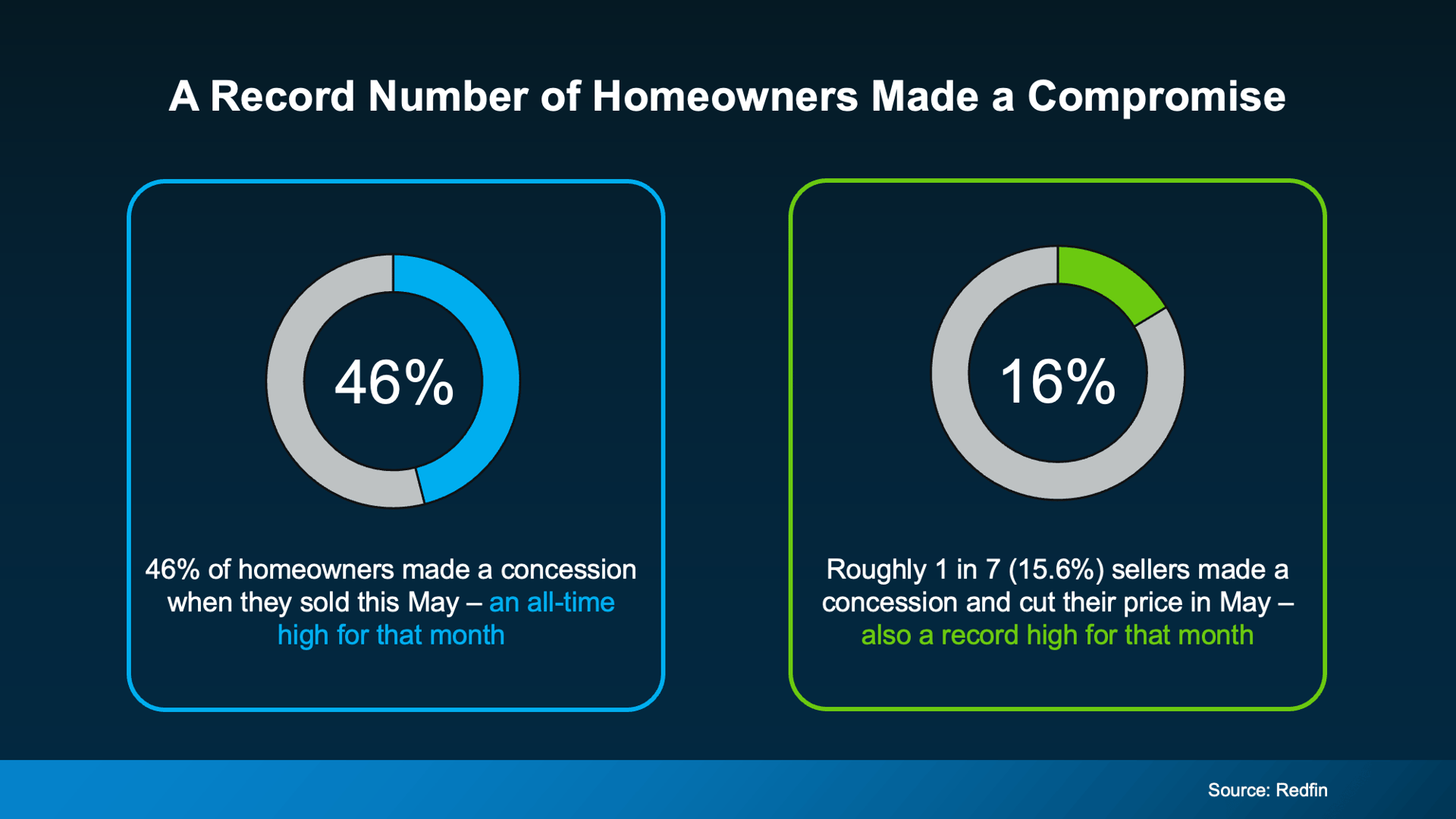
According to Redfin, 46.2% of home sales included a seller concession during the three months ending May 31, 2026. That was the highest May share in Redfin’s records. And 15.7% of sales included both a concession and a price reduction.
A concession is simply something negotiated as part of the transaction. Depending on the contract and financing, that could include help with allowable closing costs, a credit related to repairs, or another negotiated term.
And there’s an important distinction between a concession and an incentive.
A concession is generally negotiated between the parties as part of getting a transaction together. An incentive is typically advertised upfront to attract buyers, something we see frequently with new construction.
Neither automatically means the property is overpriced or that a seller is desperate. In a more balanced market, negotiation is simply part of the process.
Our local numbers tell a more nuanced story than the national headlines.
In July 2026, 413 residential properties sold in the Tallahassee market. The median sales price was $297,000, while the average was $362,726.
Homes also aren't necessarily sitting around waiting for someone to make an offer. The median time to contract was just 24 days in July, down considerably from 37 days in July 2025. Median days on market was 57, while the average was 85 days.
And months of inventory stood at 3.6, down from 4.1 months in July 2025.
So this isn't a story about a market grinding to a halt.
But there are clear signs that negotiation matters.
There were 318 active listings with price reductions in July, and the average list-to-sale price ratio was 97.24%. As of the end of the first week of August, there were 1,771 active residential listings.
Put all of that together, and Tallahassee sellers are competing for attention while buyers have choices. But well-positioned homes can still find a buyer relatively quickly.
That’s why “negotiation is normal again” may be a much better description of this market than trying to label it entirely a seller’s market or a buyer’s market.
This is where negotiations can get interesting.
Suppose a buyer likes a house but is concerned about the amount of cash needed at closing. Depending on the financing and terms of the transaction, negotiating an allowable seller contribution toward closing costs may be more useful to that buyer than negotiating the same amount off the purchase price.
For the seller, that could potentially be preferable to making another public price reduction.
Or maybe an inspection identifies an issue. Rather than having the seller complete a repair before closing, the parties may be able to negotiate another solution, subject to the contract, lender, insurer, and other applicable requirements.
Price matters, but it isn't the only thing that can be negotiated.
Closing date, repair requests, credits, financing-related terms, personal property, and other contract provisions can all become part of the conversation.
The best deal isn't necessarily the one with the lowest purchase price. It’s the agreement that works best for the circumstances and priorities of the people involved.
This isn't limited to resale homes.
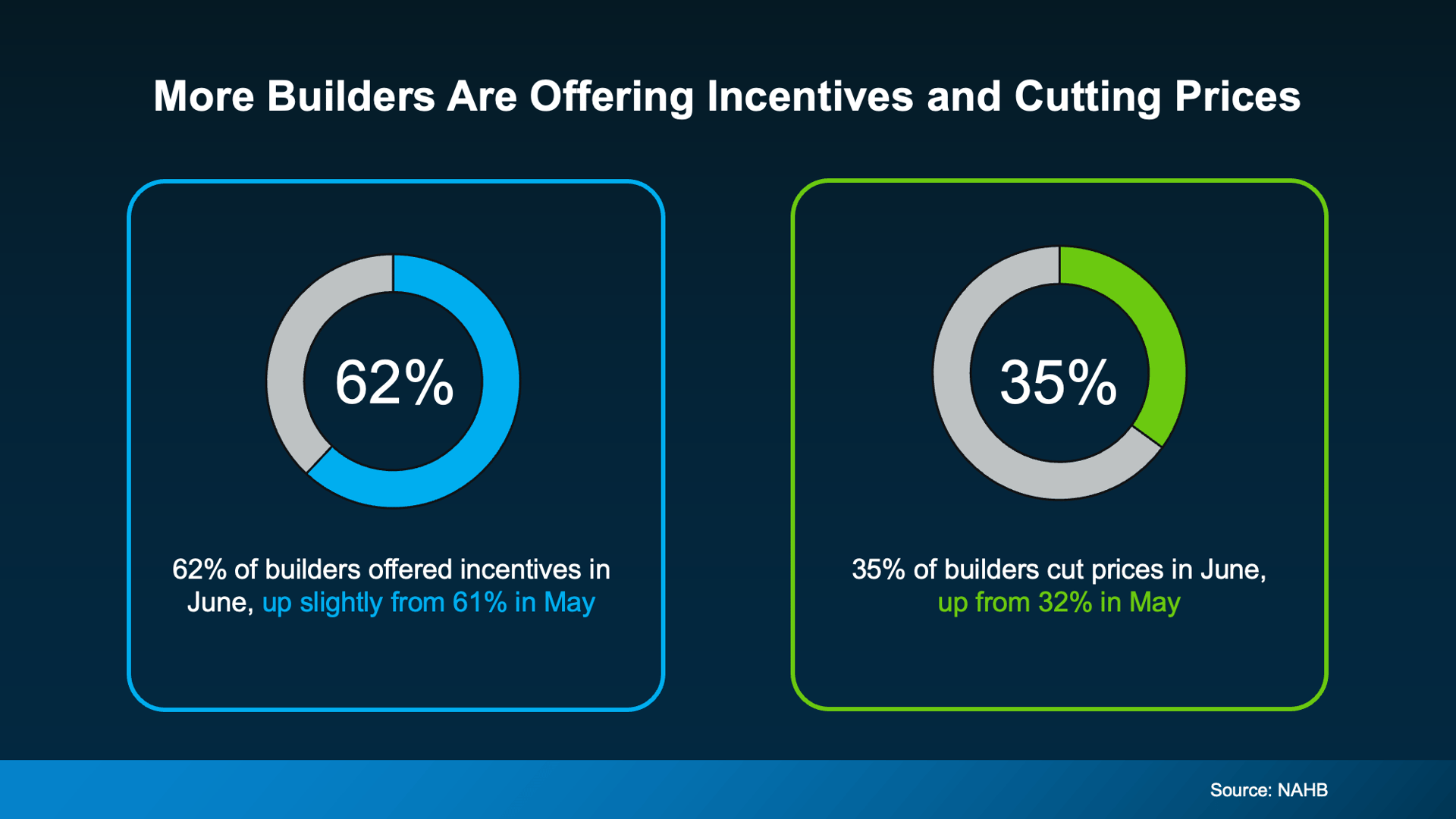
Builders across the country are competing for buyers by offering incentives and reducing prices. The National Association of Home Builders reported that 62% of builders used sales incentives in June 2026, while 35% reduced home prices.
And the trend continued in July. NAHB reported that 63% of builders were using sales incentives and 37% were cutting prices. July marked the 16th consecutive month in which at least 60% of builders reported using sales incentives.
Builder incentives can take several forms, including price adjustments, mortgage-rate incentives, closing-cost assistance, and upgrades or options.
That can make new construction worth comparing with existing homes, especially when affordability is the biggest concern.
There is one important catch: an advertised builder incentive shouldn't be evaluated by the headline alone.
Some incentives may apply only to certain homes, require closing by a particular date, or be connected to the use of a builder's preferred lender or other affiliated provider. Buyers should understand the terms and compare the complete transaction rather than assuming the largest advertised incentive automatically produces the best deal.
A mortgage-rate incentive, for example, could potentially have a greater impact on a buyer's monthly payment than a modest reduction in the purchase price. But whether that's actually the better option depends on the loan, rate, costs, how long the buyer expects to own the home, and the specific terms being offered.
And remember, the builder's sales representative represents the builder.
Having your own real estate professional involved from the beginning gives you someone focused on your interests when comparing properties, incentives, contract terms, inspections, and negotiations.
If you're selling, expect negotiation to be part of the conversation.
That doesn't mean automatically accepting every request.
With Tallahassee's median time to contract actually improving from a year ago and inventory at 3.6 months, sellers shouldn't read national concession headlines and assume buyers suddenly hold all the cards.
But 318 price-reduced listings and a 97.24% average list-to-sale ratio are reminders that buyers are paying attention to value.
The strongest strategy starts before an offer arrives: price the property appropriately, understand the competition, and decide which terms matter most to you.
Then, when an offer does come in, you can evaluate the entire package rather than reacting to a single number.
If you're buying, it's okay to ask.
That doesn't mean every seller will agree, and a particularly desirable or competitively priced home may still attract strong interest.
But today's market may provide opportunities to negotiate things that were considerably harder to negotiate during the frenzy of the last several years.
Instead of focusing exclusively on “How much can we get them to knock off the price?” consider the bigger question:
“What combination of price and terms makes this home work best for me?”
That might lead to a very different offer.
Negotiation isn't a sign that something is wrong with the housing market. It's part of a more balanced market.
Here in Tallahassee, homes are still selling, and July's median time to contract was actually 13 days faster than it was a year ago. At the same time, price reductions are common, the average sale isn't closing at full list price, and sellers are competing for buyers' attention.
For sellers, that means entering the market with a thoughtful pricing strategy and knowing where you're willing to negotiate.
For buyers, it means looking beyond the asking price and considering which terms could make the overall purchase work better.
And for both, it means something we haven't been able to say quite as often over the last several years:
There’s room to negotiate.
Stay up to date on the latest real estate trends.
Monthly Market Updates
September 21, 2026

All Real Estate News
September 21, 2026

All Real Estate News
September 18, 2026

All Real Estate News
September 17, 2026
All Real Estate News
September 16, 2026

All Real Estate News
September 15, 2026
You’ve got questions and we can’t wait to answer them.