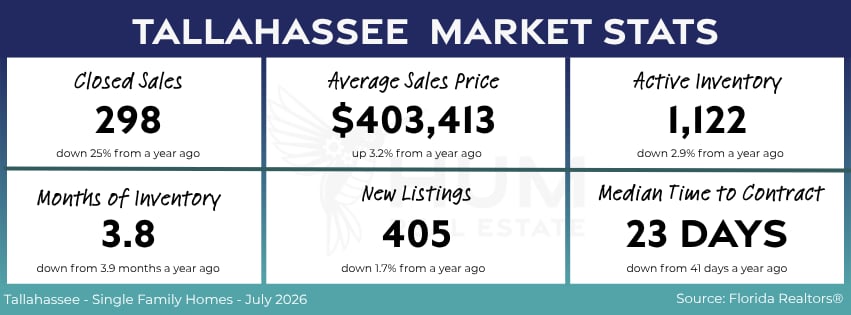
Video Update
Full Report
There’s no such thing as a perfect real estate market.
Sellers might be waiting for prices to go higher. Buyers might be waiting for mortgage rates to go lower. And just about everyone is waiting for something to change before deciding what to do next.
But the best real estate decision usually isn’t about waiting for the “perfect” market. It’s about understanding the market we actually have and figuring out how to make it work for you.
So, what kind of market do we actually have right now?
Housing Inventory
One of the biggest things to watch in real estate right now is inventory. Basically, how many homes are for sale, and how much competition is there for them.
When inventory grows, buyers have more choices, sellers have more competition, and prices tend to soften a bit.
When inventory shrinks, buyers are competing for fewer homes, giving sellers a little more leverage on price.
It’s good old-fashioned supply and demand. More homes for sale usually takes some pressure off prices. Fewer homes for sale tend to turn the pressure back up.
And when you put inventory and home prices side by side, that relationship becomes pretty hard to miss.
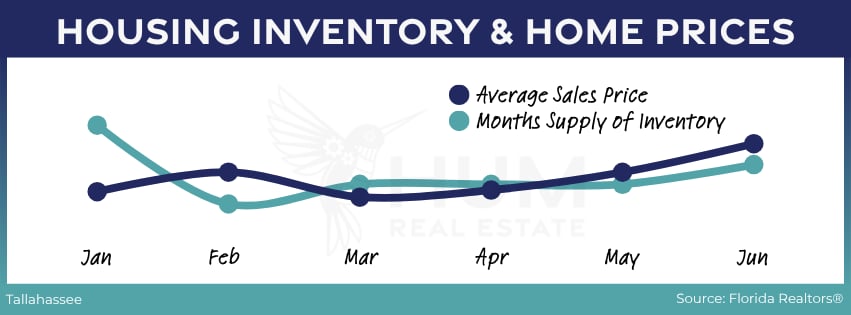
And you can actually see that relationship playing out here in Tallahassee. Take a look at the first half of this year. As inventory dropped sharply from January into February, the average sales price moved up. Then inventory started building again, and prices softened before beginning to climb again heading into summer.
Inventory helps set the temperature of the market.
Home Prices
That push and pull between inventory and prices is also where some market anxiety starts creeping in.
According to CNBC, 29% of buyers surveyed in the second quarter of this year said home prices were a concern. That’s up from just 9% the previous quarter.
And you can understand why. Sellers would ideally like to sell for a lot more than what they paid, while buyers would ideally like a really great deal. Somewhere between those two is what we call market value.
Today’s buyers not only have more choices, but they’re watching prices, comparing homes, and paying attention to how long listings have been sitting. If a home is priced too aggressively, they’re much more likely to wait than chase it.

Of course, mortgage rates are one part of the market that isn’t particularly local.
Mortgage Rates
Mortgage rates are still one of the biggest things keeping people on the sidelines, and there’s an interesting disconnect between the rates people want and the rates they’re expecting.
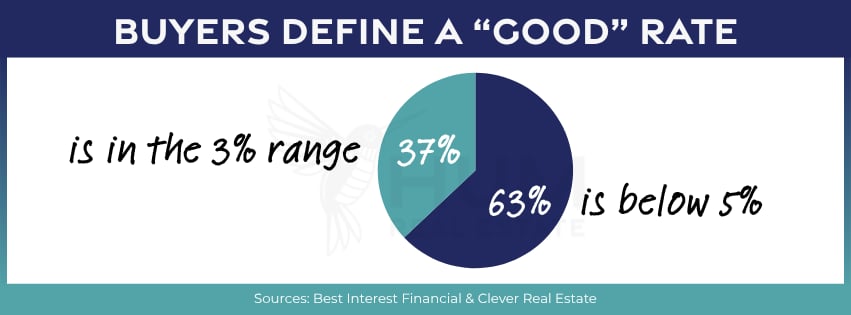
A survey from Best Interest Financial and Clever Real Estate found that 63% of respondents consider a “good” mortgage rate to be below 5%. Even more interesting, 37% are apparently holding out for the 3% range.
Obviously, 3% mortgage rates were delightful. But that doesn’t necessarily make them a good benchmark for deciding when to move today. For one thing, let’s remember why rates got that low: the world shut down. And when the housing market took off afterward, those incredibly low rates came with incredibly low inventory, bidding wars, multiple offers, rapidly rising home prices, and buyers sometimes having to make very aggressive offers just to get a house. The rate was fantastic. The circumstances that created it, and the housing market that followed, were anything but normal.
Here’s where it gets really interesting. In that same survey, 4 out of 10 buyers expected mortgage rates to fall below 5% this year.
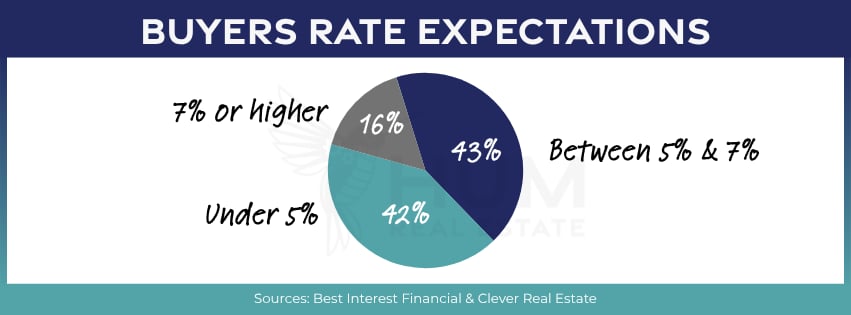
You can see why some buyers are waiting. If below 5% is the number that feels “good,” and you believe we’re headed there soon, waiting sounds perfectly reasonable.
The problem is that nobody gets to order their preferred mortgage rate off a menu.
Rates may move up. They may move down. But putting your plans on hold for one specific number means betting on something none of us can reliably predict.
Forecasts
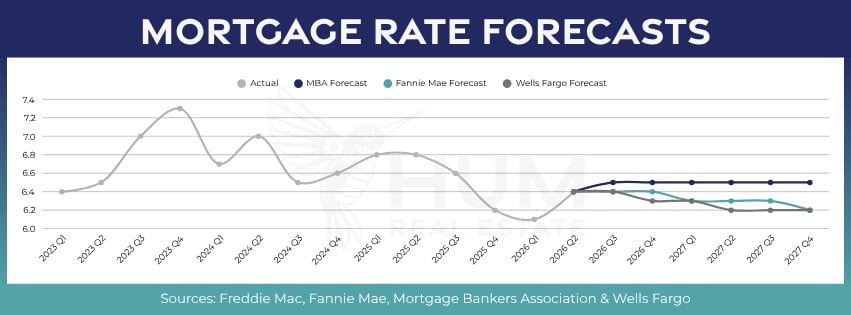
Right now, the major forecasts are remarkably similar. Looking out through the middle of 2027, they generally expect mortgage rates to remain somewhere in the low-to-mid 6% range, roughly 6.2% to 6.5%.
But why are rates expected to stay around where they are?
One of the best places to start is the 10-year Treasury yield. Historically, the 10-year Treasury and 30-year fixed mortgage rates tend to move in the same general direction.
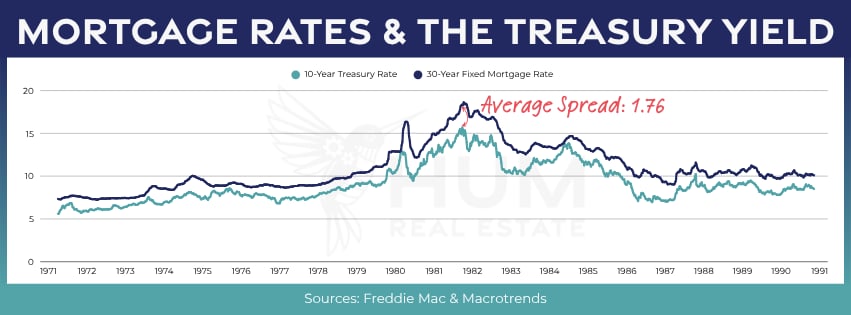
When the 10-year Treasury yield rises, the 30-year mortgage rates typically rise with them. When Treasury yields fall, mortgage rates generally come down.
There’s also a gap (or “spread”) between the two. Historically, that spread has averaged around 1.76 percentage points. So, a very simplified example: if the 10-year Treasury were at 4%, adding that historical spread would put a mortgage rate around 5.76%.
That means there are basically two paths to meaningfully lower mortgage rates: the 10-year Treasury yield comes down, or the spread between Treasury yields and mortgage rates gets smaller. Or, ideally for borrowers, we get a little help from both.
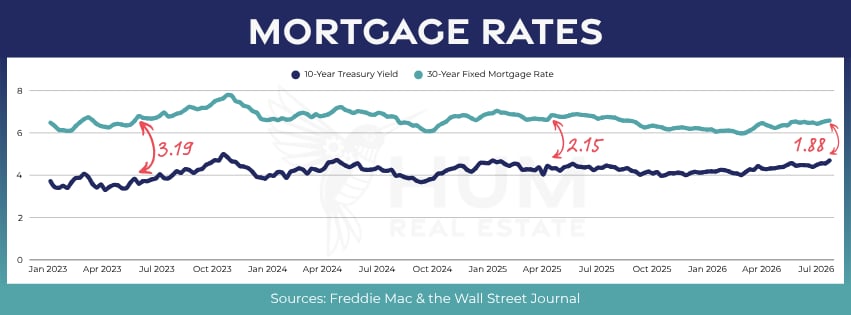
The spread between the Treasury yields and mortgage rates has been trending back towards that “norm” of 1.76 percentage points. The spread was a whopping 3.19 points in 2023, and 2.15 in April of this year. So, sitting at 1.88 now is a good trend, although certainly not an indicator of 5% mortgage rates.
So, what makes the 10-year Treasury move? A lot of things, but inflation and expectations about what the Federal Reserve may do with interest rates are two of the big ones.
And lately, inflation hasn’t exactly been cooperating.
Inflation
Inflation has been headed in the wrong direction.
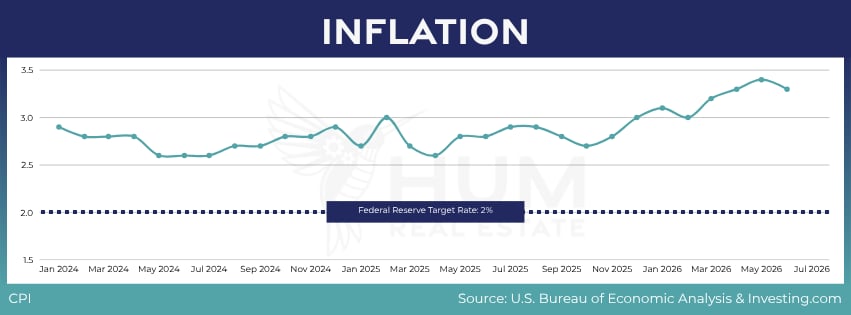
When inflation stays elevated, or investors become concerned that it could move higher, that can put upward pressure on Treasury yields. And if Treasury yields remain elevated, it becomes much harder for mortgage rates to make a significant move lower.
So, if we’re looking for something that could give mortgage rates some breathing room, cooling inflation would certainly help.
So, if lower inflation could help bring mortgage rates down, what are the expectations for inflation?
The Philadelphia Fed regularly surveys professional forecasters about where they think inflation is headed.
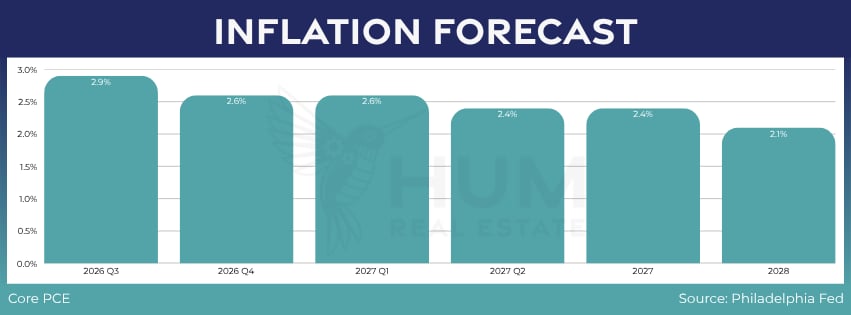
There’s some good news here: the expectation is that inflation will continue moving closer to the Fed’s 2% target over the next couple of years.
The not-so-good news? They don’t expect us to get all the way there anytime soon.
So, we’re moving in the right direction, just perhaps not at the speed anyone shopping for a mortgage would like.
And that matters because persistent inflation can keep upward pressure on the 10-year Treasury, which in turn makes a dramatic drop in mortgage rates harder to achieve.
Historically Speaking
Because we lived with unusually low rates for a long time, they might have felt normal. Historically, though, maybe they weren’t “normal” at all.
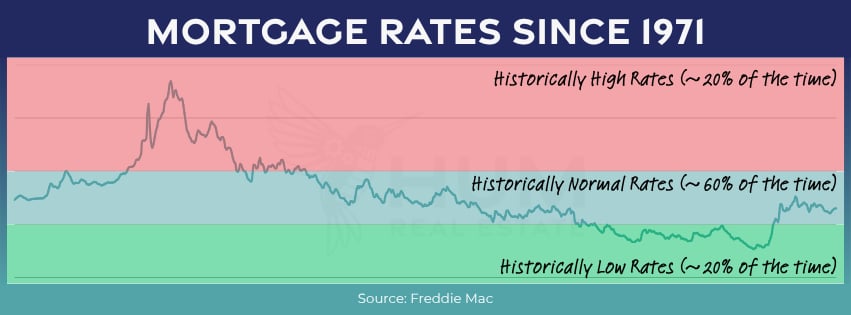
So, today’s rates may not be the rates everyone wants, but they’re also not some bizarre historical anomaly.
And that changes the question.
Instead of asking, “How long should I wait for mortgage rates to get back to 3% or 4%?” maybe the better question is, “If rates don’t fall dramatically, what can I actually do to make buying a home more affordable?”
What Can Buyers Actually Do?
If waiting around for the perfect mortgage rate isn’t much of a strategy, what is?
Fortunately, the rate you see in the headlines isn’t necessarily the rate every buyer ends up with. There are several ways buyers may be able to improve affordability without waiting for the entire mortgage market to change.
Here are four worth exploring with your real estate agent and lender.
1. Explore Lower Rates with Newly Built Homes
New construction is one place where things can get interesting.
Builders have inventory to sell too, and unlike most individual sellers, many larger builders have financing incentives available through affiliated or preferred lenders.
According to Realtor.com, new construction saw price reductions at a higher rate than existing homes during the second quarter as builders actively adjusted to market conditions.
But price isn’t the only lever builders can pull. Some are also offering mortgage-rate incentives and buydowns.
In Q2, the average mortgage rate reported for buyers of existing homes was 6.47%, compared with 5.85% for buyers of newly built homes.
That’s a meaningful difference.
So, if you’ve ruled out new construction because you assume it’s going to cost more, it may be worth running the actual numbers. The sticker price is only part of the story.
2. Ask for Seller Concessions
This is one of the advantages buyers have in a market with more inventory: sellers may be more willing to negotiate.
And sometimes the best deal isn’t necessarily a lower sales price.
Seller concessions can potentially help with allowable closing costs, prepaid expenses, or even a mortgage-rate buydown, depending on the loan program and transaction.
That can be especially valuable for a buyer who has enough income to comfortably handle the monthly payment but would benefit from keeping more cash in the bank at closing.
Nearly half of sellers gave some type of concession in May, according to Redfin, the highest share for a May in their records.
So don’t just ask, “How low will the seller go?”
Sometimes the better question is, “What else is the seller willing to do?”
3. Consider an ARM
Before anybody runs screaming from the words “adjustable-rate mortgage,” hear us out.
An adjustable-rate mortgage, or ARM, typically offers a fixed interest rate for an initial period and then adjusts according to the terms of the loan.
And that initial rate can sometimes be lower than the rate available on a traditional 30-year fixed mortgage.
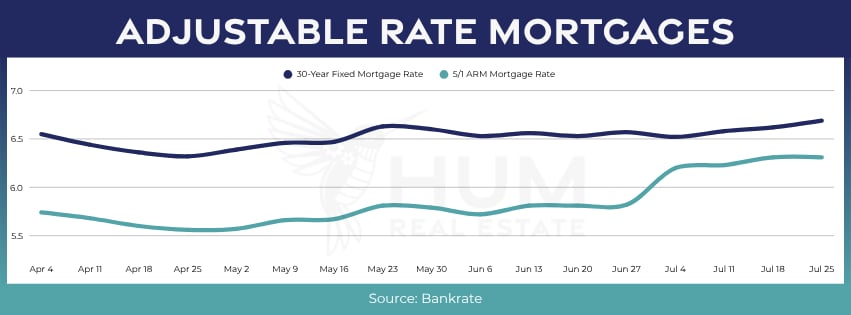
That does not make an ARM right for everyone.
You need to understand exactly when the rate can adjust, how much it can adjust, the applicable caps, and what the payment could eventually become. This is absolutely a conversation to have with a qualified lender based on your finances and how long you expect to own the home.
But “not right for everybody” and “not worth considering” are two very different things.
If the numbers and your plans make sense, an ARM may be another tool worth looking at.
4. Look Into Rate Buydowns
And finally, instead of waiting for the entire market to give you a lower rate, there may be situations where you can effectively buy one.
A mortgage-rate buydown uses money paid upfront to reduce the buyer’s interest rate according to the particular loan structure.
That money might come from the buyer, or in some transactions, allowable contributions from a seller or builder may be used toward a buydown.
There are different types, too. A temporary buydown can reduce the effective payment during the first few years of the loan, while a permanent buydown generally uses discount points to reduce the interest rate for the life of the loan.
The important part is doing the math.
How much does the buydown cost? How much does it actually save each month? How long would you need to keep that mortgage for a permanent buydown to make financial sense? And could those dollars be put to better use somewhere else?
Your lender can run those scenarios side by side.
Bringing It All Together
So, the takeaway isn’t, “Mortgage rates definitely aren’t coming down, so hurry up and buy a house.”
It’s actually the opposite.
Nobody knows exactly where mortgage rates will go. But you also don’t have to sit on the sidelines waiting for a specific number to appear.
Explore new construction. Negotiate with sellers. Ask your lender about different loan structures. Run the numbers on a rate buydown.
Because there may be a much better strategy available than simply refreshing mortgage rates every Thursday and hoping Jerome Powell sends you a housewarming present.
Institutional Investors
Here’s some potentially encouraging news, especially for first-time home buyers who feel like they’re competing with Wall Street every time a home hits the market.
Recent data shows some of the biggest players have been pulling back.
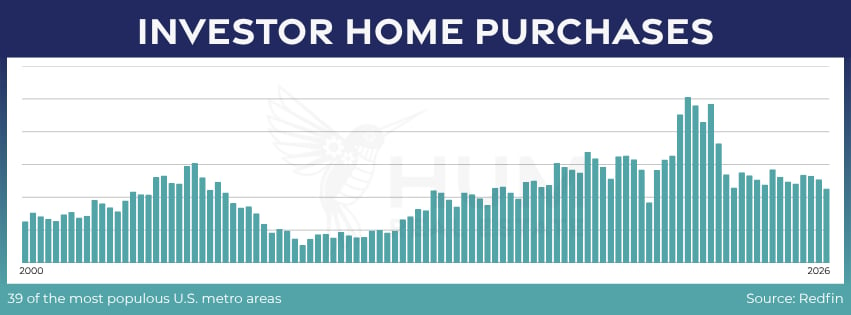
According to Redfin, investor home purchases fell 6% year over year in the first quarter of 2026, reaching their lowest level since 2020, when the pandemic temporarily disrupted home buying. Outside of that unusual period, you have to go back to 2016 to find investor purchases at similarly low levels.
Now, that does not mean investors are suddenly out of the housing market.
However, the trend gets more interesting when looking at large, institutional investors.
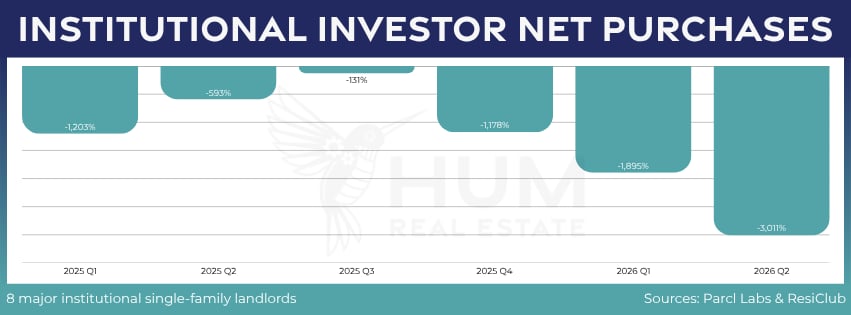
There probably isn’t one single explanation why large investors are doing more selling than buying.
The economics of owning investment property have changed. Home-price appreciation has slowed from the extraordinary pace we saw during the pandemic boom. Financing costs are higher, and expenses like insurance, property taxes, maintenance and renovations can all affect the potential return on an investment.
There has also been a significant change in federal policy toward large institutional ownership of single-family homes.
Investors are still part of the housing market, and smaller investors remain active. But some of the country's largest institutional investors have substantially reduced their purchasing, and several major operators are currently selling more homes than they're buying.
That doesn't eliminate competition, and it doesn't suddenly make homes inexpensive. But if the idea of competing against Wall Street has been one of the things making you hesitant to enter the market, the current numbers are worth a second look.
Bottom Line
Inventory is giving buyers more choices and making accurate pricing increasingly important for sellers.
Mortgage rates may not be where everyone wishes they were, but new-construction incentives, seller concessions, different loan options, and rate buydowns may create opportunities.
Large institutional investors may be pulling back rather than expanding their portfolios.
If your real estate plan is to wait until home prices, mortgage rates, inventory and the economy all cooperate at exactly the same time, you may want to get comfortable.