Understanding Your TRIM Notice: What Homeowners Need to Know
September 8, 2026
All Real Estate News
September 8, 2026
All Real Estate News
If you own a home in Florida, there is a good chance you have received a TRIM notice in the mail and immediately wondered, “Wait... did my property taxes just go up?”
The good news is that your TRIM notice is not a bill. It is a proposed notice from your local property appraiser and taxing authorities that explains how your property value was determined, what exemptions you have, and what your estimated taxes may look like for the upcoming year.
The confusing part? There are a lot of numbers packed into one small piece of paper. Let's break it down...
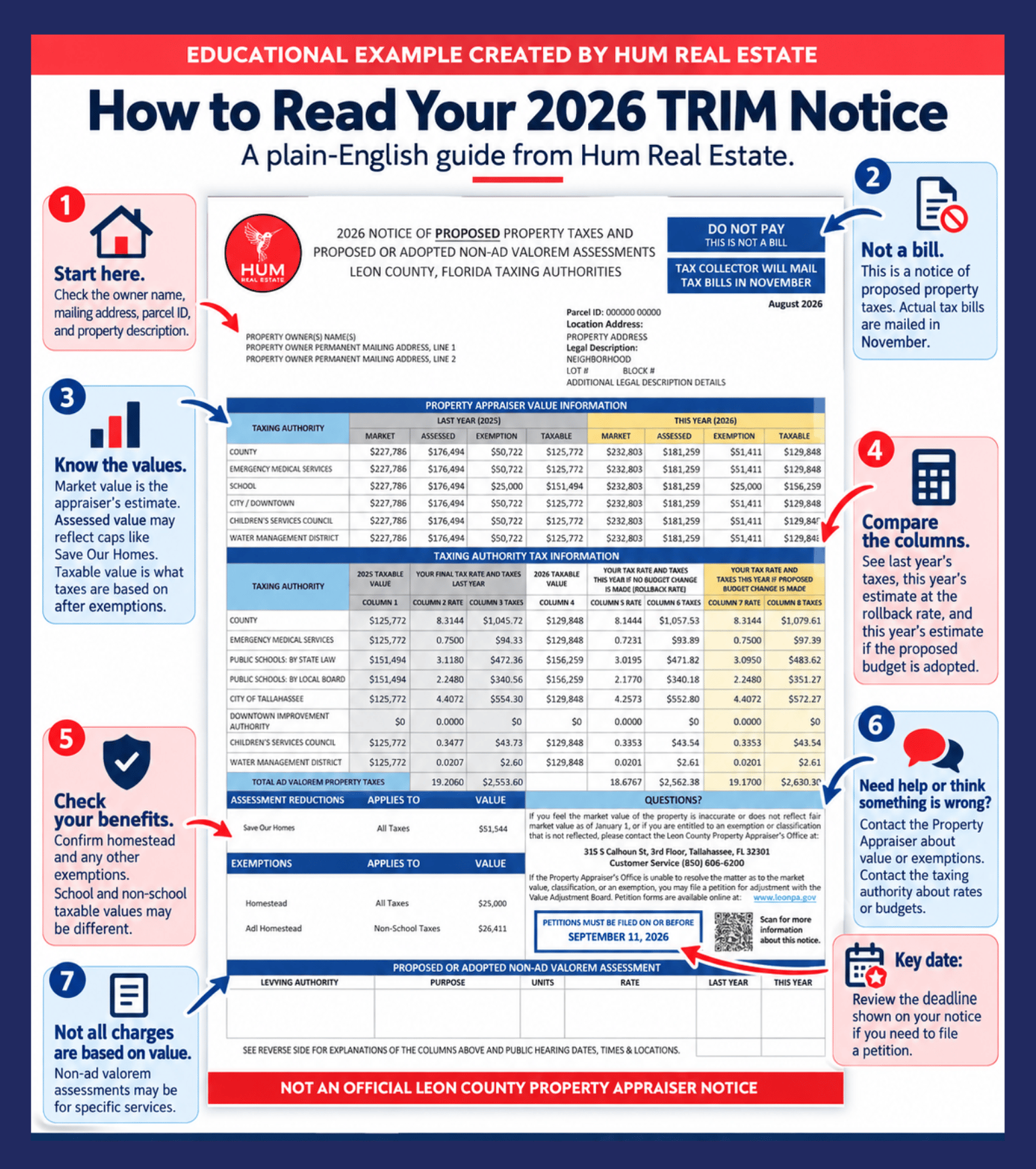
TRIM stands for Truth in Millage, and it is part of Florida’s process for giving property owners transparency about proposed property taxes.
Your TRIM notice typically includes information such as:
It is designed to help homeowners understand how their property taxes are calculated before final rates are adopted.
One of the biggest misconceptions homeowners have is that a higher property value automatically means a matching increase in property taxes.
Not always.
Florida’s property tax system includes several moving parts. Your taxes can change because of:
For many Florida homeowners, protections like the Save Our Homes benefit can limit how much the assessed value of a homesteaded property increases each year.
When reviewing your notice, pay attention to:
Assessed Value: This is the value used by the property appraiser before certain limitations and exemptions.
Exemptions: Make sure any exemptions you qualify for are correctly listed.
Taxable Value: This is the amount used to calculate your property taxes after exemptions and adjustments.
Proposed Taxes: Compare the estimated taxes with last year’s amount and look for significant changes.
If something does not look right, Florida homeowners have a limited window to contact the property appraiser’s office or file a petition with the Value Adjustment Board.
Your home’s market value and your property’s assessed value are related, but they are not always the same thing.
The value a buyer might pay for your home in today’s market is different from the value used for property tax purposes. This distinction is especially important in a changing real estate market where home prices, assessments, and tax bills do not always move together.
For sellers, understanding your property tax situation can help you answer questions from potential buyers and provide a clearer picture of the home’s ongoing costs.
For buyers, reviewing property tax information is an important part of understanding the true cost of owning a home beyond the purchase price.
Your TRIM notice is not something to ignore, but it also is not a reason to panic. Take a few minutes to review the information, confirm your exemptions, and understand how your property taxes are changing.
Stay up to date on the latest real estate trends.

All Real Estate News
October 23, 2026

All Real Estate News
October 23, 2026
All Real Estate News
October 21, 2026

All Real Estate News
October 20, 2026

Articles for Buyers
October 19, 2026

October 19, 2026
You’ve got questions and we can’t wait to answer them.