Capital Gains Taxes Are Becoming a Bigger Question for Home Sellers
July 13, 2026
All Real Estate News

July 13, 2026
All Real Estate News
As home values continue to rise across Florida, more homeowners are finding themselves asking a question they did not expect when they bought their home years ago: what happens at tax time if I sell?
For many sellers, especially longtime owners, the conversation around capital gains is becoming just as important as pricing strategy, timing, and market conditions.
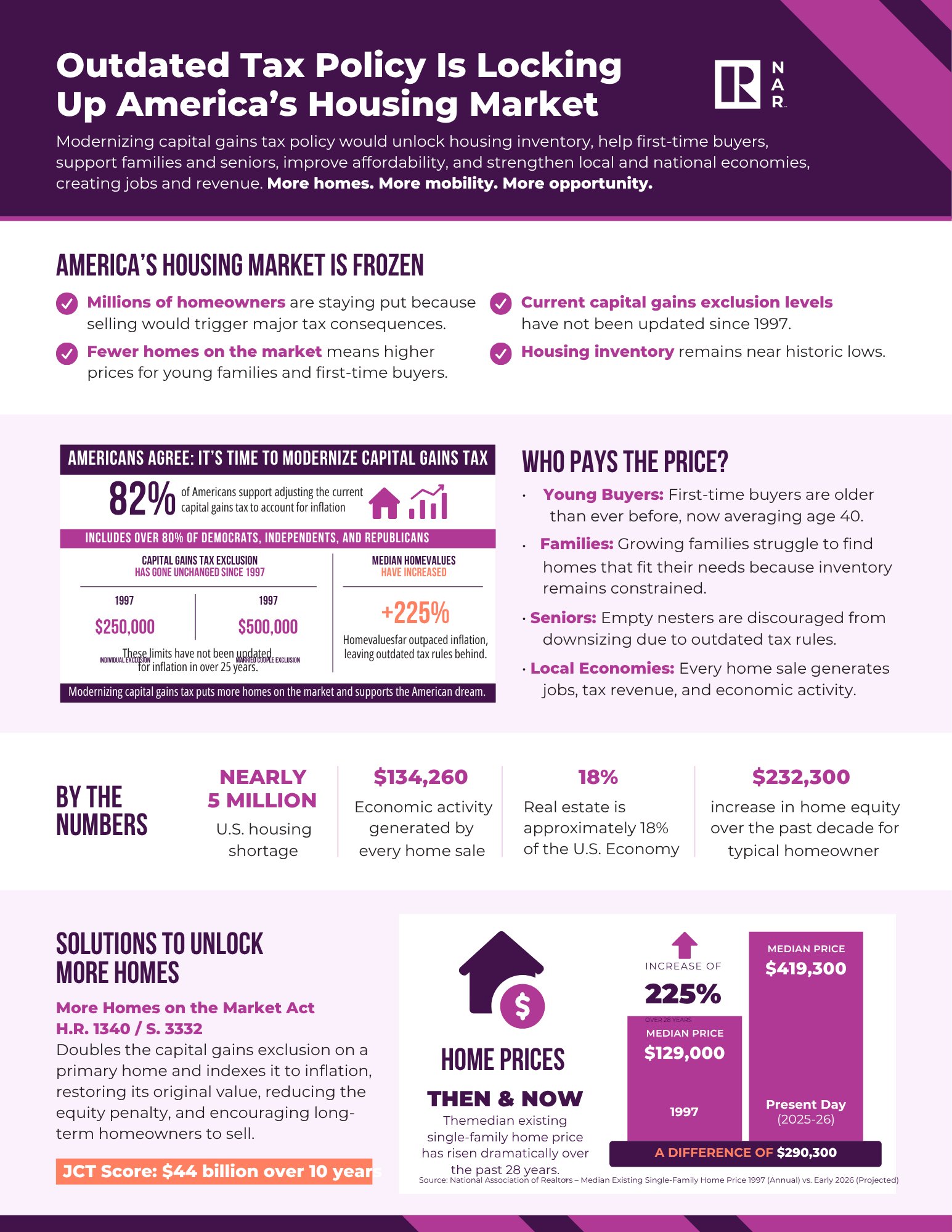
According to a recent report from the National Association of Realtors®, an estimated 17.9% of Florida households that own and occupy their homes may currently have gains that exceed federal capital gains exclusion limits. That is slightly higher than the national average of about 15%.
These numbers are being driven by one major factor: home value appreciation over time.
And while rising equity is generally a positive for homeowners, it can also introduce tax considerations that many people have not thought about in years.
Federal tax law allows homeowners to exclude a portion of profit from the sale of their primary residence, as long as they meet certain ownership and occupancy requirements.
In simple terms:
These limits apply to profit, not the total sale price of the home. Homeowners can also typically factor in their original purchase price, documented improvements over time, and certain selling expenses when calculating gain.
The important detail many homeowners miss is that these exclusion limits have remained unchanged since the late 1990s, even as home prices have steadily increased over time.
The same NAR research shows that as home values continue to climb, more homeowners could potentially fall above these exclusion thresholds.
For example:
This does not automatically mean a tax bill for every seller. It simply highlights how rising equity can change the financial picture for long-term homeowners.
This issue is most relevant for:
In many cases, homeowners may be closer to these thresholds than they realize until they begin seriously considering a sale.
The most important takeaway is that capital gains considerations are not something to address at the closing table. They are best discussed early in the planning process, alongside pricing strategy and timing.
Understanding your potential equity position ahead of time allows for more informed decisions and fewer surprises later.
Because these exclusion limits have not been updated in decades, housing industry groups such as the National Association of Realtors® have supported proposals like the More Homes on the Market Act. The goal is to adjust the exclusion amounts to better reflect today’s home values and economic conditions.
Rising home values have created significant wealth for many Florida homeowners, but they have also introduced new layers of financial planning when it comes time to sell.
If you are considering selling, it is worth taking a closer look at your equity position early so you can move forward with clarity and confidence, not surprises. You can get a detailed report of your home's value at HomeSweetHomeBot.com
A thoughtful plan today can make a major difference in your outcome tomorrow.
Here's the breakdown:
Stay up to date on the latest real estate trends.

All Real Estate News
August 25, 2026

All Real Estate News
August 24, 2026

All Real Estate News
August 21, 2026

All Real Estate News
August 20, 2026

All Real Estate News
August 19, 2026

All Real Estate News
August 18, 2026
You’ve got questions and we can’t wait to answer them.