The Housing Market Is More Stable Than It Feels
September 1, 2026
All Real Estate News

September 1, 2026
All Real Estate News
If 2026 has felt a little chaotic, apparently you are in good company.
Talker Research recently asked 2,000 Americans to choose a word that describes the year so far. The most popular answer was “stressful,” chosen by 35% of respondents. Another 32% went with “challenging.”
So, if economic headlines, mortgage-rate predictions, price changes, insurance costs, and general uncertainty have made you hesitant to make a move, that is understandable.
But there is something interesting happening underneath all that noise.
The housing market itself is starting to look a lot more predictable.
Not necessarily cheap. Not necessarily easy. And definitely not identical from one neighborhood or price range to another.
But nationally and here in Tallahassee, several of the numbers sellers and buyers watch most closely are settling into much narrower ranges.
And after the real estate roller coaster of the last several years, boring might actually be kind of nice.
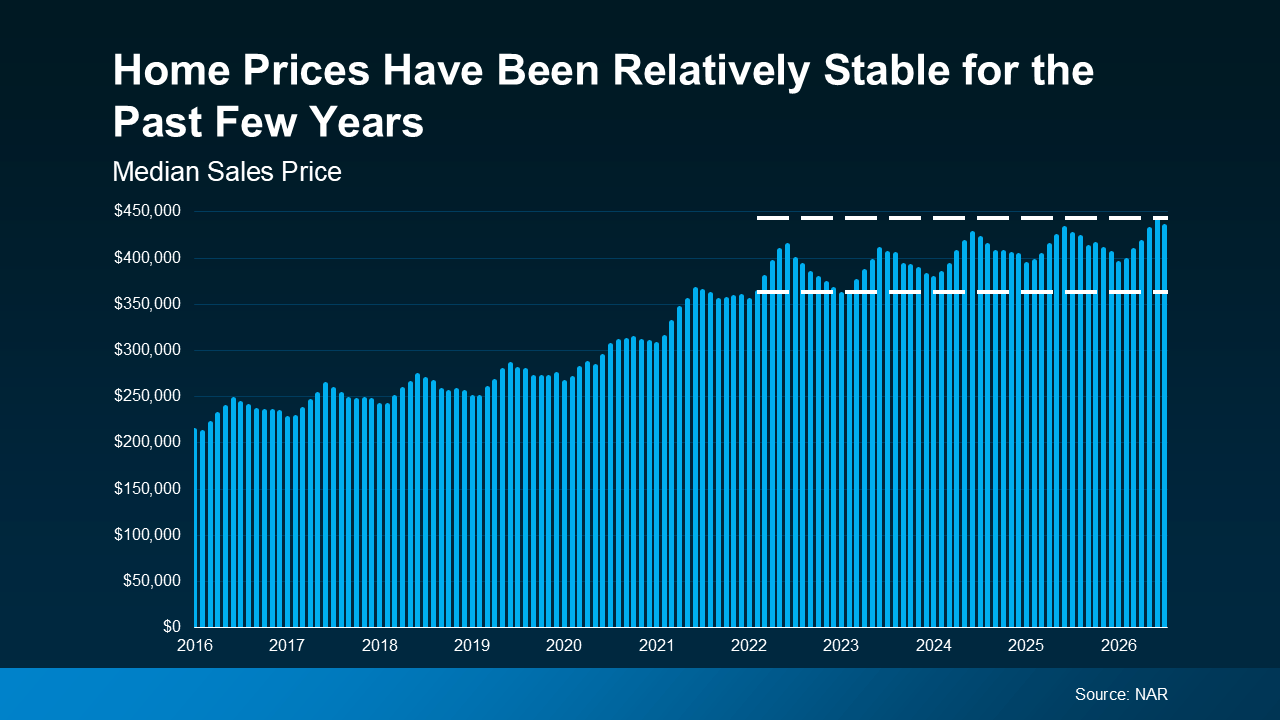
Remember when it seemed like home prices were jumping every time you refreshed Zillow?
That is not the market we have today.
Nationally, the median existing-home sale price was $434,100 in July 2026, according to the National Association of REALTORS®. That was 2.0% higher than July 2025.
So prices are still rising nationally, but nowhere near the pace we saw during the pandemic-era housing boom.
Tallahassee has its own story.
Zillow's Home Value Index put the typical Tallahassee home value at $296,376 at the end of July, up 1.2% over the previous year. Its median list price was just under $305,000 within the city. July is currently the latest complete month of data available, and we are still waiting for final August numbers.
Looking more broadly at the Tallahassee metro, Realtor.com data put the median listing price at $342,900 in July. That number has been remarkably steady recently: $350,000 in April, $349,450 in May, $343,950 in June, and $342,900 in July. We are still awaiting the finalized August data, so July remains the latest complete month for comparison.
That is a pretty good example of what normalization actually looks like.
Prices are not skyrocketing.
They are also not universally crashing.
And one number cannot describe every Tallahassee property. A Golden Eagle estate, a Killearn Estates ranch, and a Southwood home can all behave very differently even during the same month.
The takeaway is not that prices have stopped changing.
It is that pricing has become more dependent on the actual house, location, condition, competition, and price range instead of simply assuming everything will appreciate rapidly because the entire market is rising.
Inventory may tell the local story even better.
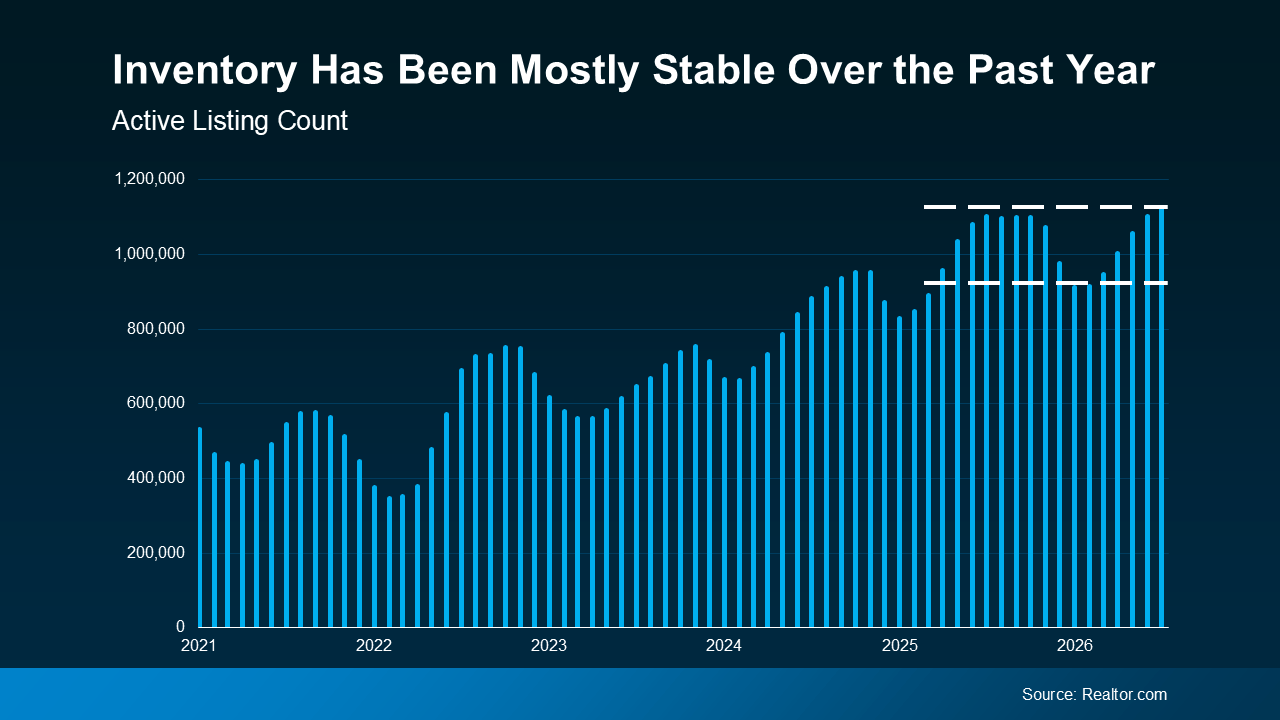
During the pandemic housing frenzy, sellers frequently had very little competition. That helped create bidding wars, extremely short market times, and an environment where sellers could sometimes get away with pricing strategies that would be considerably riskier today.
More homes have returned to the market since then.
But lately, even that shift has become less dramatic.
Nationally, Realtor.com reported 1.126 million active listings in July 2026, just 2.1% more than a year earlier. In the South, inventory was actually 0.2% lower year over year.
The Tallahassee metro looks remarkably similar.
There were 1,405 active listings in the Tallahassee metro in July, compared with 1,353 in June. More importantly, July inventory was only 1.41% higher than it was a year earlier.
That is very different from a market where inventory is suddenly doubling or disappearing.
It means sellers can get a better idea of how much competition they are likely to face when they list.
It also means buyers generally have enough options to compare homes instead of feeling like they have to pounce on the first acceptable property that appears.
There were 474 new listings added across the Tallahassee metro in July, following 482 in June and 520 in May.
Homes are coming on the market. Homes are going under contract. New choices are replacing some of the ones that sell.
In other words, the shelves are not empty anymore, but they are not suddenly overflowing either.
Here is another number that makes planning considerably easier.
The median Tallahassee metro listing spent 56 days on the market in July. That was about three days longer than June and 4.5 days longer than July of last year.
That does not mean every seller should expect exactly 56 days.
Well-priced homes in desirable locations can still move quickly. Other properties may require considerably more time.
Our last 3 sales in Waverly Hills, The Highlands at Northhampton, and University Green took only 26, 5, and 24 days to go under contract before closing. With the right price, condition, and marketing, things are still moving quickly.
But the broader market is giving sellers something we did not always have during the extreme swings of the past few years: a more realistic planning window.
That matters when you are trying to coordinate a move, purchase another property, time a closing, or simply figure out how long you might be living with a perpetually spotless kitchen counter while strangers tour your house.
It also reinforces why pricing matters.
When sellers have competition and buyers have time to compare options, the market tends to punish aspirational pricing more quickly.
Mortgage rates may be the best example of something that can still feel uncomfortable while also becoming more predictable.
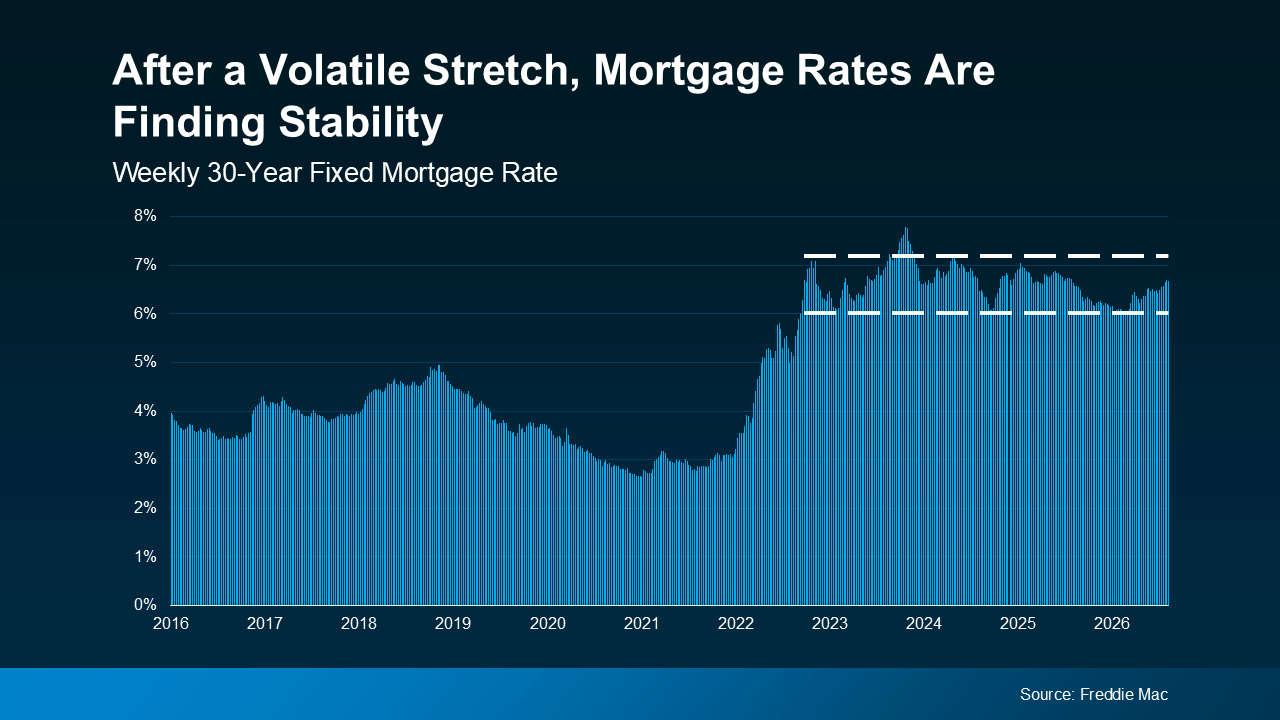
The 30-year fixed mortgage averaged 6.66% on August 27, 2026, according to Freddie Mac. One year earlier, it averaged 6.56%.
Nobody is suggesting 6.66% feels the same as 3%.
It does not.
But look at 2026 so far and something becomes pretty obvious.
The average 30-year rate was 6.16% on January 8. It dipped just below 6% in late February, reached 6.00% in early March, moved back into the mid-6% range through the summer, and has spent August between 6.65% and 6.69%.
There has been movement, but not the kind of movement that makes planning impossible.
For sellers, mortgage rates matter because they affect the purchasing power of the people looking at their homes.
For buyers, they matter because even relatively small rate changes can affect the monthly payment.
But after years of waiting for some dramatic return to 2020-era rates, it may make more sense to build a plan around the market we actually have and adjust if rates improve.
Trying to perfectly predict interest rates is not really a housing strategy.
This may be the most important distinction.
A more predictable Tallahassee housing market is not a frozen housing market.
There were still 1,405 active properties across the metro in July. Hundreds of new listings were still coming to market. Properties were still going pending. Prices were still moving. Mortgage rates were still changing from week to week.
And different parts of Tallahassee can behave very differently.
A $225,000 starter home in Apalachee Ridge Estates does not necessarily have the same competition or negotiating dynamics as a $700,000 home in Summerbrooke. New construction in Canopy may be competing with builder incentives that a resale seller cannot duplicate. A condo in College Town has a completely different potential audience than a home on five acres in Quincy.
That is why national headlines become much less useful once you are actually thinking about making a move.
The question changes from “What is the housing market doing?” to “What is the market doing for this particular property?”
That is something we can actually measure.
During the hottest years of the pandemic market, a rising tide covered up quite a few mistakes.
That is less true today.
For sellers, a steadier market means the basics matter again: understanding the competition, preparing the home well, using strong listing media, pricing appropriately from the beginning, and paying attention to how the market responds once the property is listed.
For buyers, it means focusing on the payment that actually fits the budget, comparing available properties, looking beyond the asking price at the complete financial picture, and recognizing negotiating opportunities when they appear.
Neither side needs to wait for a mythical perfect market.
A more predictable market actually makes it easier to build a strategy around the variables we know instead of betting everything on what rates, prices, or inventory might do six months from now.
Plenty about 2026 may still feel unpredictable.
Tallahassee real estate increasingly does not.
Based on the latest complete local data, Tallahassee inventory was only slightly higher than a year earlier in July. Median listing prices stayed within a relatively narrow range through the spring and summer. Typical home values were showing modest annual growth. Market times were relatively steady. And mortgage rates, while still higher than most people would like, have spent much of the year within a recognizable range.
That does not mean every home, neighborhood, or price range will follow the averages.
So, if you are considering selling or buying a home in Tallahassee, the better question may not be:
“When will the housing market finally settle down?”
It may be:
“What does the market look like for me right now?”
Stay up to date on the latest real estate trends.
All Real Estate News
September 22, 2026
Monthly Market Updates
September 21, 2026

All Real Estate News
September 21, 2026

All Real Estate News
September 18, 2026

All Real Estate News
September 17, 2026
All Real Estate News
September 16, 2026
You’ve got questions and we can’t wait to answer them.