Understanding the Contingency Period and Due Diligence as a Home Seller
January 17, 2026
All Real Estate News
January 17, 2026
All Real Estate News
This article provides general information based primarily on the Tallahassee Board of REALTORS® Contract for Sale and Purchase, revised March 2026. Individual transactions may involve different contracts, amendments, addenda, or statutory requirements. This article is not legal advice. Consult a Florida real estate attorney regarding specific contractual rights or disputes.
Between accepting an offer from a buyer and closing, several important steps must take place. The buyer may need to complete inspections, secure homeowners insurance, finalize financing, and obtain an appraisal. Depending on the contract, any of these steps could affect whether the sale moves forward.
In real estate, these protections are commonly referred to as contingencies.
A contingency is a condition that must be satisfied according to the terms of the contract. If a contingency is not satisfied, the agreement may provide options for renegotiation, termination, or other remedies, depending on the circumstances and deadlines.
Understanding how these contingencies work can help Tallahassee homeowners avoid surprises, prepare for potential negotiations, and improve their chances of reaching the closing table.
Quick Links: What Is the Contingency Period? | Inspection Contingency | Repair Requests | Insurance Contingency | Financing Contingency | Appraisal Contingency | Other Contingencies | Contract Termination | Seller Responsibilities | Bottom Line
The contingency period is the portion of the selling process after a contract is signed when certain contractual conditions must be satisfied.
In Tallahassee, the standard Tallahassee Board of REALTORS® Contract for Sale and Purchase provides a 15-calendar-day contingency period for several important aspects of the transaction, including:
However, not every contingency operates under the same timeline. Appraisals, title examinations, and other contractual provisions may have separate deadlines and requirements.
The Contract Date is established when the last party's signature on the executed contract and any final counteroffer is delivered. The contract specifies that time frames are measured in calendar days, including weekends and holidays, based on the time zone where the property is located.
Understanding the terms of an offer is just as important as understanding the price. An offer with fewer contingencies, shorter deadlines, or stronger financing may provide a different level of certainty than another offer at the same price.
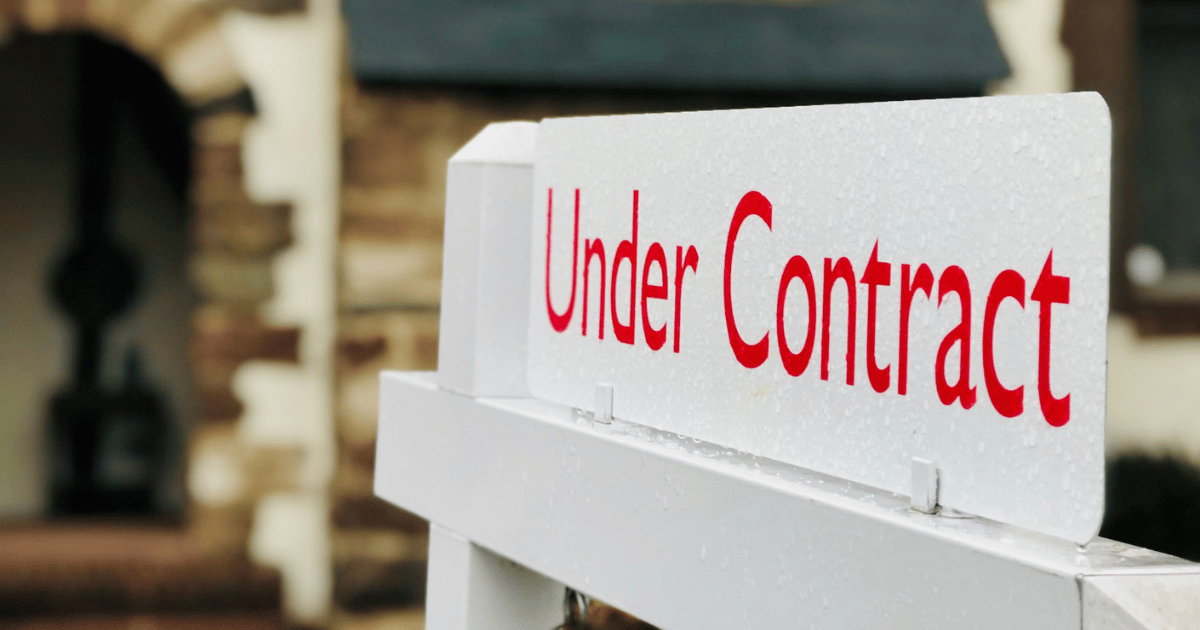
One of the first things that typically happens after a home goes under contract is the inspection.
According to the Tallahassee Board of REALTORS® contract, the buyer generally has 15 days from the Contract Date to inspect the property.
Common inspections in Tallahassee may include:
Under the standard inspection provisions, the buyer may terminate the contract during this period if the inspection results are unsatisfactory, unless those rights have been waived.
This doesn't necessarily mean something significant must be wrong with the home. Under the standard language, the buyer has discretion to determine whether the inspection results are satisfactory.
Even a well-maintained home can generate a lengthy inspection report. That doesn't necessarily mean something is wrong with the transaction.
However, an inspection report is not automatically a list of repairs the seller must complete.
Depending on the agreement, the buyer may:
Keep in mind, depending on how the buyer submits repair requests (within the specified 15-day period), the seller may be bound to a specific number of days they must reply by, or failure to respond can be deemed an automatic acceptance of the repair request. Additionally, lender-required WDO repairs can take priority when applying the agreed repair amount.
For example, a buyer might request that an aging (but functioning) HVAC system be replaced. Whether the seller is required to make that repair depends on the contract, and any applicable agreements.
A seller might agree to:
The best decision often depends on the estimated cost, the contract terms, and the potential consequences of putting the home back on the market.
Keep in mind that selling a property as-is does not eliminate the seller's disclosure obligations. Under Florida law, sellers must disclose all known, material facts affecting the property's value that are not readily observable and are not already known to the buyer.
Insurance is an increasingly important consideration in the Florida real estate market.
According to the Tallahassee Board of REALTORS® contract, the buyer generally has 15 days from the Contract Date to determine whether satisfactory hazard and flood insurance, if applicable, are available.
Insurance companies may consider factors such as:
The availability and cost of insurance may affect the buyer's ability or willingness to proceed. Under the local contract, the buyer may terminate within the insurance contingency period using the required written notice and Termination Form.
Sellers can prepare by gathering roof replacement records, permits, warranties, and documentation of completed improvements.
Addressing potential insurance concerns and required disclosures early can help reduce complications during due diligence.
A mortgage preapproval can be an encouraging sign, but it is not the same as final loan approval.
According to the local contract, the buyer generally has 15 days from the Contract Date to secure satisfactory financing.
The buyer must also complete the loan application within the specified period. This includes providing their lender with all requested documentation, completing disclosures, and instructing the lender to order the appraisal.
Failure to meet these application requirements constitutes a waiver of the financing contingency.
If the buyer cannot obtain satisfactory financing, the contract establishes procedures for providing written notice and terminating within the applicable 15-day period.
Once that period expires without the required notice, the transaction is generally no longer contingent on financing, except for the applicable appraisal provisions.
For sellers, this is why evaluating an offer involves more than looking at the purchase price. Financing type, down payment, loan terms, and contractual deadlines can all affect the likelihood of a successful closing.
When a buyer is financing a home, the lender will generally require an appraisal to determine whether the property's value supports the proposed loan.
But what happens if the appraised value is lower than the agreed-upon purchase price?
According to the Tallahassee Board of REALTORS® contract, there are specific deadlines when the appraisal is below the purchase price or requires repairs that conflict with, or are not addressed in, the agreement.
Here's the important part: If the seller fails to respond within the required three-day period, the contract considers that failure to respond an acceptance of the appraised amount and terms.
For example, suppose your home is under contract for $350,000, but the appraisal comes back at $340,000. If you don't agree to sell at the appraised amount and terms, you must communicate that decision within the required deadline.
An appraisal below the purchase price doesn't necessarily mean the sale is over. The parties may be able to negotiate another solution, and FHA, VA, and other financing arrangements can involve additional appraisal protections.
This is one reason strategic pricing matters before a property reaches the market. An attractive offer above comparable sales may also introduce additional appraisal risk.
Inspections, insurance, financing, and appraisal are among the most common concerns, but other issues can arise before closing.
The local contract establishes a process for addressing title defects. If a qualifying defect is identified, the seller generally has 15 days after receiving notice to resolve it. If the defect cannot be cured, the buyer may have options to accept the title as-is or terminate.
Homeowners association disclosures, restrictive covenants, surveys, and other property-specific conditions may also create additional obligations or contingency rights.
Special clauses, riders, and addenda can modify the standard contract provisions, so sellers should understand the terms of their particular agreement.
Under the Tallahassee Board of REALTORS® contract, certain contingencies allow the buyer to terminate and receive a refund of the earnest money deposit when the applicable conditions, notices, and deadlines are satisfied.
However, the right to terminate under one contingency does not necessarily apply to other circumstances or remain available after its deadline passes.
The contract addresses failure to perform and potential seller remedies, which may include retaining the deposit as liquidated damages or seeking specific performance under the applicable terms.
If the parties dispute who is entitled to the deposit, the contract provides procedures for the escrow agent to address the dispute.
Sellers should not assume that a canceled contract automatically entitles them to keep the earnest money deposit. The circumstances, contract provisions, and required procedures determine the available options.
Another important provision is: If the contract terminates, the buyer may be required to provide the seller with complete copies of all inspection reports.
This information can be valuable, but it may also reveal previously unknown defects that the seller needs to evaluate for disclosure to future purchasers.
Preparing the property, organizing important documentation, and understanding potential issues can help reduce uncertainty once the contingency process begins.
For Tallahassee sellers, helpful steps include:
Sellers also have continuing responsibilities after accepting an offer.
Sellers must keep utilities on and maintain the home, lawn, shrubbery, pool, and other improvements through closing or possession, whichever occurs first. The property must be maintained in substantially the same condition, with ordinary wear and tear excepted.
Required repairs must be completed in accordance with applicable law and the contract's workmanship requirements. Documentation requirements of certain repairs performed within 90 days of closing may also apply, as well as allowing the buyer to reinspect the property to verify compliance.
The goal isn't to eliminate every possible issue. It's to identify potential concerns early and have a plan for addressing them.
Accepting an offer is an exciting milestone, but the contingency period is one of the most important stages of selling a home.
For Tallahassee sellers, understanding inspections, insurance, financing, appraisal, and other contractual contingencies can help prevent unexpected complications and make the transaction easier to navigate.
The strongest offer isn't always the one with the highest price. The terms, deadlines, financing arrangements, and likelihood of successfully closing are all important considerations.
Because getting your home under contract is important. Getting it sold is the goal.
For additional information about how contingencies work from the purchaser's perspective, visit our companion guide: Tallahassee Home Buying: Understanding the Contingency Period and Due Diligence.
This article provides general information based primarily on the Tallahassee Board of REALTORS® Contract for Sale and Purchase, revised March 2026. Individual transactions may involve different contracts, amendments, addenda, or statutory requirements. This article is not legal advice. Consult a Florida real estate attorney regarding specific contractual rights or disputes.
Stay up to date on the latest real estate trends.

All Real Estate News
November 3, 2026

All Real Estate News
November 2, 2026

All Real Estate News
November 2, 2026

All Real Estate News
October 31, 2026

All Real Estate News
October 30, 2026

All Real Estate News
October 29, 2026
You’ve got questions and we can’t wait to answer them.